

The Most Popular Dessert In The US During The '80s Was An Italian Staple
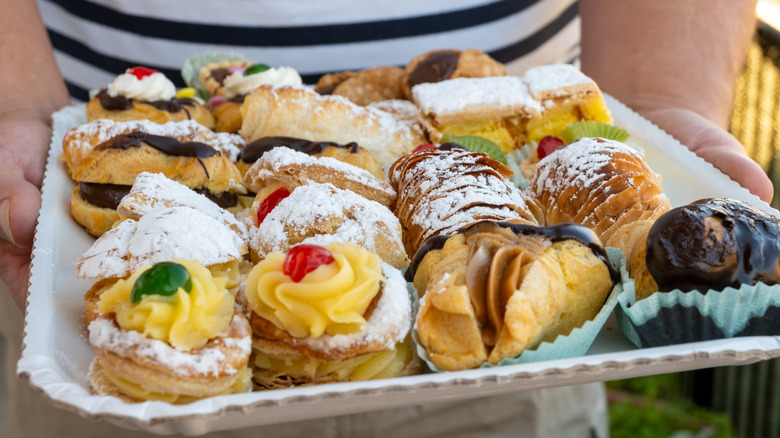
Some dishes become so ingrained in culture that it's hard to imagine there was a time they were barely known, but prior to the 1980s, Italian food was considered "ethnic," food was mostly reserved for working class immigrants and their families or a specialty of a few regional enclaves like New York. It was in that decade that then-novel dishes like risotto broke through the ideas most Americans had about Italian food and pushed it into the larger world of fine dining. With that, tiramisu became the U.S.'s most popular dessert of the decade.
Tiramisu was virtually unheard of in the U.S. at the start of the 1980s. Part of this has to do with the relatively recent origins of the dish. Who officially "created" tiramisu is a debate that is still not settled today, but it was long claimed to be the product of the city of Treviso in the Veneto region of Italy, just outside of Venice, where it was supposedly first served by a restaurant called Le Beccherie in 1972. However some authors found several recipes that they claim date to the late 1950s, from the region of Friuli Venezia Giulia in the far north of the country, decades before it made its way to American dinner tabes.
Tiramisu came to the United States in the 1980s with the rise of Northern Italian cuisine
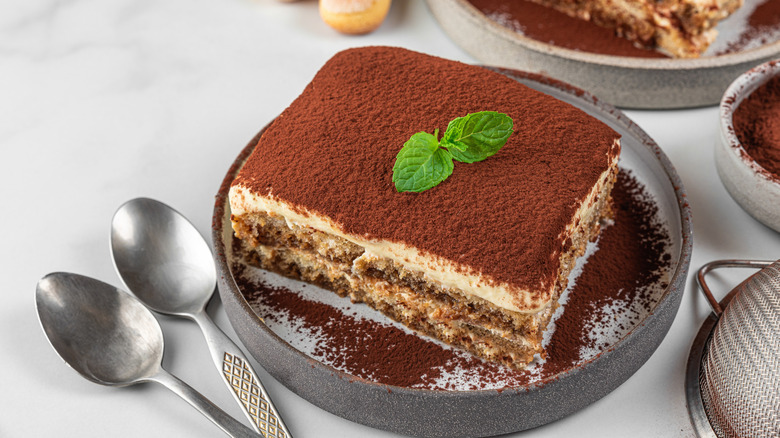
The government of Italy current recognizes the evidence in support of tiramisu originating in the Friuli region, while the region of Veneto still claims to be the home of the dish. Still, others support an even harder to prove theory that tiramisu originated as a dish served in brothels in Treviso in the 19th century. But the important facts are that tiramisu didn't become popular in Italy itself until the '70s, and that it originated in the north. In the United States however, the vast majority of Italian immigrants came in the late 19th and early 20th century, and they came from the south.
This explains why the heavier, tomato sauce dishes and pizza of the region came to dominate what Americans thought of as Italian food, influencing Italian-American creations like spaghetti and meatballs and chicken parmesan. Because these immigrants were generally poor workers, their cuisine was seen as cheap, divey food. It was the rise of Northern Italian cooking in the '80s that made Italian food trendy. At the time, Northern Italian food of the time was seen as lighter and more refined.
Partly a result of a general craze for high Italian, generally northern, culture in the 1980s, the rise in Italian-fare was also the result of trade barriers falling. This made it easier for American restaurants to import luxury Italian ingredients like prosciutto, truffles, and, of course, tiramisu.
Tiramisu was a decadent dessert for America's new fine-dining Italian restaurants
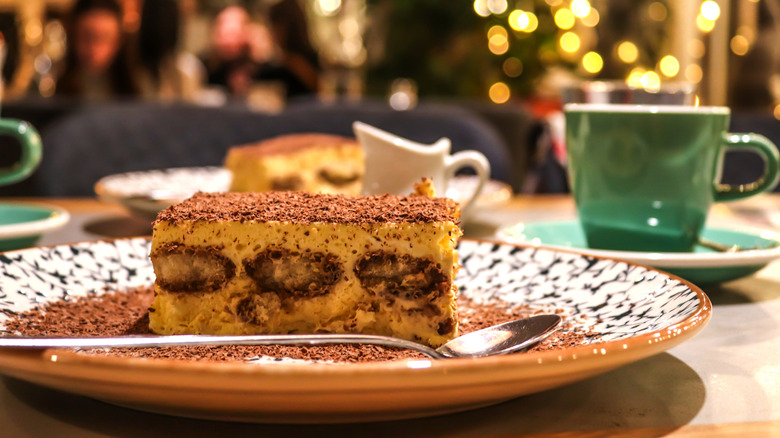
The timing was perfect for tiramisu. The dish had just become popular in Italy the decade before, and like other luxury Italian foods, the fall of trade barriers made its component ingredients widely available. The biggest was mascarpone – the popular Italian cheese is maybe the most important part of a tiramisu recipe, and wasn't common in the U.S. until it began being imported in the '80s. Of course, another major factor was the specifics of the dish itself.
With its airy, light texture, and rich creamy flavor, tiramisu has an indulgent decadence that could compete with the best desserts from high-end French restaurants. It was also the perfect symbol of what defined Italian dining at the time: lighter while still feeling trendy and luxurious. Some foods are just in the right place at the right time to become sensations, and tiramisu was certainly that in the '80s.
Tiramisu's enduring popularity is also proof of another reason the dessert took off: it's simply delicious. Unlike other trendy foods of certain decades, tiramisu has never come to feel outdated. The relative simplicity and the classic Italian ingredients make it feel timeless, which is certainly part of the reason why people are often surprised to hear how recent a creation it is.