

You've Probably Made This Mistake When Buying Chocolate, But Don't Do It Again

When you're treating yourself to a quality bar of chocolate, you're going to be a lot more discerning in your choices than when it comes to grabbing a mass-produced candy bar. You're likely going to pay attention to the percentage of cocoa content, the list of ingredients, and of course the price. But if you're not checking the origin of the cacao, you're missing out on a big piece of the puzzle.
Just as with wine or with coffee beans, the terroir for cacao — how and where it's grown — can have a big impact on the flavor and quality of the final product. For example, the richly fudgy and chocolately flavor of your favorite candy bars is typical of cocoa grown in West Africa, where much of the world's cacao is actually grown. Certainly, it's familiar and delicious, but there's so much more to explore from smaller chocolatiers and artisanal brands, especially if you want to learn to taste chocolate like a connoisseur.
Madagascar stands out for producing cacao that's both rare and unique, with tastes that are fruit-forward, citrusy, and even herbal. Head to Ecuador and you'll find chocolate that's aromatic and floral, with notes of vanilla and jasmine. In Papua New Guinea, cacao beans are dried over fires, resulting in chocolate that has notes of smoke, along with some nuttiness and earthiness.
The importance of single-origin cacao
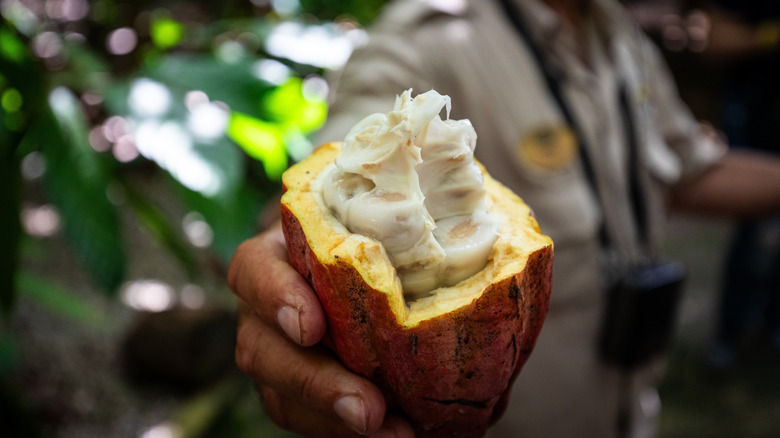
The real mistake most people make when choosing chocolate isn't even just about deciding which origin is best, but checking that an origin is listed in the first place. Chocolate without a source listed is often made from what's known as commodity cocoa, which is grown and processed in bulk to get the highest output at the lowest price. This cocoa is usually sourced from multiple regions or countries, then blended for brand consistency, rather than to highlight the natural flavors of the beans, which is often typical of smaller chocolate producers.
Opting for single-origin chocolate isn't just a matter of taste, though; it can also be an ethical decision. By listing a particular growing region on the label, brands are offering full transparency to their customers — even more so if it is listed to the level of an individual farm. This often represents a direct relationship with growers, who are paid fairly for their work and for their product (which is why you'll find bean-to-bar chocolates are more expensive). This has impacts on the broader community in these areas, with the income helping to fund infrastructure and education.
Single-origin chocolate is a more environmentally-friendly option, too. Farmers are encouraged to use sustainable growing practices, including organic farming to maintain soil health, and preserving local cacao varieties to promote biodiversity.