

Hold Up! Don't Toss Moldy Silicone Kitchenware — Here's How To Save It
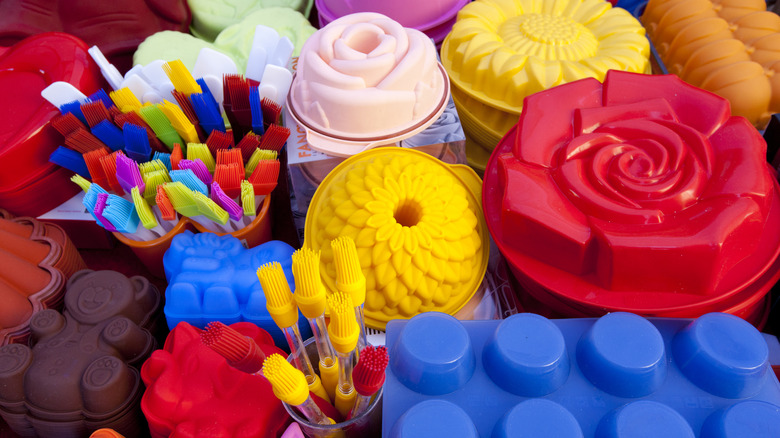
Silicone kitchenware is naturally nonstick, can handle extreme temperatures, and is incredibly flexible and easy to store. But without proper cleaning, it can develop odors and become moldy, which will affect food safety and quality. Fortunately, there's no need to toss moldy silicone ice cube trays, molds, mats, or bakeware. The best way to remove mold from silicone is to soak it in a clean tub of hot water and distilled white vinegar for a few hours. Then, gently scrub away all traces of mold using a soft-bristled toothbrush or small kitchen brush. Cleaning silicone with vinegar can also help if your silicone kitchenware makes food taste like soap.
Soak items in a tub of hydrogen peroxide and warm water to remove stubborn mold stains. When using peroxide, rinse all items in clean water afterward. After cleaning, dry carefully with a soft microfiber cloth to remove all traces of water from every nook and cranny. Letting water (or other liquids) sit on the silicone is what makes them moldy in the first place, so items should always be fully dried after cleaning and before storing. If you're still concerned about unpleasant odors on your silicone cookware, you can run it through the dishwasher to sanitize it. Just be sure to check the manufacturer's instructions first to make sure it's dishwasher safe and only use the top rack for silicone.
Other tips for cleaning moldy silicone kitchenware
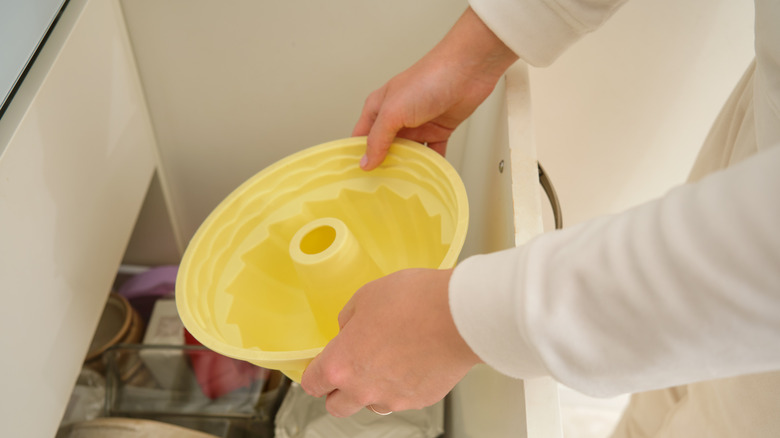
If you don't have a dishwasher and the water from your kitchen tap isn't quite hot enough for your needs, you can use a simple method to kill mold and remove stains: boiling water. Heat up a stockpot of water on the stove or put a bowl of water in the microwave. When the water starts boiling, add your silicone items to the pot or place them in a large, clean kitchen tub and pour the boiling water over them. You can also add a tablespoon of baking soda to the boiling water to deodorize the silicone.
Another option is to heat the silicone in your oven. First, confirm that the silicone is heat-safe to at least 350 degrees Fahrenheit. Then, preheat your oven and put the silicone pieces in for around 10 minutes. After removing them, place them in a cool water bath and then gently scrub with a baking soda paste. Leave the paste on for a few hours and then rinse it off with cool water and wash the items with mild dish soap.
One of the most important rules to follow when using silicone kitchenware is to not use harsh cleaning chemicals or chlorine bleach to clean silicone. These chemicals can degrade the material over time and affect its nonstick properties. Even some mold and mildew cleaners may leave a residue that renders your silicone items unsafe for food. However, mold and mildew cleaners that are labeled safe for use on kitchenware can be used according to the instructions on the packaging.