

What To Know Before Choosing Leathered Granite Countertops For Your Kitchen
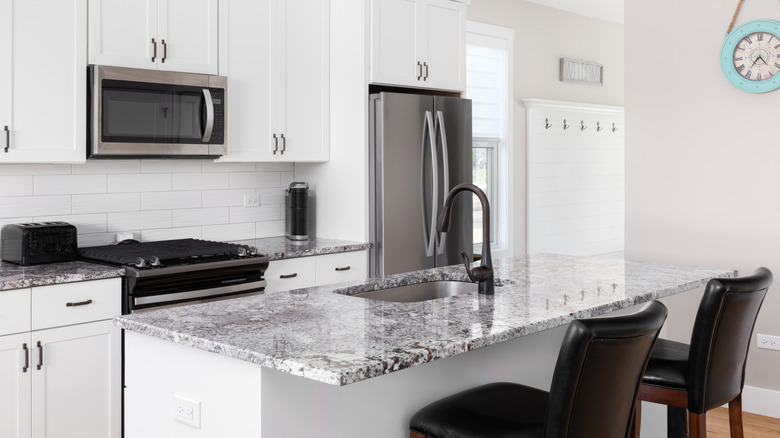
Granite is one of the most popular kitchen countertop materials for many reasons: It's durable, relatively inexpensive, and doesn't go out of style like other materials do. But did you know that there are many different finishes to choose from under the granite umbrella? Honed, polished, and flamed finishes are all available, and one of the styles that has gotten a ton of attention in particular is the leathered finish.
This finish is first honed (meaning it doesn't have the same sheen as the polished granite that you may be used to), then textured with a diamond-shaped tool. The small dimples created by the bit add texture to the countertop and give it a more natural, matte, and sophisticated finish. The color is still natural and vivid, which works best with dark kitchens, and is extremely captivating to the eye. While leathered granite is slightly more expensive than polished or honed granite, some say that it's a great low-maintenance alternative to glossier finishes, which tend to show smudges and fingerprints more easily.
More than just a pretty face
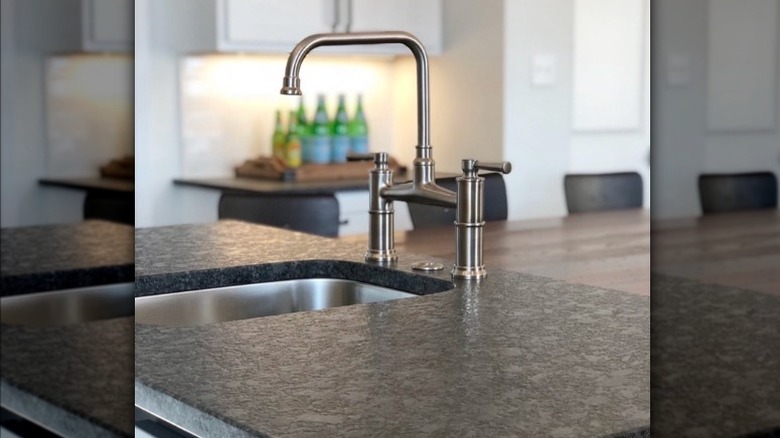
Leathered granite countertops don't just look cool; they are also highly functional and perfect for busy kitchens. Granite, as a whole, is a pretty low-maintenance countertop material, but it becomes even more durable and spill-resistant once the surface is leathered. The process tightens the pores on the countertop, which means that water or spills can't seep in the way they can for a natural stone like marble. It's also heat-resistant, which means that you can put a hot pot on it — though it's still recommended to use a trivet or potholder to protect the seal and keep it looking better for longer.
However, just because it's water-resistant doesn't mean that it requires no upkeep; the surface is susceptible to dust, which can gather in the crags and cause discoloration. Plus, since the surface isn't entirely flush, cleaning it is more difficult than it would be for flat, polished granite. However, choosing a darker, leathered granite color, like a dark black or brown, may help, as can running a brush over it regularly to dislodge dust, crumbs, and particles.