

The Old-School Kitchen Liquid That Fights Hard Water Stains On Dishes
We may receive a commission on purchases made from links.
Hard water is a problem that can be an endless source of frustration. Minerals that naturally occur in the groundwater are what cause it. It's not typically harmful to humans, although you may want to avoid cooking your beans in hard water. These minerals can also make cleaning more of a struggle. Soap reacts the way you want it to in soft water. In hard water, parts of soap bond to some of those minerals and create soap scum, reducing cleaning power and leading to deposits that are especially visible on silverware and glassware. The solution to overcoming these water stains is in a simple, old-school rinse agent.
Rinse aids aren't just a scam to get you to spend more money washing dishes. They also do a different job than vinegar on cloudy glassware. They contain surfactants, compounds that reduce the surface tension of water. When your dishes are being rinsed, that lower surface tension means the water has a harder time clinging to them. If it can't stay on your plates and glasses, it can't dry and leave mineral deposits behind. The other thing surfactants do is bond with grease so that, as the water washes away, the grease and grime goes with it.
Rinse aids also contain a small amount of acid, like citric acid, which helps break down some minerals. Some contain chelating compounds, which are substances that bind with hard water ions and prevent them from interfering with the cleaning process. If you have hard water, it's best to find a rinse aid that specifies it helps in hard water, like Finish Jet-Dry.
Rinse aid to the rescue
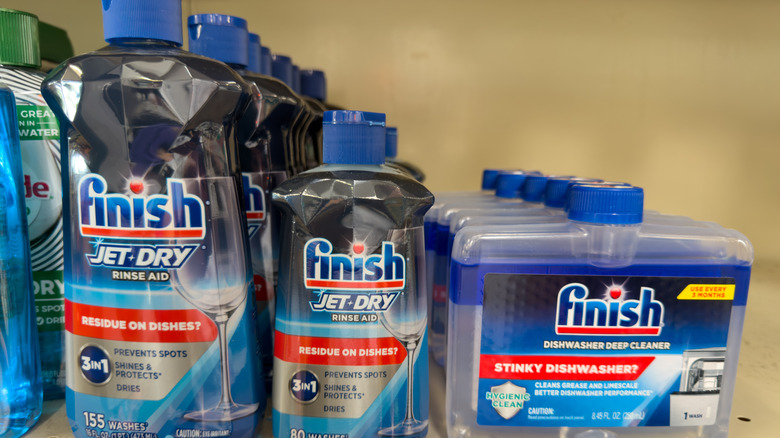
Rinse aid is pretty easy to use in your dishwasher. Just about every dishwasher has a rinse aid dispenser you can fill. It typically lasts for about a month before it needs to be refilled, depending on how often you do your dishes. So, with a dishwasher, the process is simple and hands-off once you've filled the dispenser. But you can also use it if you hand wash your dishes.
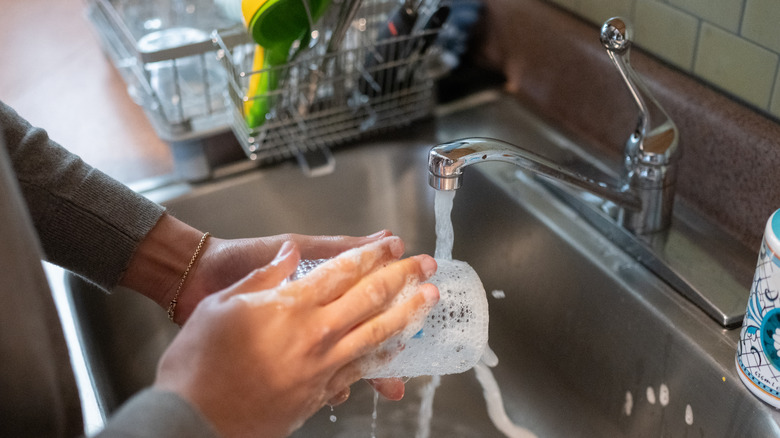
The best way to use a rinse aid for hand washing your dishes is to have a double sink setup. Use one sink for washing and set up the other as a rinse tub. Put the plug in, then fill it with water and a couple of drops of rinse aid. Once you finish washing the dish, give it a dip in your rinse sink and then put it on the drying rack. If you only have one sink, then you can use a large basin or Tupperware container for the same effect.
Make sure you don't use too much rinse aid because it can start having a negative effect. Instead of those white mineral spots on your dishes, you might notice a rainbow sheen. Make sure you're filling the dispenser only up to the fill line in your dishwasher. If you are noticing the rainbow streaks or your dishes still have white residue, you could adjust the amount you use up or down until you get it right.