

Why Induction Stoves Are Set To Dominate 2026 Kitchen Trends

Technology is constantly upending what home cooking looks like, and as we move into 2026, the breakout kitchen trend is looking like induction stoves. While electric versus gas stoves has long been the debate, gas was considered the ideal by many home cooks for decades, due to its superior temperature control. However, induction stoves have upended that traditional thinking in recent years. While the technology has been around for a while, it hadn't caught on, partially due to cost and partially due to confusion over how induction stoves actually work. But the technology behind induction stoves has been improving rapidly, making them more functional and lowering the cost. And now they have hit the sweet spot where they should be on the verge of breaking through into the mainstream, and experts expect them to become the most popular type of stove in the coming years.
The biggest factor that is driving the new trend towards induction stoves is that customers are waking up to the many ways they are simply better than gas stoves. From a cook's perspective induction stoves heat up pans more rapidly than both gas and traditional electric stoves, and they also heat pans more evenly. They are so powerful that they can boil water up to four minutes faster than gas or electric. Induction stoves also have more precise temperature controls as well, making it easier to avoid burning or overcooking food. And even with that power induction stoves are more energy efficient and environmentally friendly.
How inductions stoves actually work
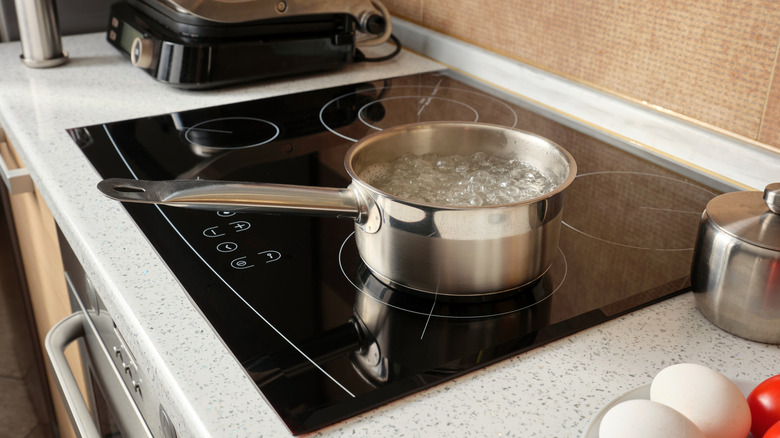
How does induction achieve these results? It works through the process of electromagnetism, which directly heats pots and pans on the stove. Essentially induction stoves use electricity to create a magnetic field. That magnetic field interacts with the metal in pots and pans, creating a new electric current directly in the metal, which heats it. This is different than traditional electric stoves and gas because those create heat outside pans, which then warm up the pans indirectly. But with induction the pans themselves become the source of heat. That is why they can get so hot and change temperature so quickly.
This is also why induction stoves are more energy efficient. Because they use electricity to heat the pot directly, 90% of the energy becomes heat. By contrast, electric and gas stoves lose much of their heat to the room and air instead of your food. Electric is more efficient, with 75% of the energy transferring to food, while gas only hits 40% efficiency. And with gas, much of that is lost to the air, which degrades air quality in your home. In fact, they leak methane even when not on. So induction is good for your wallet in using less energy, good for your health, and good for the environment. Gas is actually so inefficient that many states have started banning gas in new construction, which is accelerating the adoption of induction stoves.
The advantages of induction stoves
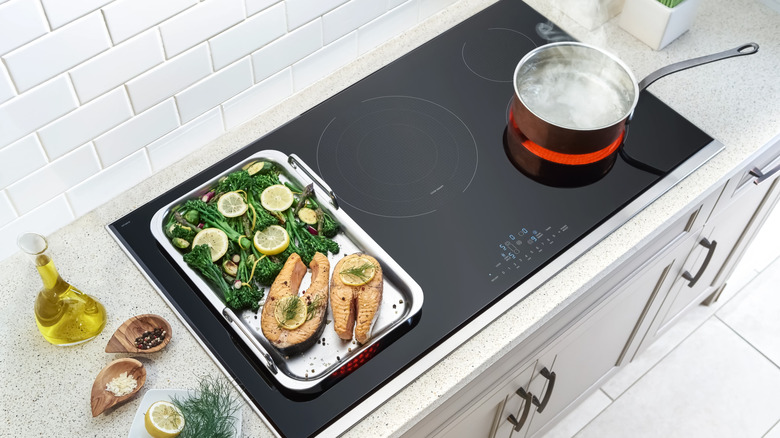
Even if a product is better in many ways, old habits can die hard, and it takes time for the culture around a product like induction stoves to change. Many people who love to cook associate gas with a more professional style of cooking, but chefs themselves are increasingly adopting induction stoves, and that influence is starting to trickle down to home cooks. It's gotten to the point where even some Michelin-starred restaurants are switching to them. And with how closely people follow kitchen trends, when something like that happens, everyone from influencers to interior designers take note.
The one main downside of induction stoves compared to gas remains price, as the lower end models for induction are still around $1,000, which is almost twice the cost of entry-level electric and gas stoves. However, this is still a significant reduction in price compared to where they were, and with the savings on energy use, induction stoves may be no more expensive over time. And while a higher cost is an issue, many home cooks may consider an extra $500 a small price to pay for the many advantages of induction stoves.
There may be a small learning curve with this advancing technology, and induction stove mistakes you'll need to learn to avoid, but induction stoves look like the stove of the future. And in 2026, the future may already be here.