

Why This Vegetable Tackles Burnt Food In Your Pots And Pans
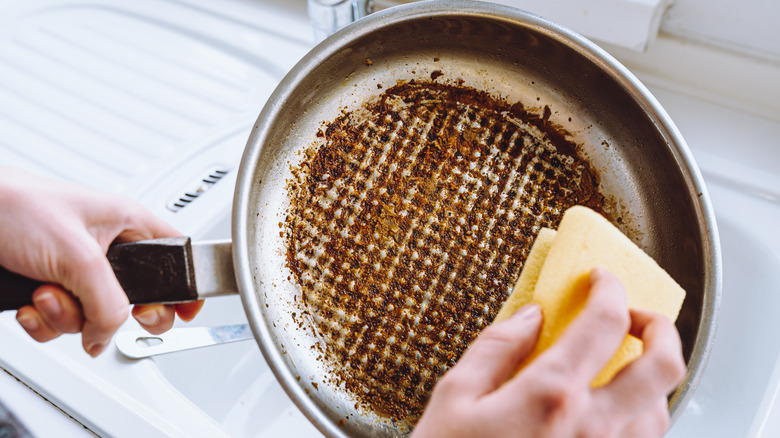
Sooner or later, you're going to experience burnt food residue in your pots and pans. It's all but inevitable for any cook. Brand new, nonstick surfaces are usually pretty forgiving, and you can clean them easily. But if you're using an older pan, maybe a stainless steel that's been around the block a few times, you'll have to put some elbow grease into scrubbing it clean every now and then. Usually that involves soaking it, using the scrubby side of your sponge, or coming up with some novel cleaning solutions. But have you ever tried using rhubarb? It might be the solution you're looking for.
The secret to cleaning burned-on messes with rhubarb is to chop the stalks into pieces, place them in the dirty pot or pan, and boil them in water for 10 to 30 minutes, depending on the pot's size and how full it is. Your goal is to reduce the rhubarb and burnt residue down into a thick, gluey sludge. Watch the pot as it boils to keep an eye on its progress. If you have a lot of carbonized mess to clean up or didn't use enough water, your pot could boil dry — and you'd don't want that. Once you see that the burnt residue has come loose, you should be able to rinse the pot and give it a quick wipe down. A final wash to remove any remaining rhubarb and residue should leave it as good as new. Sounds remarkably simple, right? The secret is oxalic acid.
It's not too hard with rhubarb

Rhubarb is rich in oxalic acid, just like potatoes (which are perfect for cleaning cast iron). Oxalic acid is much stronger than the acetic acid found in vinegar. This is the same substance found in heavy-duty cleaners like Bar Keepers Friend. It's used in industrial rust cleaning products because it works by breaking chemical bonds at a molecular level, turning that stubborn residue into a water-soluble salt that rinses off.
It's an ideal cleaning solution for certain jobs because it's not abrasive like steel wool or baking soda nor does it use harsh chemicals like bleach. It's still important to follow certain safety protocols, however, because this is an acidic solution. Of course, you're boiling rhubarb, so obviously you're not going to be getting your hands in there. Once the boiling process is done and you rinse the pot, there should be very little residue, so gloves are unnecessary unless you normally use them to wash dishes.
Rhubarb is safe to use on most surfaces including stainless steel and ceramic. Oxalic acid can potentially damage some surfaces, such as wood and enameled steel, but a diluted solution like the one produced by rhubarb should not cause issues if it is rinsed thoroughly after cleaning. Nonstick coatings can also be damaged by prolonged exposure to acid, so avoid trying to clean a non-stick pan with rhubarb. Next time you have some handy, try a few of these rhubarb recipes to make something delicious. Then use the leftover bits to clean the pot when you're done. That's just efficient cooking.