

The Unspoken Parmesan Cheese Rule You Should Follow When Dining In Italy

Famous for its Mediterranean diet, fresh veggies, olive oils, cheeses, loads of pasta, and so much more, dining is one of the best reasons to visit Italy. Pleasant surprises consistently land on piled-high plates, all the more reason to "mangia" your way across the country — from the many wines of Tuscany to the bountiful seafood in Sicily, the fresh basil pesto pasta in Liguria, and the pizza al taglio in Rome. Then there's the universally embraced Parmigiano Reggiano produced in regions such as Parma, Reggio Emilia, Modena, Mantua, and Bologna. Versions of this cheese in the U.S. are known as simply "Parmesan."
When dining in Italy, there's an unspoken rule about Parmesan that may catch you off guard: Don't request added grated cheese to seafood dishes – especially pasta with fish or shellfish, such as linguine and clams. Asking for Parmigiano in this scenario is widely considered a faux pas. The reasoning is that the intensity of long-aged cheeses, including Parmigiano, tend to overpower the subtler taste profiles of fish and shellfish. That's because fermentation, aging, and moisture evaporation cause these cheeses to develop concentrated, complex flavors and rich, dense texture.
The no-no of Parmesan with seafood isn't necessarily a hard-and-fast rule in other countries — but it's very much engrained in the culinary culture of Italy. So "when in Rome," as the saying goes, or in other parts of Italy, you'll have a much better dining experience when honoring local traditions. Italy is revered for its magnificent food, so by all means, resist the urge to change it.
Italian Parmesan is more intense and flavorful
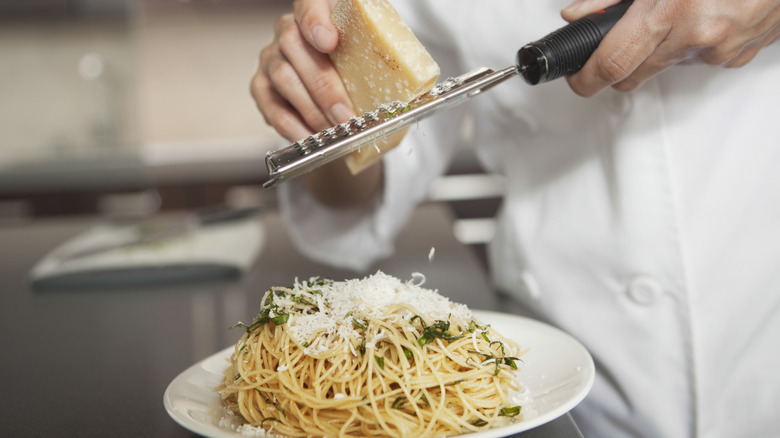
Aside from the seafood and Parmesan taboo, there's another aspect to consider when pairing Parmesan and Italian cuisine. Parmigiano Reggiano comes from specific PDO (protected designation of origin) regions and is regulated for authenticity based on both place and method — so it's widely considered superior to the versions available in America. As noted by Elettra Pauletto in their round-up of eight unspoken rules when dining in Italy, it's never going to taste the same as fresh Parmesan from an Italian market. In some cases, it's not even the same product due to additives like emulsifiers, which are commonly added to pre-grated Parmesan to avoid cheese clumping.
The basic qualities the U.S. looks for when labelling Parmesan are not the same, and there's a notable difference between American and Italian Parmesan cheeses. When eating at a restaurant in Italy, the increased intensity and flavor of real-deal Parmigiano means that you'll rarely, if ever, need to request more of it on your food — regardless of what's being served. So, as Pauletto put it: "Lay off the Parmesan." Otherwise, you might get a few raised eyebrows. The exception could be when eating heavier dishes and sauces, such as meat-based meals and bolognese or ragù sauces — but even then, go easy, considering the pure, unadulterated persona of true Italian Parmigiano Reggiano.