

The Common Appliance Mistake That Will Ruin Your Kitchen Cabinets
We may receive a commission on purchases made from links.
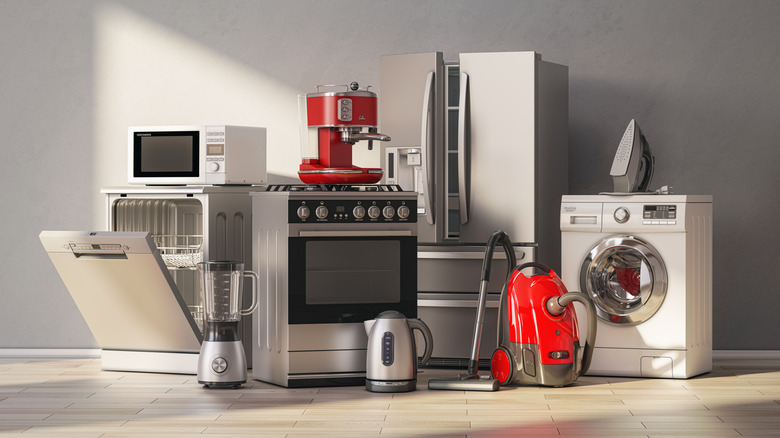
Purchasing a brand new kitchen appliance can be a daunting task. There are more than a dozen mistakes to avoid – from not measuring the space correctly to ignoring energy efficiency labels. But one of the worst mistakes you can make is flushing your kitchen appliances with your cabinets. While it's satisfying to see your brand new dishwasher fit just right, it's actually better for the space above it to be on the wider side so the vent is exposed. Otherwise, you'll be dealing with steam and heat damage issues for years to come.
Larger appliances are some of the biggest culprits for this all-too-common problem. Some built-in fridges are extremely prone to causing heat damage, since they require a venting panel. If the panel isn't properly installed, or it's forgotten altogether, the cabinets that sit above it are likely to be damaged. Aside from being considered an outdated microwave placement in design, over-the-range microwaves have vents that aim upwards, meaning all of the beautiful cabinetry above is likely to endure a bit of steam damage every time the microwave is opened.
Although this issue is quite common with major appliances, countertop appliances like air fryers, slow cookers, toaster ovens, and even coffee makers are arguably even more of a risk. That's because the steam or heat damage from these appliances is likely to happen to the space underneath your cabinets, meaning you might not even notice it until it's too late. Depending on the material your cabinets are made of, you could be dealing with expensive issues, like mold and mildew, corrosion, warping, discoloration, cracking, and even melting.
Avoid the mistake before it's too late
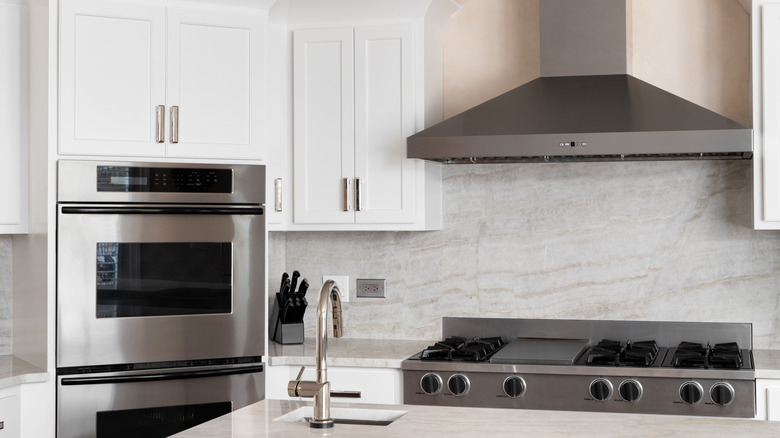
Luckily, steam and heat damage isn't an inevitable issue if you're extra cautious when bringing new major and countertop appliances into your kitchen — and there are a few things you can always double-check. Of course, reading appliance manuals and following building code requirements are the main precautions you can take, especially if you're installing something that generates heat and steam. If your appliance's vents are placed in an appropriate place, you should be in the clear. Just don't rush the process, and don't be afraid to hire an expert.
Another essential tip requires just the click of a button, literally: Every time you cook, be sure to turn on your range hood so as much heat and moisture is exhausted as possible. Your range hood is there for a reason, after all — and it plays more of a role than you might expect, so don't just use it when your cooking gets smelly. Kitchen ventilation is extremely important when cooking for more reasons than one, and for extra insurance, you can open up your windows when cooking to prevent even more moisture and steam from building and damaging your cabinetry.
If you're especially anxious about steam and heat damage, you can always install additional protection to your cabinets. Some cabinet heat shields, like the Amerbo Heat Shield Automotive Aluminum adhesive, are ridiculously easy to install between cabinets and ranges or cooktops and require no special skills. For under-the-cabinet steam, a mini dehumidifier like the Eva-Dry Wireless Mini Dehumidifier can also be placed on your countertops. These precautions aren't absolutely necessary, but they might be worth it for extra peace-of-mind in the kitchen.