

Why Adding Vinegar To Your Pot Roast Changes Everything
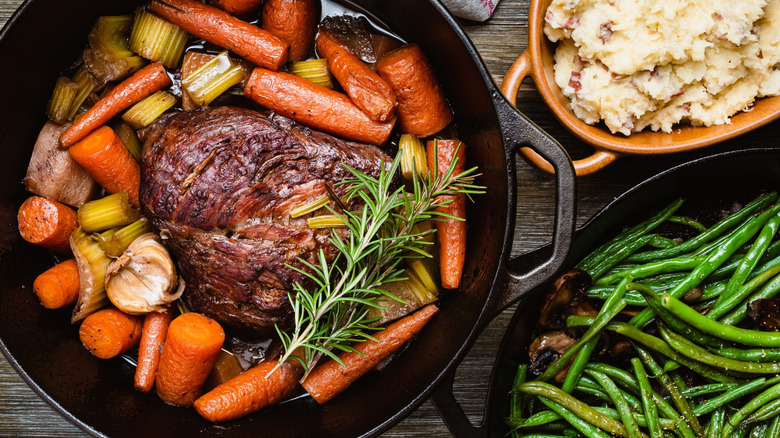
There are moments in cooking where a simple addition changes your whole perspective on an ingredient — and a few dashes of vinegar with pot roast will be one of them. It can seem hyperbolic to attribute so much transformation to one simple pantry staple, but for slow-cooked, saucy meals like pot roast, the hype is real. That's because over long periods of cooking, flavors tend to dull even if the final result is still tasty. Acidic ingredients like vinegar are an easy fix that counteracts that, and wakes up all those ingredients you spent hours melding.
There are two things vinegar will do for your pot roast: brighten and balance In a way somewhat similar to salt, acidic ingredients help stimulate your taste buds and make everything else taste better. This is what cooks mean when they talk about vinegar, or lemon juice, or any other sour ingredient "waking up" flavors. Even if you can't taste the vinegar itself, a small amount of it added to a nice pot roast recipe at the end of cooking will make tastes that have mellowed in the pot pop more in your mouth. Acids also stimulate salivation, which will give your pot roast a more luscious, rich mouthfeel.
So sample your pot roast when it's done, add just a teaspoon or two of wine, balsamic, cider, sherry or any other type of vinegar, and then taste the transformation that just took place. If you haven't tried it before, the first time is often the most surprising.
Vinegars balance and brighten the slow-cooked savory flavors of pot roast

While vinegar can enhance flavors, it also balances them out. In any dish, a dash of vinegar is a great way to counteract recipes that ended up too sweet, too bitter, or even too salty. It's a force that brings everything into harmony and makes the eating experience more satisfying — and that balance is extra welcome with a pot roast. Most pot roast recipes are lacking in acid, usually being high in fatty rich flavors and meaty, savory umami ones. The sour acid in vinegar cuts against that, which makes the dish taste more balanced.
The balance that vinegar brings can also be another way of highlighting the savory flavors more — because, much like how sweet-salty combos, they stand out more against the contrast of the vinegar. Vinegar itself is also a source of flavor. Different types of vinegar are made by fermenting and aging all kinds of liquids with sugar in them. That process gives vinegar extremely complex flavors, and adding that to a pot roast will only make it more mouth-watering without distracting from the meatiness.
If sweetness is what you're after, balsamic will provide, while red or white wine vinegar will give your roast that robust tang. Apple cider vinegar and sherry are other alternatives that will add depth and brightness to your roast. Whichever you choose, vinegar really is one of the most powerful tools in your kitchen — and pot roast was made for it.