

Avoid Putting This Type Of Fruit On Your Charcuterie Board At All Costs
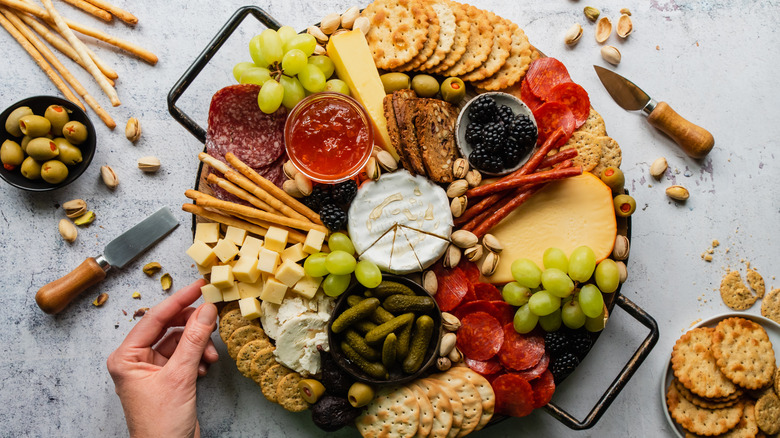
Charcuterie arrangements always spark drama whenever they come up. Everyone has a cheese brand that they're insistent is "must-have," while also dwelling on the precise thickness of meat slices and the specific type of cracker. However, there's one thing that can unite every enthusiast in horror at the mere thought of appearing on a board: juicy fruits, like watermelon. They have good reasons to be scared — these moist foods can spell doom for a good charcuterie board the moment you put them on.
When you place high-moisture fruits like watermelon, fresh pineapple chunks, or overly ripe peaches on your board, they begin releasing liquid almost immediately, which spells trouble for all your other ingredients. Your carefully selected aged cheddar becomes soggy. That premium prosciutto? It starts absorbing the fruity liquid. The crackers lose their crispness. What began as an elegant presentation quickly transforms into a disappointing, mushy mess.
It's not just texture either. Fruit liquid creates muddy bleed-through that destroys your careful composition. What was sharp visual contrast becomes a blurry, unappetizing mess. Guests start avoiding certain sections entirely. You're left frantically dabbing at moisture with paper towels while trying to maintain conversation. So skip the juice bombs entirely — your board will thank you.
How to build a better, non-soggy board
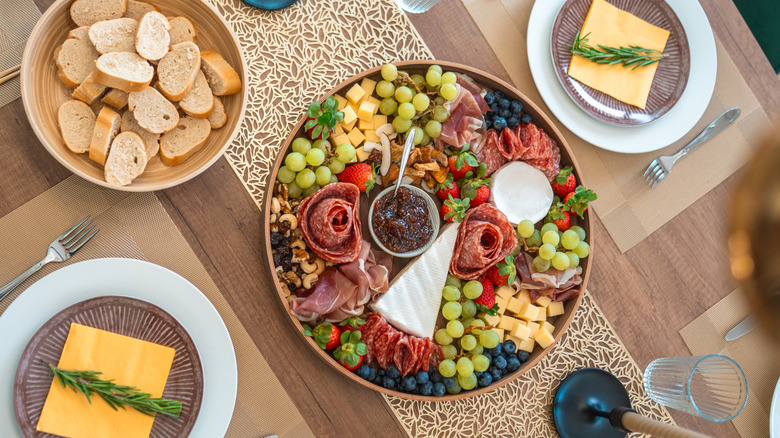
If you've been browsing charcuterie arrangements for some time, you'll notice that the same fruits will appear again and again from one "recipe" to another: apples, pears, grapes, berries, and so on. They're all crisp, hold their shape, and offer mild sweetness that complements the cheeses and cold cuts on the board — all without complicating your arrangement with their juices.
Don't overlook dried fruits either — think figs, apricots, and cherries. Other than being juice-free, their concentrated sweetness and chewy texture can make the flavors of your salty meats and tangy cheeses pop. The best part? They're completely stress-free — slice them up hours ahead without worrying about browning or moisture issues. Want tropical flavors? Swap in dried mango or pineapple instead.
Once you've picked your fruits, scatter them throughout the board, filling in spaces around the cheeses and meats. You'll want to use them to fill in gaps and "prettify" your board as visual elements. The goal is creating a spread that looks as impressive at the end of your event as it did when you first presented it — and choosing the right fruits makes all the difference.