

One Of The Biggest Red Flags To Watch Out For When Buying Frozen Shrimp
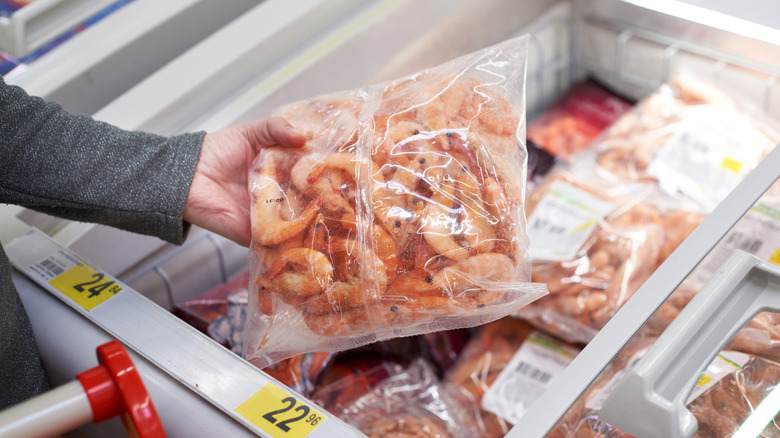
Very little can go wrong when you're buying frozen shrimp, or so we think. There's still a chance they could have been mishandled one way or another, and it doesn't always show in glaring signs. It's the subtle red flags we should be looking for, and the easiest one to spot is ice crystals. What appears to be a natural occurrence in frozen food might just be one of the reasons your shrimp recipes don't taste as good as they should.
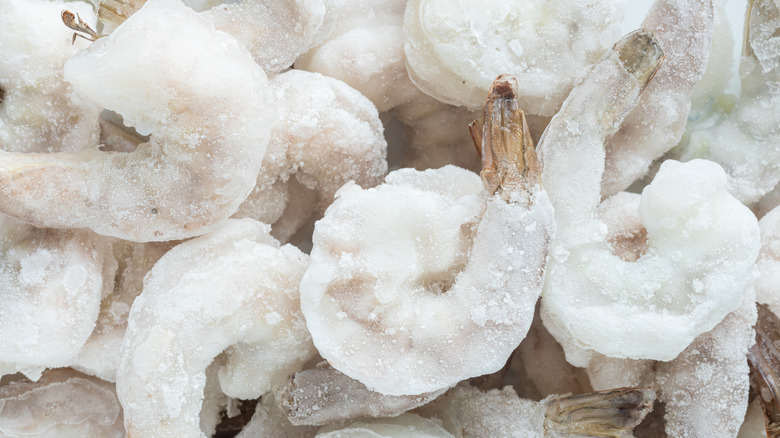
We're not just talking about the regular thin frost layer you often spot on frozen shrimp. What you should be wary of are clumpy chunks of ice crystals, usually gathering in a much larger amount than typical. Normally, this is avoided thanks to the IQF (Individually Quick Frozen) technology, in which the shrimp are flash-frozen individually to keep from sticking to each other and prevent freezer-burn. The large ice crystals indicate that the shrimp had subsequently been thawed and refrozen after they had been packaged, most likely due to inconsistent, temperature-fluctuating storage and transport conditions.
In case you are wondering, no, those ice crystals do not make the shrimp inedible. They will, however, strip away the fresh flavor you often seek in this seafood. The texture will also be affected as the shrimp becomes drier and less plump due to moisture loss. Worst-case scenario, the brief thawing period enables bacteria to grow and accelerates the spoilage process.
Other red flags you should be cautious of
Ice crystals are only one of the many common mistakes to avoid when using frozen shrimp, cooked or otherwise. Increase your chances of avoiding them by strictly sticking to IQF shrimp rather than opting for block-frozen shrimp. Although more affordable, the latter are more suitable for large-scale cooking, whereas IQF shrimp's high-quality taste and texture make for much better home-cooked meals.
While you're checking the labels, make sure to also see if the frozen shrimp brands use sodium bisulfite or sodium tripolyphosphate (STPP) to preserve the shrimp's fresh exterior. Safe as they may be in small amounts, these chemicals can affect the shrimp once cooked, likely leaving them with a soggy texture and translucent colors. Hypothetically, you could remove them by defrosting the shrimp in cold water, but it's much easier to check for these ingredients at the beginning.
As for the shrimp's own telltale signs of spoilage or lack of freshness, the first one to avoid is the pungent, ammonia-like odor, as well as slimy liquid coating the entirety of the bag or the shrimp. These are some of the most obvious ways to tell if shrimp has gone bad. Moreover, the shrimp should not be discolored, murky, or greyed out, possibly as a result of freezer burn. Instead, they should be clear with a light sheen.