

The Kitchen Tool You Should Avoid Putting In Your Dishwasher At All Costs
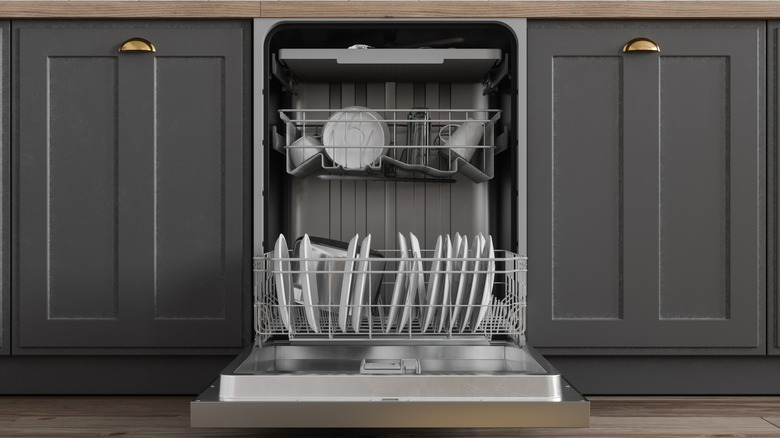
Dishwashers are a modern marvel, saving us so much time in our daily routines. But even the almighty dishwasher has its limits, and respecting those limits actually helps prolong its life and effectiveness. For all the kitchen tools you didn't realize actually can go into the dishwasher, there are several things that are hand-wash-only territory. One of the key items you should never put in your dishwasher is a grater. Not only can it damage your dishwasher long-term, but it's also got a unique design that many dishwashers may not be able to completely clean, potentially causing a safety risk.
Addressing that potential damage factor first, it can, in fact, be mutual. Graters are gonna' grate — the sharp scallops that so deftly shower cheese or garlic onto your dishes can also eat away at the coating of your dishwasher's racks. In turn, the hot temperatures and soapy detergents in the dishwasher can dull those scallops over time and cause rust. Then there's the issue of whether your dishwasher is up to the task of getting into the teeny, tiny crevices of a grater; some are, some aren't. It all has to do with the pressure and precision of the appliance's jet streams. If they're not strong enough, your grater could accumulate build-up from whatever you use it on, build-up you may not even notice for a while because it's so small. That can create a bacterial breeding ground and continue to pass that bacteria onto future items you grate.
How to clean graters instead
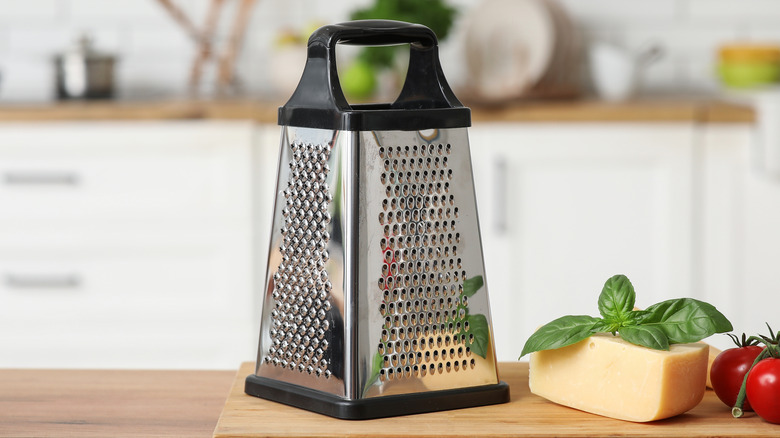
Remembering essential dishwasher-loading tips is crucial to prolong the life of your dishwasher and kitchenware while ensuring everything that touches your food is 100% clean, safe, and bacteria-free. It even plays a role in avoiding more immediate safety risks like possibly getting cut by a grater that's shifted position in a dishwasher's cycle. All these reasons are why certain items, from knives to wooden utensils, should never enter the dishwasher.
When it comes to a tricky item like a grater, though, how can you wash it then? Graters may seem like a pain to clean until you learn the simple solution of soaking them. Do this right after you use yours, employing warm, soapy water. You can even let it sit overnight. This loosens food particles, so it's a snap to scrub them off. Whether you remember to do this soak or not, grater-scrubbing is one of the genius kitchen-cleaning hacks you can do with lemon. Simply scrub a halved lemon over the blades and watch as the fruit's acid tears into food bits — they'll fall off, and then you just need to rinse off the lemon juice. If the residue on your grater is particularly tough, try sprinkling the lemon with salt first for some abrasiveness.
Speaking of abrasiveness and cheap, easy, chemical-free cleaning hacks, baking soda can also work its magic on your grater. Soak the grater in a vinegar-and-baking-soda mixture, or use a baking-soda-and-water paste to scrub it. After you soak, scrub, and rinse, always completely dry graters to prevent rust.