

The Common Storage Mistake Too Many People Make With Frozen Veggies
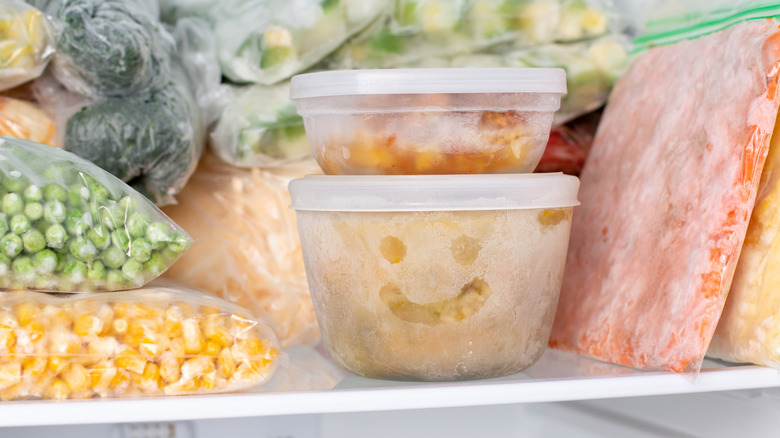
Keeping frozen vegetables on hand makes it easy to add a bit of nutrition to your meal, and it's a must for anyone guilty of letting fresh produce linger too long in the fridge. But while the freezer is the best place for long term storage, it's a mistake to think it will keep your vegetables fresh indefinitely.
In theory, food that has been preserved at below freezing temperatures will be safe to eat for years, but this doesn't mean you will want to. For optimal texture and taste, most vegetables keep for about one year, but some only last as little as three months. Starchy vegetables such as carrots or broccoli freeze particularly well, but those with higher moisture content (such as tomatoes or peppers) will have a shorter freezer life.
Over time, the freezing process draws moisture out of food, leading to ice crystals on the surface, which we identify as freezer burn. It's not so much the ice that is the issue, but the loss of moisture on the inside that irreparably changes the food's texture. Temperature fluctuations in the freezer can also cause these ice crystals to evaporate, leaving the surface of the food exposed to oxygen, speeding up the rate of deterioration.
Freezer burned food won't make you sick, but it can create dry leathery patches on the outside, a woody texture inside, and musty flavors. These dry textures can't be rectified even with cooking and rehydration, so vegetables that have reached this point are best thrown away.
Tips for the best tasting frozen vegetables
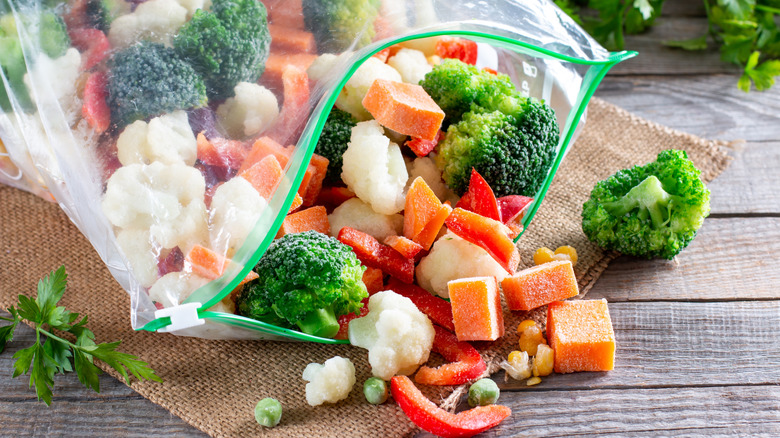
Maintaining the best taste and texture with your frozen vegetables relies on correct preparation as well as storage. Vegetables should be washed to remove any dirt or bacteria, then cut into evenly sized pieces, unless you plan to use them whole.
The most important step for home freezing however is blanching. Blanching not only kills microorganisms but also halts the enzymes in vegetables that are responsible for ripening and eventually decay. Dry thoroughly then freeze quickly by spreading in a single layer on baking sheets. Faster freezing means smaller ice crystals, and less damage to the texture of the vegetable. Once completely frozen, the vegetables can be transferred to zip top freezer bags. Don't forget to label frozen vegetables with the date; it's a small but important step that will help you to get through your stash while they still taste good.
Vegetables with a high-water content such as lettuce or cucumbers aren't particularly suitable for freezing. As well as being more prone to freezer burn, they will have a mushy texture once thawed. Tomatoes can survive the process well if they are pureed first.
When to comes to store-bought frozen vegetables, consider buying bagged rather than boxed, as half-empty boxes will allow airflow around the vegetables. Most importantly, pay attention to the use by date. This tells you how long the vegetables will remain at the ideal level of freshness based on the manufacturer's preparation methods.