

9 Mistakes Everyone Makes When Using A Dutch Oven

There are few kitchen tools more essential than a Dutch oven. They're heavy duty pots made of cast iron. Although you can find Dutch ovens that are just bare cast iron, most Dutch ovens you'll see in stores or online, like those from Lodge or Le Creuset have an enamel coating, which means that you don't have to season the cast iron. This makes them easier to care for than some other types of cookware.
One of the things we love most about Dutch ovens is the fact that they're just so versatile. Dutch ovens are perfect for braising, making stew, deep frying, and even baking casseroles, meaning that this is a kitchen tool you'll probably use quite often. But even though Dutch ovens seem relatively straightforward, it's still possible to make mistakes with them, either during the cooking or the cleaning process.
That's why we spoke to Dutch oven experts Rena Awada, owner, head chef, food blogger, and content creator at Healthy Fitness Meals, and Francesca Montillo, culinary instructor, cookbook author, and leader of Italian culinary tours through her business, Lazy Italian Culinary Adventures. These experts helped us get a better sense of the Dutch oven mistakes you'll want to avoid, where they come from, and why. Plus, what to do instead.
Preheating an empty enameled Dutch oven
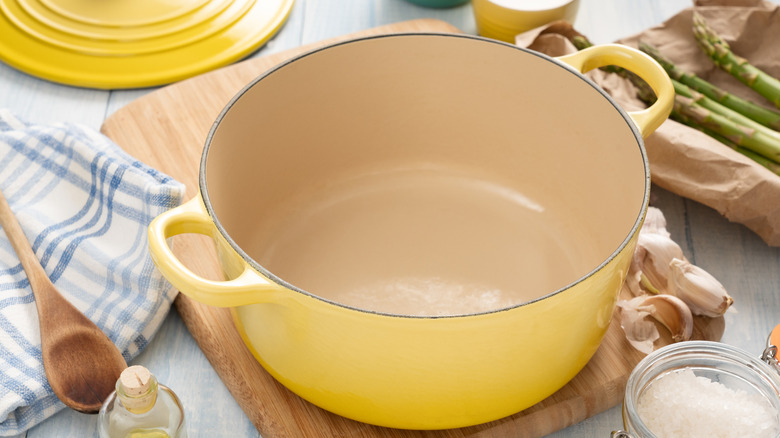
Generally speaking, you're going to want to preheat your Dutch oven before you start cooking in it. But according to Francesca Montillo, preheating an empty enameled Dutch oven is a big mistake. Doing so can actually cause the enamel to crack, which can ruin your pan. Luckily, the solution isn't difficult to implement. Per Montillo, you should "always preheat with oil or ingredients inside, and use medium or medium-low heat to protect the enamel." The enamel is there to ensure that food won't stick to the bottom of the pan too much, so you definitely don't want it to crack.
Since this mistake is a problem because it causes the enamel to crack, you don't have to worry about taking this extra step if you have a non-enameled Dutch oven. Those can be preheated while they're empty, even without any oil. This can be a good option if you're baking bread specifically.
Raising the heat too high
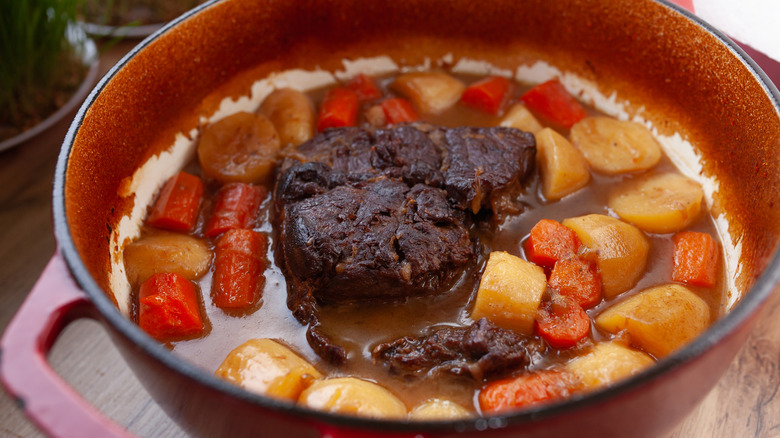
If you're used to searing or frying foods in pots or pans made of carbon steel or cast iron, then you might often be used to turning the heat up fairly high on your burner. This is a solid method to use with some types of pans, but it doesn't really work with Dutch ovens. In fact, says Rena Awada of Healthy Fitness Meals, it's a common mistake that home cooks make with Dutch ovens.
"These pots are made of heavy materials that hold heat and distribute it evenly throughout the pot," she explains. "Therefore, it is best to use medium to low heat settings." Yes, this may increase the amount of time you have to spend on certain recipes, but it's important to maintaining your Dutch oven in good condition.
So, what will happen if you do happen to turn up the heat on your Dutch oven? As, with failing to preheat , you can expect higher heat to burn your food, or, potentially damage the enamel coating. Considering how expensive some Dutch ovens can be, we think it's really not worth it to take the risk.
Using metal utensils in your Dutch oven
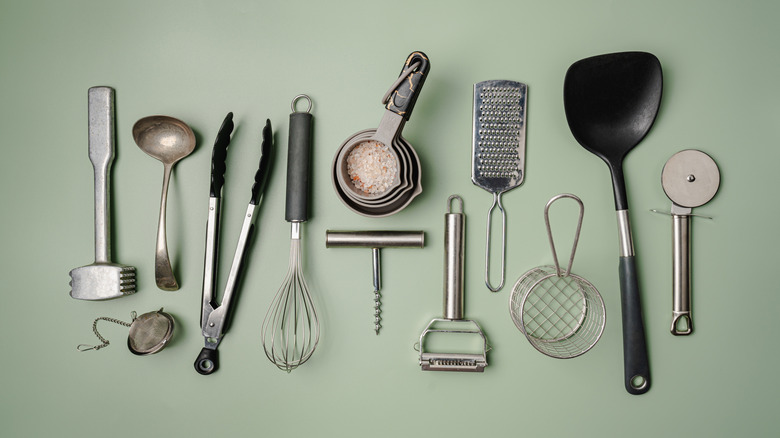
Recently, we learned that it can be dangerous to use plastic cooking utensils — especially the black plastic variety that's seemingly ubiquitous in kitchens across the country. Doing so may introduce toxins into your food, and that certainly has some other effects beyond sounding unappetizing. That may make you assume that metal cooking utensils are always a better option. While metal utensils can be useful in some contexts, they're generally not appropriate for using in Dutch ovens. According to Francesca Montillo, it's a mistake to scrape the enamel of your Dutch oven with metal tools.
Luckily, there are plenty of other kitchen utensil materials to choose from. Montillo suggests "wood, silicone, or heat-safe nylon utensils." Just keep in mind that some materials, like silicone, may not be able to stand too much super-high heat, so either don't keep the utensil in your cooking food for very long or opt for natural wood utensils instead. Your Dutch oven will thank you for it.
Overcrowding the pot
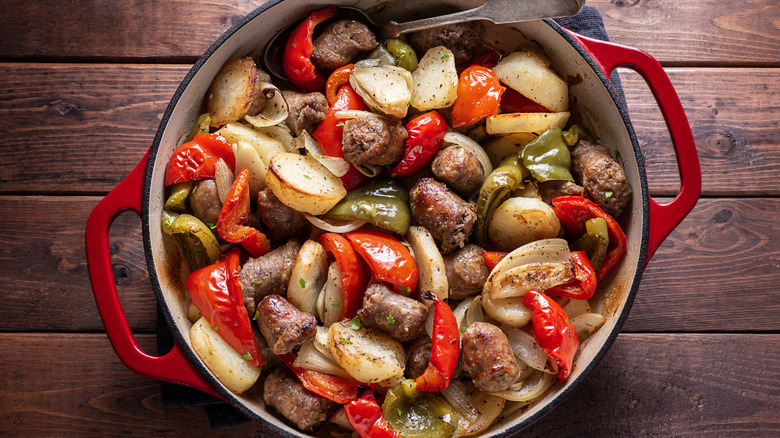
Depending on what you plan on making in your Dutch oven, you may have to think about the woes of overcrowding your pot. This isn't an issue if you're making a basic soup or sauteing some veggies for a quick lunch. But if you need anything to get a nice sear on it (in other words, you want the Maillard reaction to take place), you're going to be really careful about overcrowding your Dutch oven. "Overcrowding the pot, particularly when searing meat, is another frequent mistake," claims Rena Awada.
If everything is going to end up in the pan anyway, you may not immediately understand what the big deal is when it comes to avoiding overcrowding. But, per Awada, doing so "limits the amount of surface area that is heated, causing the food to steam, not brown. This is why it is important to sear in batches." Unless your meat, tofu, or whatever else you're making to get all wet and soggy, make sure to give your ingredients enough space for one another in the pan. This, says Awada, will allow them to "develop a proper crust."
Assuming that your Dutch oven is nonstick
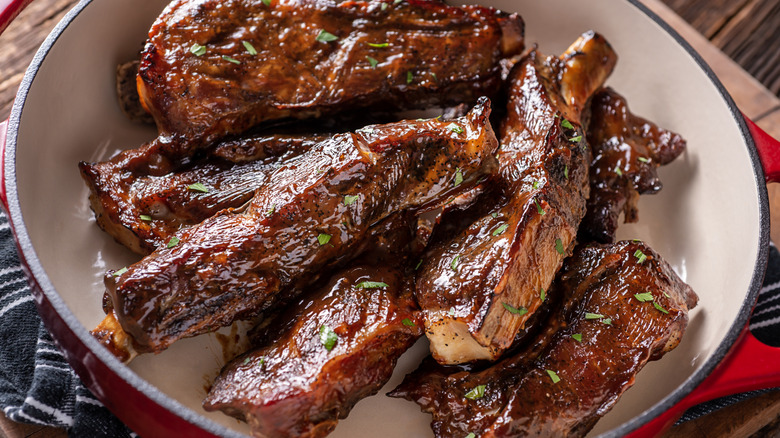
Go to the kitchen section of a home goods store these days, and you'll probably find a wide variety of nonstick pans from which to choose. These pans are often inexpensive, and they do in fact prevent sticking well — you won't have to use a ton of oil to prevent stuff from attaching itself to the bottom of your pan. But it's important to keep in mind that, despite the popularity of nonstick products, a Dutch oven is not nonstick itself. Assuming that it is, though, is a common mistake that people make with Dutch ovens, says Francesca Montillo.
That doesn't mean you're destined to have a smoky kitchen or a huge clean-up operation after every time you use your Dutch oven. You just have to figure out how to prevent sticking naturally. Per Montillo, you should, "Preheat properly, use enough fat, and allow food to release naturally before moving it." Another tip to prevent sticking? Make sure to pat your meat and vegetables dry before adding them to the pan.
Not utilizing the lid of your Dutch oven properly
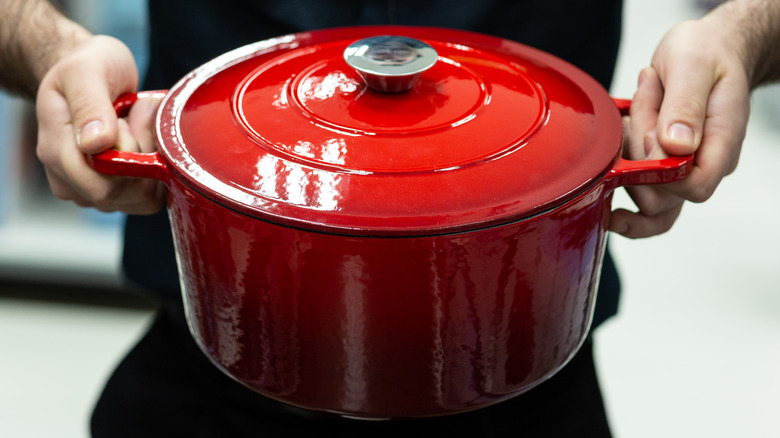
Up until this point, we've mainly covered the bottom part of your Dutch oven. But what about your lid? Knowing how to handle the lid is just as important as understanding how to treat the rest of the pan. And one major mistake that home cooks make with their Dutch ovens, says Rena Awada, is not understanding how to use the lid the right way.
"When closed tightly," Awada explains, "the lid serves the important function of trapping moisture and forming a self-basting chamber, ideal for braising and stewing." If you're cooking a dish that calls for a lot of liquid, trapping that moisture is exactly what you want to do. "Leaving the lid off or failing to close it can cause other dishes to dry out," says Awada. "See to it that the lid is the correct size and that no gaps are present to seal in moisture and flavor."
That being said, you won't need to use the lid of your Dutch oven for everything. If you're trying to achieve a crispy or crunchy texture, you'll usually want to keep the lid off of the pot.
Cleaning it in the dishwasher
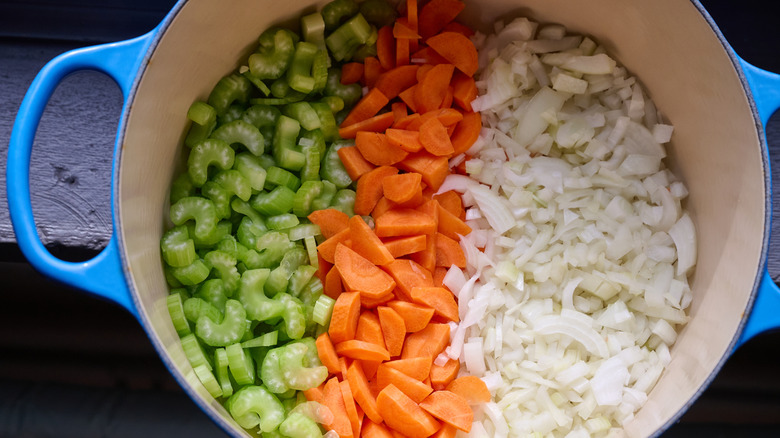
Using a dishwasher can save you a ton of time and energy, especially after you cook a recipe that requires the use of several pots and pans. A variety of different types of cookware can go in your dishwasher. Stainless steel, glass, and ceramic are all fine in the dishwasher, for example. But there are some types of cookware that don't belong in the dishwasher, and your Dutch oven is one of them.
"Treating [your Dutch oven] like everyday cookware" is a big mistake, says Francesca Montillo. Cleaning a Dutch oven in the dishwasher can cause the enamel to dull over time. If you want to keep your pan in pristine condition, it's better to just do that cleaning in the kitchen sink. Per Montillo, you should "hand wash with mild soap" and "remove stains by simmering baking soda and water." Doing dishes by hand isn't particularly fun, but at least you can rest easy knowing that your Dutch oven isn't getting damaged in the washing process.
Not realizing how heavy it is before you pick it up
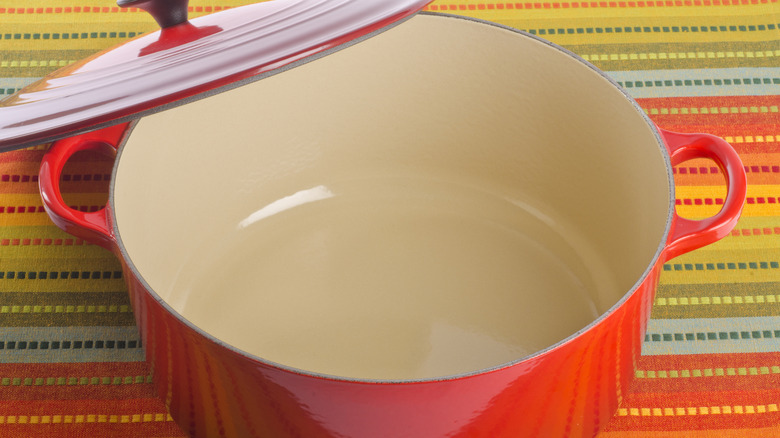
If you've never worked with a Dutch oven before, you may think that it looks like every other pot or pan out there. Once you pick one up, though, you'll suddenly remember that these kitchen tools are made out of cast iron, making them super heavy. A five and a half quart Dutch oven from Le Creuset, for example, weighs in at over 11 pounds. That can make it really unwieldy to work with, especially if you don't have a ton of arm strength.
When you're new to working with a Dutch oven, it's a good rule of thumb to keep in mind how heavy this piece of kitchen equipment is. After all, the last thing you want to do is pick up a steaming hot pot full of soup or stew only to drop it because it weighs way more than you were expecting. If you can't easily pick up your Dutch oven by yourself, make sure to ask for help whenever you're trying to move it, particularly when it's still hot.
Forgetting that you can use it in the oven too
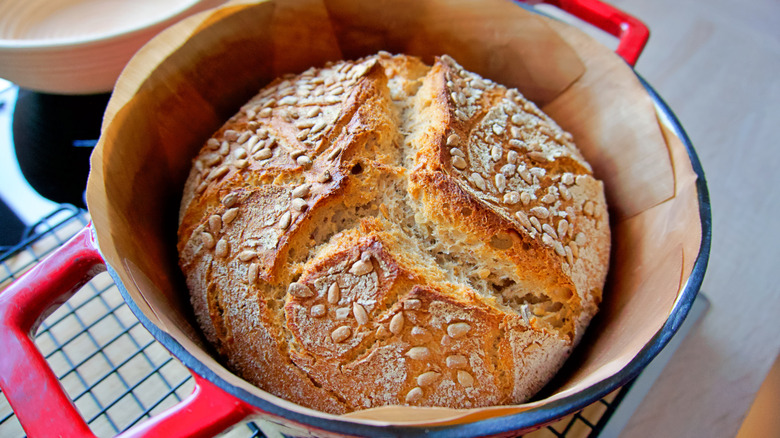
If you're like us, when you think about a Dutch oven, you probably think of a kitchen tool that's meant to go on your stove. And, of course, this is a great way to cook with your Dutch oven. But it's a mistake, says Francesca Montillo, to think that you can only use it on the countertop. In fact, one of the reasons people love this kind of cookware is the fact that it can go from the stove to the oven and back again, making it an incredibly versatile tool to have in your kitchen. You should absolutely "take advantage of its ability to move seamlessly from burner to oven," says Montillo.
So, what are some dishes you can cook in the oven using your Dutch oven? It's ideal for baking breads and desserts — now you can steer clear of those grocery store bakery items you should avoid buying anyway. It's also great for casseroles, and, luckily, we have a ton of casserole recipes to choose from. Whatever you end up making, don't be afraid to experiment with using your Dutch oven on both the stove and in your kitchen oven.