

If You Still Use This Old-School Kitchen Tool, You're Most Likely A Boomer
For years, there was one sound that drew house cats like it was the Pied Piper calling in rats. The resonant, abrasive drone of an electric can opener was a staple sound in kitchens around the country. Perplexingly loud, this innovative kitchen tool let you power through cans of any size by holding down a lever, assuming the cutting blade was lined up correctly. But they've fallen out of style in recent years, and if you still use one, there's a good chance you're a Boomer or a member of Gen X raised by can-opener diehards.
These small, freestanding countertop appliances plug into a wall outlet and let you lift a lever, line up the can with the cutting blade, and drop it to activate the motor. A tiny wheel rotates the can so the cutting blade can cut through the metal all the way around until the lid is free. A magnet held it in place. Prior to electric models, manual can openers were the only way to get into a can. For people with weakness or arthritis in their hands, or those struggling through multiple cans, an electric can opener was a brilliant technological leap forward.
Electric can openers rose to prominence in the 1950s. Many Boomers love these little appliances because they grew up with them, and the electric can opener is simply a staple part of their kitchen alongside a toaster or a blender.
Electric or hectic?
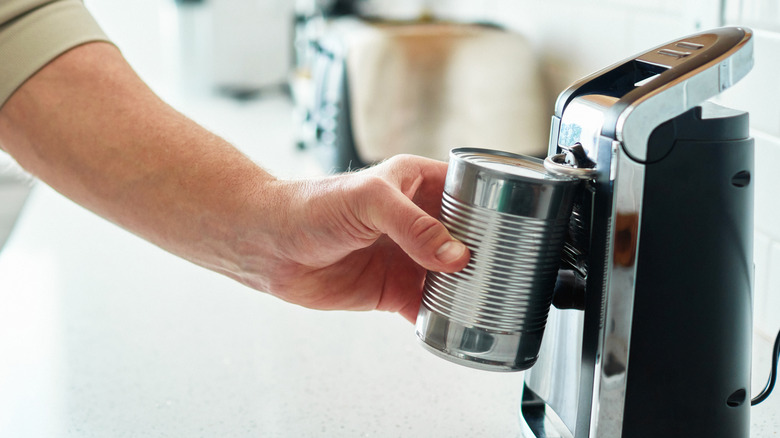
In modern kitchens, electric can openers are few and far between. This may be due to the rise of pull-top cans, and partly because of smaller, hand-held can openers being more convenient and easy to store without cords or wasted cupboard space.
Electric can openers were not always easy to use, and you sometimes had to struggle to line up the cutting blade. A heavier can could knock the whole device over or keep falling off the blade, forcing you to operate it with one hand and support the can with the other. They also aren't significantly faster than a manual can opener and are sometimes even slower. Let's not forget that if the power goes out, so does your can opener. Manual can openers are one of those powerless gadgets that are always useful.
Electric can openers take up counter space. Cheap ones also have a bad habit of dying. Manual openers typically last longer, while modern rechargeable models fit in a drawer and open cans just by pressing a button.
Another issue with the electric can opener, though a generation of cats who learned the sound meant dinner may disagree, is the noise. For their size, electric can openers are surprisingly loud when operating. Aside from an old coffee grinder or blender, few kitchen appliances are louder than an electric can opener. With so many more reliable options available today, it's no wonder electric can openers are becoming one of those baffling Boomer cooking habits.