

You Can Stop Believing This Common Protein Myth
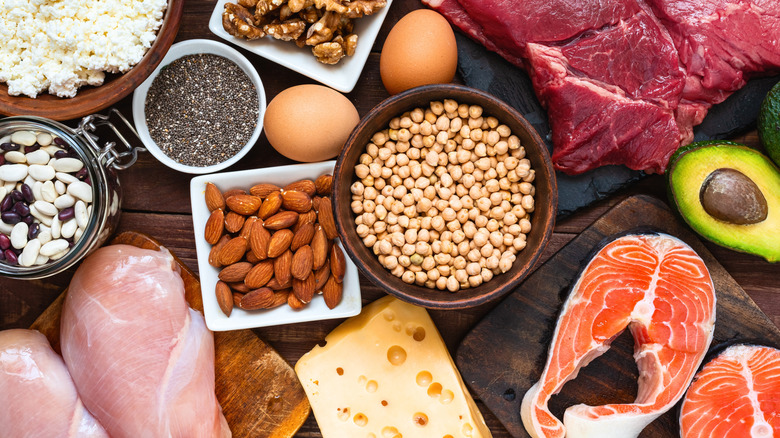
Protein is quite the buzzword these days, and rightfully so. It's an essential macronutrient that contributes to the optimum health of your body, though people especially like it for its muscle-building properties and the way it can aid weight loss. But there are also some myths surrounding protein that you need to stop believing. For example, it's a myth that consuming it immediately after a workout is crucial if you want to build muscle.
We brought this myth to Chris Mohr, a registered dietitian and fitness and nutrition advisor at Garage Gym Reviews, who told us that "the most important factor is total protein intake over the day rather than obsessing over an immediate post-workout meal." Still, the timing is not entirely negligible. "Consuming protein within a few hours before or after exercise can help optimize muscle repair and growth," Mohr explained, and specified that "for most people, a window of about two hours after finishing a workout is sufficient, assuming there is adequate protein and overall calories the rest of the day." He acknowledged that this also applies to eating before the workout.
The amount of protein consumed and your general calorie intake are therefore more essential for muscle building than the timeframe of eating protein. "Consistency is the most important, and meeting your daily protein needs rather than stressing over an exact minute-by-minute window," he pointed out.
How much protein do we actually need?
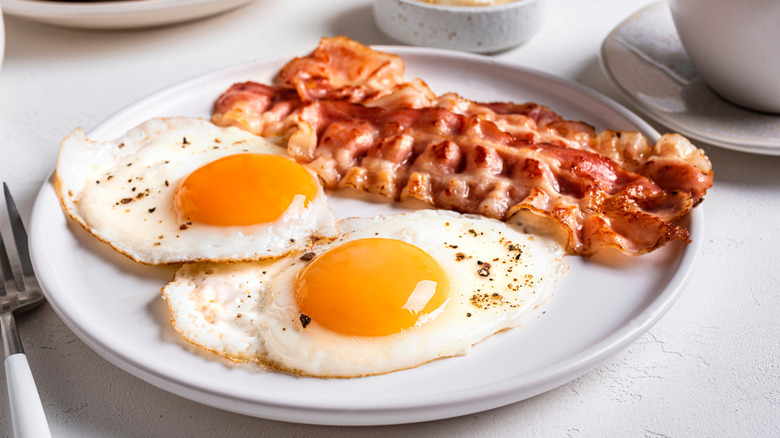
According to the FDA, the general recommendation for adults is to aim for 50 grams of protein per day, while WebMD explains that most people should be getting 10% to 35% of daily calorie intake from protein sources. For the average person, these numbers and percentages can be pretty confusing, so Mohr broke them down for us in practical terms.
"When it comes to how to eat protein, try to have a decent amount of high-quality protein, around 20 to 30 grams per meal," he said. There are lots of simple ways to add a protein boost to your meals — Mohr specifically highlighted "lean meats, eggs, dairy, tofu, beans," while acknowledging that other combinations are okay as well, "including even a protein shake, for convenience." There's no need to complicate the equation.
Another piece of advice Mohr had for us was to pair the protein with carbohydrates, because "they can help replenish glycogen stores, especially after longer or more intense workouts." That's why marathon runners often load up on carbs leading up to race day. As you can see, no single food group is the enemy or the end-all be-all. As long as there is balance, you're doing the best for your body.