

8 Types Of Goat Cheese And How To Use Them
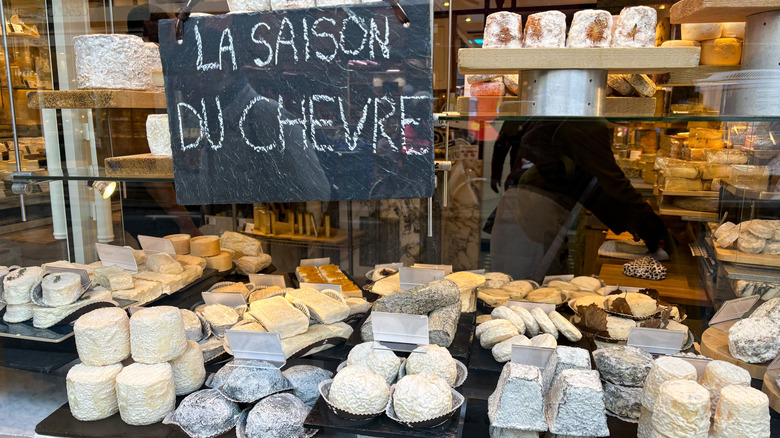
Goat cheese may not be as universally celebrated in the United States as, say, cheddar cheese or American cheese. Nevertheless, it's pretty common to see this more pungent variety in salads or on burgers, and we're willing to bet that you'll find it on a charcuterie board this holiday season — the cranberry chèvre goat cheese is one of our favorite Trader Joe's host gifts. Because goat cheese features capric acid, it tastes vastly different from sheep and cow cheese. Plus, it offers a unique texture: Creamy when young, but crumbly once aged.
Rather than restricting yourself to just one or two varieties of this versatile cheese, we suggest trying as many as possible to find what you like best. Tapping into the myriad varieties of goat cheese allows you to create more nuanced and refined flavor pairings; you'll want to select your cheese depending on what else you're serving it with.
To get a better sense of available options, we spoke with three cheese experts. Namrata Sundaresan co-founded Käse Cheese, an artisan cheese brand in India, where she also teaches cheesemaking. Meanwhile, Jennifer Greco is a French cheese specialist who leads French cheese and wine workshops in Paris. Finally, Aaron Menitoff is the CEO and co-founder of Boarderie, which ships artisan cheese and charcuterie boards nationwide. Throughout this article, they will introduce you to distinct goat cheese varieties and suggest ways to make the most of their flavors and textures.
Plain, fresh chèvre
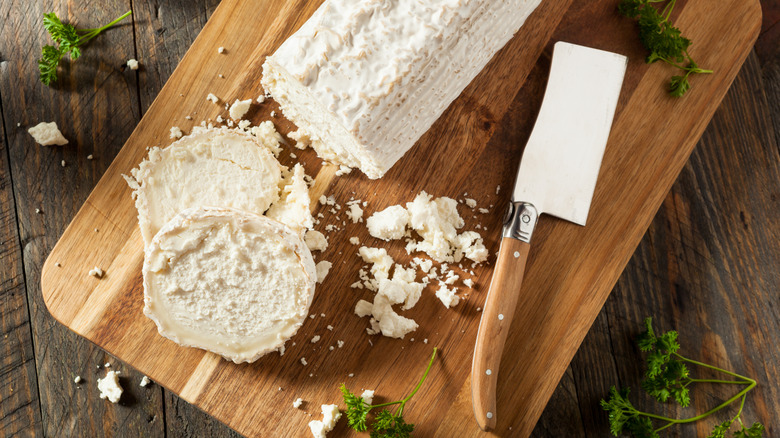
Google the word chèvre and next to the various pictures of salads and cheese that will pop up, there will be dozens of adorable goats. That's because "chèvre" is the French word for "goat," but it also refers to goat cheese in general. While it can be infused with flavorings or coated with fruits and nuts, let's start by examining this goat cheese variety in its basic form.
Fresh chèvre is lusciously creamy and well-suited to many different applications. For instance, it can add tanginess to pasta, omitting the need for sauce, but it can also work well in a no-bake apricot goat cheese cheesecake. It offers a "clean, lemony, and slightly grassy" flavor, shared Jennifer Greco, and she suggested letting it shine in a pasta with smoked salmon or in an omelet. To preserve its tanginess, she recommended using fresh goat cheese as a garnish or finishing touch. "It also melts very quickly, so adding it to warmed up dishes at the end of cooking adds a lovely, bright flavor," she added.
This goat cheese variety is simple to prepare in a home kitchen, Greco noted. For a basic log of fresh chèvre, you only need to curdle milk using an acid like lemon juice, vinegar, or citric acid. Then, drain whey, add salt and optional flavorings, shape it into a log, and let it firm up in the refrigerator. You probably won't get the same results offered by artisan cheesemakers, but don't let that stop you from experimenting!
Flavored goat cheese
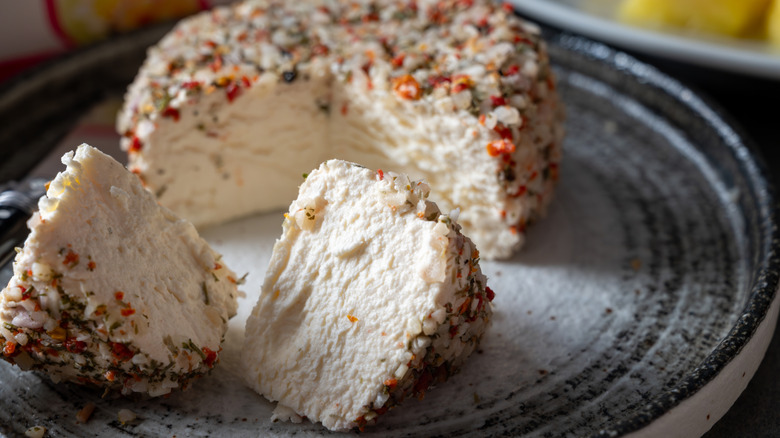
Now that we understand the basics of fresh chèvre, it's time to add some flavorings to the mix. Essentially, it's usually fresh goat cheese that we're talking about when discussing the addition of herbs, fruits, and spices. Aaron Menitoff had many suggestions for this category, taking two varieties sold by Boarderie as examples.
Blueberry vanilla is one of his favorites because of flavorful and aesthetics. "The combination creates this beautiful balance of bright goat cheese with a jammy, almost dessert-like exterior," Menitoff describes. Because it falls on the sweeter end of the spectrum, he recommends pairing it with ingredients like candied buttered pecans, sweet sesame almonds, rosemary-olive oil crackers, and dried cherries. It can also go with citrus fruits like tangerines and oranges.
Fig and rose goat cheese is another one of Menitoff's go-to varieties, which he says is "elegant and aromatic — soft, floral, and naturally sweet from the figs." With its luxury note, it would be great on romantic occasions. It can hold its own alongside crackers or piped onto dates, but it also performs well in conjunction with bold ingredients like crystallized ginger and salami, Menitoff explained.
It's best to serve goat cheese at room temperature. "That's when you get full creaminess and complexity," Menitoff added. If you have leftovers, store them in the refrigerator in an airtight container to preserve flavor and moisture content.
Valençay
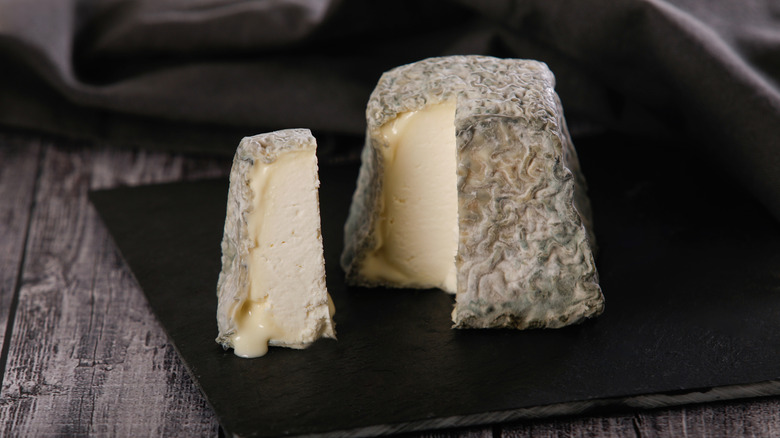
Valençay is a pyramidical French cheese (minus the pointed top) coated in a layer of ash. This cheese has been protected by an Appellation d'Origine Contrôlée (AOC) label for nearly 30 years. As a young goat cheese, it's delightfully creamy, smooth, and velvety. Inspired by this classic, Namrata Sundaresan now makes her version of it.
As Sundaresan explains, Valençay isn't as tangy as other goat cheese varieties due to the aforementioned layer of ash and an aging period of several weeks. Instead, you'll find that this cheese is earthier and milder while featuring notes of lemon and milk. Ash helps neutralize acidity and creates suitable conditions for microbial growth.
Even though Valençay could potentially be used for baking, Sundaresan suggested using it as table cheese. Nut brittles were one of her top suggestions for goat cheese pairings in general, and Valençay would indeed be a good match for ingredients with a touch of sweetness. Other complementary foods include fruits like cherries, sweet crackers, and honey. Sauvignon blanc wouldn't be a bad idea, either.
Other ash covered goat cheeses
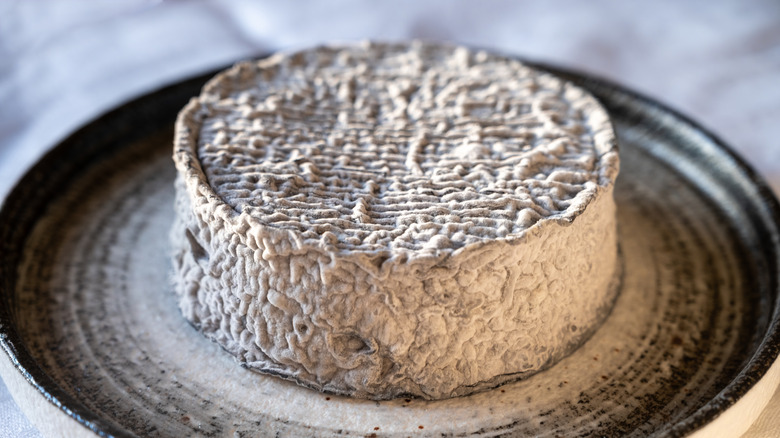
Valençay isn't the only ash covered goat cheese variety on the market. Other well-known varieties include Sainte Maure de Touraine and Selles-sur-Cher. The quality of both of these cheeses is protected by the AOC label, or, its correspondent European classification, the PDO (Protected Designation of Origin) status.
Sainte Maure de Touraine is formed into a log with a rye straw running through its center. Produced in Loire Valley, after the curd is molded and drained, the log is skewered with the straw, covered in ash, and ripened for at least eight days. It's moderately nutty and should be served raw — ideally with pears or green vegetables. Meanwhile, Selles-sur-Cher is a round goat cheese that hails from the same French region. The ash-covered surface protects a gooey cheese that typically has earthy, grassy, and faintly nutty flavor. Pair it with something sweet like honey or fruit.
As Jennifer Greco explained, "Ashed goat cheeses firm up as they age. They can be chalky in the center with a creamy, gooey layer beneath their wrinkled rinds. Flavors evolve from mild to earthy, mushroomy, and with notes of hazelnuts." A goat cheese like this may initially feel intimidating, but ash-ripened cheese is more than meets the eye. To ease yourself in, start with a mild variety. Greco recommends serving it on salads, with roasted vegetables, and on cheese boards.
La Tur
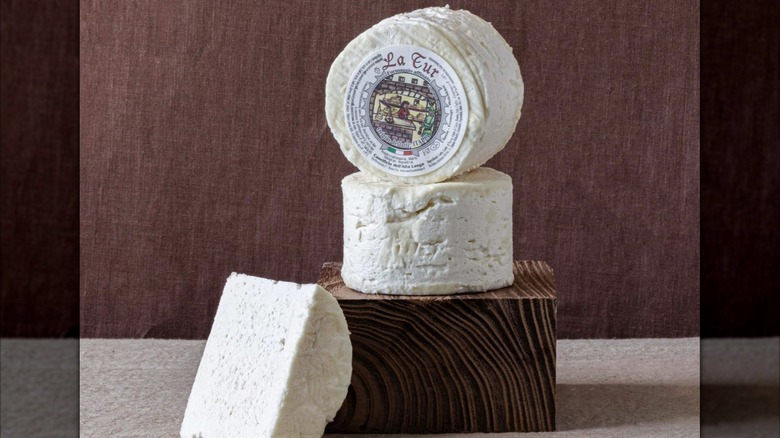
Usually aged for approximately 10 days, La Tur is a young cheese with a bit more structure than fresh chèvre. Nevertheless, once you cut past the rind and oozy lining (both of which are totally edible), you'll find that this cheese has a remarkably soft and almost foamy texture with a high moisture content. The original combines goat, sheep, and cow milk and comes from Caseificio Dell'Alta Langa, whose home is in Italian Piedmont.
Though some compare it to Brie, La Tur is an overlooked cheese from Northern Italy that deserves far more attention. Flavor-wise, it is earthy and buttery, but also tangy. Because of that, it pairs well with fruits like apples and raisins, crackers, and bread. If you drink alcohol, make sure to sip on a glass of wine while sampling this cheese. No matter what, though, you shouldn't give into the temptation to eat La Tur straight from the fridge; it needs to be at room temperature to achieve its full glory.
La Tur is one of Namrata Sundaresan's favorite goat cheeses, and she had a few tips on storing cheeses with bloomy rinds like this one in the refrigerator. "Wrap them with butter paper and then leave them inside a Ziploc, or what I would usually do is wrap them with butter paper and a layer of beeswax, and then keep them in a nice, airtight box," she suggested. Like other goat cheeses, it's best kept in a refrigerator's vegetable drawer.
Goat Gouda
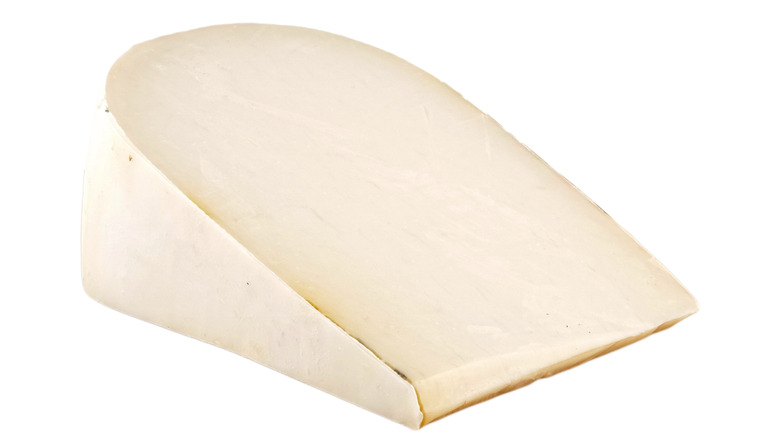
Aaron Menitoff shared that goat Gouda is extremely versatile and approachable. "It's semi-firm, sliceable, and buttery with a gentle tang. You get the caramel notes of a classic Gouda but with the clean brightness of goat's milk." Because of this unobtrusive profile Menitoff noted that it's "the perfect cheese for someone who may not think they're a goat cheese person," noting that you may soon be converted into a goat cheese fan after tasting it.
Because goat Gouda is creamy and nutty, it plays nicely with savory ingredients like salami, sun-dried tomatoes, spicy nuts, and rosemary and olive oil crackers, explained Menitoff. He also added that serving it raw will yield ideal results, but this is one of the goat cheese varieties that can add a creamy texture to dishes even when melted. You can also shave it over salads, serve it on cheese boards, or add it to grilled cheese sandwiches.
Unless you already have the appropriate cheese-making equipment and experience, it's probably best to leave it to the artisanal cheesemakers; as Menitoff noted, "it's a washed-curd cheese that requires precise temperature control, pressing, turning, and aging." Once you have obtained goat Gouda — perhaps online, at a local farmers market, or from a standard grocery store like HEB or Fred Meyer — and opened the package, Menitoff suggests the pieces "should be wrapped in parchment or cheese paper and then loosely in foil, so they breathe without drying out."
Labneh
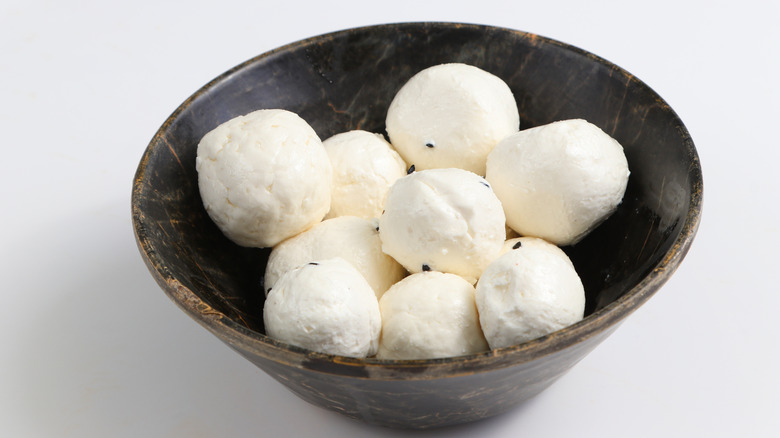
If you want to expand your goat cheese repertoire, Jennifer Greco recommended Middle Eastern varieties. Specifically, she highlighted goat labneh. Though it's now often made with cow milk, or a combination of cow, sheep, and goat milk, in the not-so-distant past, labneh was usually prepared using goat milk. This makes an obvious difference to taste, but, as Aaron Menitoff explained, goat cheese is "naturally lower in lactose, and many people find it easier to digest than cow's milk cheeses."
Essentially, labneh is yogurt that has been salted and strained for an extended period of time. Ideally, this type of cheese is also more sour than Greek yogurt. If you want to make it at home, the process is surprisingly simple, and homemade labneh requires only two ingredients: goat yogurt (or goat milk) and salt.
Labneh is dreamily thick and the perfect candidate for pairing with olive oil on a mezze platter in the company of pita bread, tomatoes, cucumbers, and other fresh produce. It can also be shaped into balls and preserved. When searching for main dishes where you can incorporate it, look for recipes that feature other Middle Eastern flavors, such as this za'atar egg salad sandwich recipe.
Garrotxa
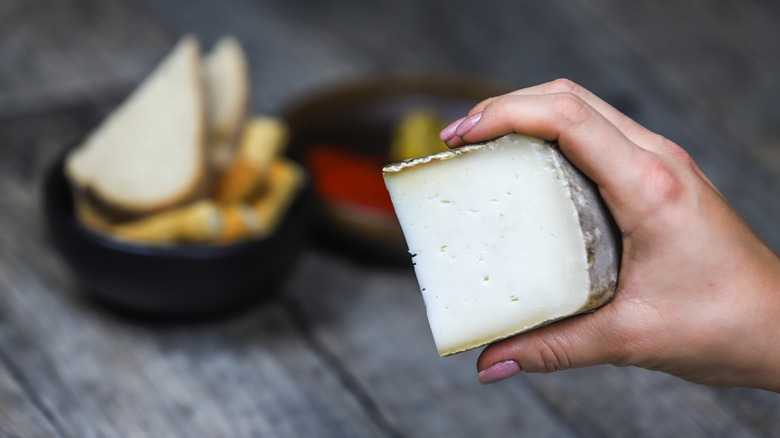
If you're looking to create lasting memories at your next dinner party or cheese and wine night, try sourcing a wheel of Garrotxa. This Spanish cheese, recommended to us by Jennifer Greco, hails from Catalonia, and it recently claimed a place in the Register of Protected Geographical Indications (PGI). "Goat cheese is a reminder that great cheese comes from craftsmanship — from the hands that make it, the milk, the environment, and the care behind every wheel," shared Aaron Menitoff. Garrotxa offers an excellent opportunity to taste terroir and artisanal expertise because it can only be made in Catalonia and is traditionally aged in caves.
Don't let Garrotxa's moldy presentation deter you; underneath the mold is a cheese rich in earthy and nutty flavors, as well as a creamy, flaky texture. Besides, that grey mold serves a necessary purpose: It gives the cheese a woodsy aroma. The bloomy rind also helps balance acidity, creating a subtly sweet nuance.
You don't need to wait until a fancy dinner to savor Garrotxa. Serve it with bread and nuts for a simple snack, or pair it with Spanish ham. Garrotxa is one of several cheeses that pair beautifully with pinot grigio, and it also goes great with cider. This cheese experienced a resurgence in the 1980s, and while you probably won't find it at your usual mainstream grocery store, there's a good chance that a specialty cheese shop near you carries Garrotxa.