

This Simple Cutting Trick Is The Secret To Crispy, Caramelized Roasted Carrots
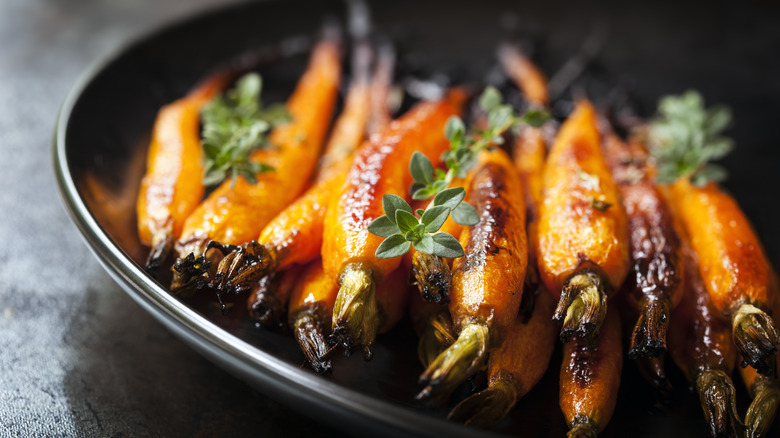
Carrots are an underrated vegetable often relegated to veggie trays and snack bags. It is, after all, much easier to eat a raw carrot than to take the time to cook it. But caramelized, roasted carrots can be absolutely delicious. The problem is that the vegetable's size and shape means you need to cut each piece if you want it to cook evenly. The trick to perfectly caramelized carrots with crisp edges and a soft interior is mastering the oblique or roll cut.
Cutting carrots on the oblique means making diagonal rather than straight cuts. It's also called a roll cut because you rotate the carrot about a quarter turn before each slice, keeping a consistent angle without changing your cutting motion. The cut piece is asymmetrical but cooks more evenly and stands up to heat better than a typical rondelle cut. Tasting Table spoke with chef Eli Collins of a.kitchen+bar Philadelphia and D.C. about why an oblique cut is the best choice for roasting carrots.
"It creates a shape that cooks evenly while also creating a bite-sized piece to serve," he says. If you've ever tried to roast carrots before without cutting them evenly, you know the results can be very inconsistent. The top near the stem might still be crunchy in the middle, while the tip is mushy and overcooked. Collins' recommendations can eliminate the issue of uneven cooking, leaving you free to focus on giving those roasted carrots a flavor boost.
Take a peek beyond oblique

If you're looking for maximum caramelization, Collins recommends a larger cut to start. "At a.kitchen we actually grill the carrots whole to cook them through and then slice them down into smaller pieces which then get grilled or roasted again," he says. This method exposes more surface area. When the whole carrot is grilled, it can stand up to heat longer without overcooking. You'll get more color at first, and when you later cut the carrots into oblique chunks, it becomes easier to finish building flavor without risking overcooking.
Collins warns against cutting your carrots too thin, which can be a temptation, especially if you're trying to roast in a hurry. "They will probably dry out before you get any real color," he says. That problem often comes up when you use classic knife cuts like paysanne or julienne. The carrots just can't stand up to the roast.
Thin or straight cuts just don't create the surface area that an oblique cut does. The angled faces of an oblique-cut carrot allow heat to reach it more evenly than a straight cut does. This is how you maximize caramelization and ensure a tastier bite in the end. It takes a little practice to master, but give it a try along with this recipe for honey-glazed carrots and see the difference for yourself.