

'Eat With Your Eyes' — How A Pro Chef Picks Produce For A Perfect Veggie Platter
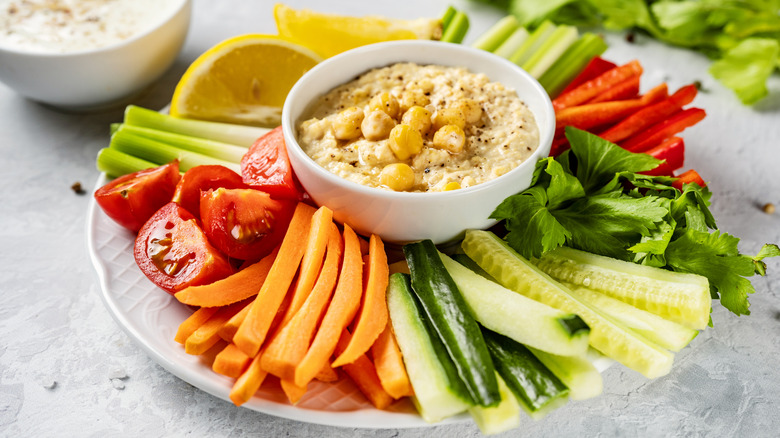
Veggie platters are a welcome addition to any party menu. Not only are they fresh and healthy, but they also add an array of seasonal color that can brighten up the food table. If you aren't sure where to start when selecting vegetables, consider the overall presentation of the tray, or "eat with your eyes," according to Chef Eli Collins of a.kitchen+bar Philadelphia and D.C.
Tasting Table spoke exclusively with Chef Collins to get his advice on how to build a veggie platter that will wow all your friends, and it starts with picking the perfect produce. Collins suggests that you can avoid feeling overwhelmed by choices in the produce section when you "pick out what looks fresh and definitely eat with your eyes." He also recommends that you focus on the colors of the veggies you're choosing, and how they will look together on your platter, advising that "the color of the vegetable should also be bright and fresh looking," and that you should "pick some dynamic colors and just go for it."
Selecting vegetables in an array of bright, bold colors will make your veggie tray stand out. It will also showcase some of the most exciting colors of the season and make your tray come together in a balanced way. Collins shares, "I think a cohesive aesthetic will be easy to achieve if using vegetables all from the same season." You can also play with color even further by adding a variety of different types of dips to your veggie platter.
Consider the exterior texture of the vegetables as well
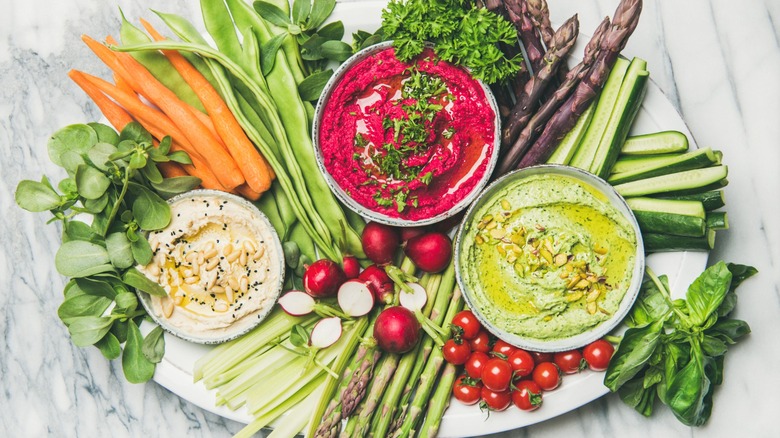
In addition to focusing on the color of your veggies, the trick for finding the freshest produce at the grocery store is to pay attention to the texture of each veggie's exterior skin as well. Collins warns, "Be careful of soft spots. This can be a signifier of rotting." In most cases, you want firm vegetables with unmarred skin. Vegetables that have unnatural brown or black spots, are bruised, have cuts or gashes, or have mushy skin may be rotten and won't taste good (or even necessarily last until your party or meal).
If possible, gently touch the exterior skin of the vegetable to evaluate its texture. Collins says a vegetable may be too old "if the skin or outside has the appearance of being wilted," meaning if it is wrinkled or feels dry and limp. Old, mushy vegetables won't taste as good as fresh ones, and could affect the overall quality and presentation of your vegetable tray. Collins recommends that you "look for vegetables that have a crisp texture and feel," as that indicates the veggies are young, fresh, and healthy. If you're worried about serving tough vegetables on a crudités platter, blanch them first to soften them so they're ready to eat.
When picking out celery or carrots for your tray, you should "also be careful of wilted or dried greens. This can also be the case with root vegetables such as carrots or potatoes." The greens, or the leafy parts of the vegetable, can indicate the vegetable's age and how healthy it is. Leaves that are wilted, brown, translucent, or mushy could be a warning sign that the vegetables are past their prime.