

10 Underrated Vintage Foods That People Swear Are Delicious
Vintage food can fall into many different categories. There are timeless recipes that are still made today, like red velvet cake and garlic bread (yep, garlic bread is vintage, created by Italian-Americans in the early 1900s). Then there are the downright bizarre vintage recipes. We're thinking about things like bananas with ham and hollandaise, and molded egg salad or seafood in aspic. They have their fans, sure, but they're not really the kind of dishes that most people would look back on fondly. And then there are the underrated vintage dishes.
We've scanned the internet, paying special attention to Reddit threads and blog posts, to deduce which vintage foods people think are the most underrated and, quite frankly, delicious. Intrigued to see if your favorite made the list? Keep scrolling to find out why people think recipes like watergate salad, prune whip, corn casserole, and porcupine meatballs all deserve a mainstream comeback.
Watergate Salad
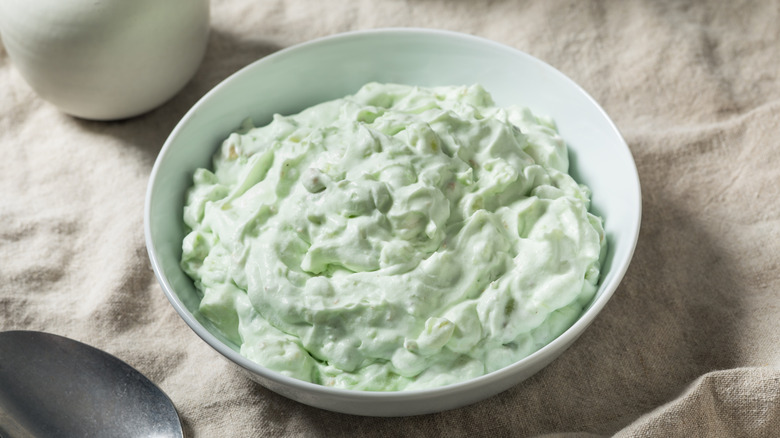
When you think of former President Richard Nixon, you probably don't think of pistachio pudding mix combined with canned pineapple, marshmallows, chopped nuts, and Cool Whip. You do, however, probably think of Watergate — the major political scandal of the 1970s that led to Nixon's unprecedented resignation. Watergate was, of course, a huge topic of conversation during this decade. It wasn't just a point of serious discussion; it was also a running joke for many. This is probably how Watergate Salad (which consists of all of the ingredients we mentioned earlier) got its name.
Watergate Salad isn't served much anymore, but many maintain that, despite its morally questionable name, the dish is delicious. Many recall their parents and grandparents regularly whipping up Watergate Salad for family gatherings, which they would happily munch through despite the slightly off-putting green hue. Not everyone called it Watergate Salad, though; others remember it as pistachio fluff or even moldy salad, but it was pretty universally loved.
Despite the name, the dish itself wasn't invented in the 1970s. Sweet, pistachio salads were being made years before, and Helen Keller even published a recipe in the 1920s for a very similar dish, named "Golden Gate salad." The name Watergate was likely inspired by a similar dish in the 1970s called Watergate cake. People joked it was a secretive cake, as the thick layer of green icing covered up the reality of the nuts inside. The cake had something to hide, just like the scandalous politicians of the time.
Jell-O salads
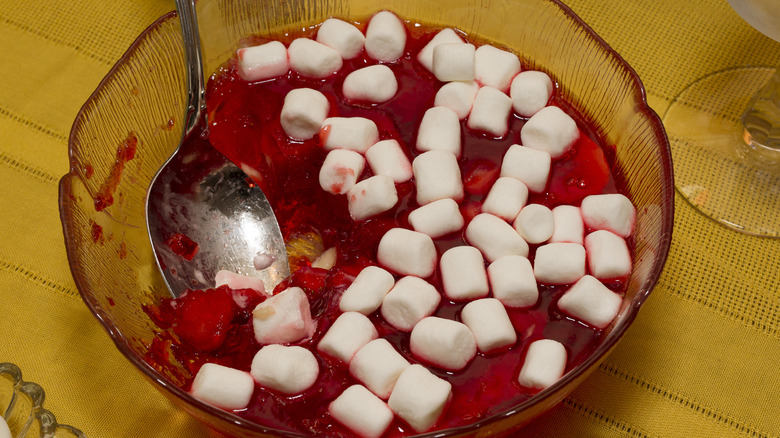
The words "Jell-O salad" don't always bring up good memories for those who grew up eating them in the 1960s and 1970s. The dish could come in many different formats and usually didn't actually contain anything that we'd think of as a salad today (leafy greens, for one). And the type of people's parents or grandparents used to serve probably shapes how they feel about them today.
For example, some remember their moms covering hot dogs in Jell-O and calling it a salad. Others remember carrot and lime-flavored Jell-O concoctions, while a few remember their parents giving them meat or tuna covered in wobbly Jell-O. If you're wondering why any of these dishes ever existed, it all started with the popularization of Jell-O and other packaged foods after the Second World War. People loved experimenting with making dishes that looked incredibly extravagant during this era, all while using very simple ingredients, like Jell-O from a packet.
But not everyone grew up with parents who decided to try and break the, ahem, mold of what Jell-O could be. Others loved their moms' concoctions of sweet Jell-O salads, which would combine the signature wobble of Jell-O with ingredients like fresh fruit, whipped cream, nuts, coconut, marshmallows, and even pretzels. In fact, some have such good memories of eating Jell-O salad when they were younger that they continue to whip up their own versions today.
Swiss steak
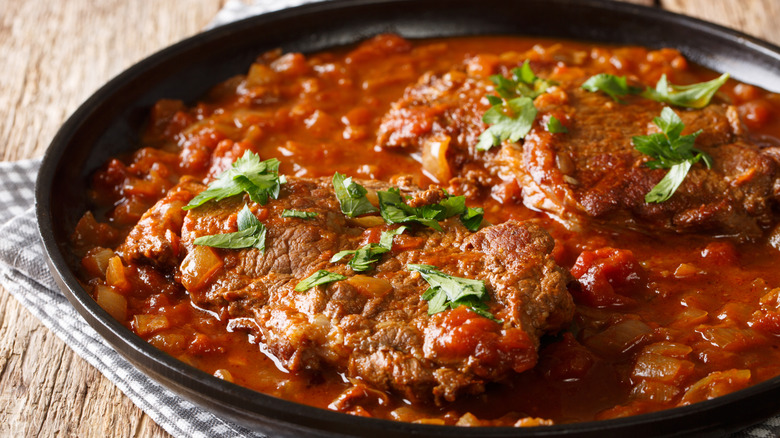
Jell-O salad isn't what most of us would think of as salad, and Swiss steak? Well, it isn't really Swiss. Nope, it turns out that there is not much reliable evidence to suggest that this dish, which was popular in the 1950s, was inspired by any recipes from Switzerland. That didn't stop people from making it regularly, though. In a nutshell, Swiss steak is round steak, cooked in tomato and onion gravy with vegetables like carrots and celery, and then served with white rice or mashed potatoes. The steak is usually pounded to tenderize it, which might be where the name "Swiss steak" comes from. Swissing, which involves pounding or rolling, is actually a British technique of softening cloth.
Swiss steak was popular with many families during the midcentury and onwards. Several people have fond memories of their parents serving them Swiss steak during midweek or on special occasions, and plenty say it was their favorite home-cooked meal. Many also remember a particular seasoning mix for Swiss steak by McCormick, which was discontinued in 2013, but has inspired many copycat recipes since.
In a Reddit thread, many commenters said that now that they had been reminded of the existence of Swiss steak, they would certainly be making it again. Of course, some tastes have changed since the 1950s. If you no longer eat meat, you don't have to miss out, because there are a few vegan recipes for Swiss steak out there, too.
Prune whip

Donald Trump famously loves McDonald's. Barack Obama adores salted caramel. Franklin D. Roosevelt, apparently, was all about the classic grilled cheese. And Dwight Eisenhower? Well, he couldn't get enough of prune whip. Yep, the 34th president of the United States, who took office from 1953 to 1961, loved this fluffy dessert, which was traditionally made for him with unflavored gelatin, hot prune juice, prune pulp, lemon juice, sugar, egg whites, and nuts.
In fact, prunes used to be pretty popular. In 1949, for example, research suggests that the average person would eat more than 1.1 pounds of prunes over the course of the year. By the 1970s, though, this had dropped to around 0.4 pounds. Prunes still don't have the best reputation, and many see them as a food of their grandmother's. But many maintain it's time that they came back. Firstly, because they're nutrient-dense. But secondly, because they're tasty and versatile. And one of the best ways to eat them? In a prune whip, of course.
But don't worry, you don't have to eat them with gelatin like Eisenhower did. Instead, you could transform fresh prunes into a light, fluffy, indulgent whip by simmering them with brandy and brown sugar, pureeing them, and combining them with ingredients like mascarpone, cream, and vanilla paste. Delicious and decadent.
Ambrosia salad
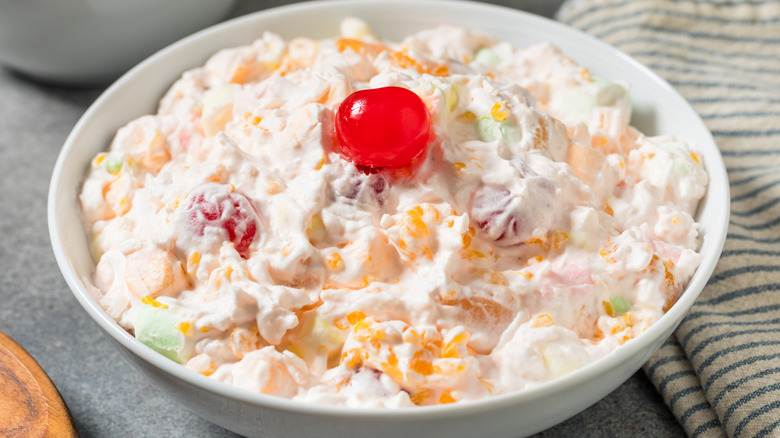
Ambrosia salad is very similar to Watergate salad and sweet Jell-O salads. It was popular in the 1950s, and it doesn't involve any leafy greens. Nope, ambrosia salad isn't something you go for when you're trying to lose weight or eat healthier foods. It's something you go for when you want indulgence, and some people used to love it so much, they would eat an entire bowl in one sitting. Others would eat a slightly more normal-sized portion, but still maintain it's an underrated dessert that deserves a comeback.
Recipes for ambrosia salad vary from household to household, and every family has their own twist on the dish. But, in general, it consists of marshmallows, cream, fruits, nuts, and sour cream. It's pretty simple to make: All of the ingredients are stirred together in a large bowl and then refrigerated before serving.
Some families would top the whole thing with flaked coconut and maraschino cherries, while others would opt for apples, bananas, and mayonnaise instead of sour cream. Mayonnaise sounds like an odd choice for a dessert dish, but many maintain it really works. In fact, one Redditor claimed that they had been eating ambrosia salad with mayonnaise for 50 years, with no plans to give it up anytime soon.
Lemon Lush
Lemon is a pretty popular flavor in the U.S. today. According to data from YouGov that was gathered in 2025, lemon is the eighth most popular fruit in the U.S. Only 4% of Americans claim that they don't like lemon, while nearly 80% are fans of this sweet, tangy citrus fruit. So it makes sense that it appears in quite a few different recipes. Lemon cake, lemon meringue, lemon bars, and even lemon pasta are all pretty popular ways to use lemon. But if you were in the 1960s or 1970s, you might add another favorite to the mix: Lemon Lush.
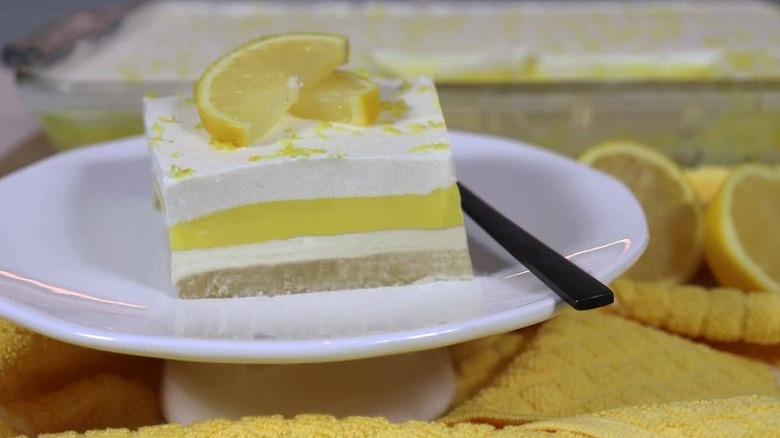
Many claim that Lemon Lush is an underrated, delicious dessert that is deserving of a comeback, and honestly, when you look at the ingredients, it makes sense. It's a layered dessert, featuring a wafer-based cheesecake-like crust, which is topped with lemon pudding, whipped cream, and lemon zest. For lemon fans, what's not to love?
Fun fact: Lemon Lush is a variation on Chocolate Lush. Both are often referred to as the Next Best Thing to Robert Redford Dessert. Sometimes, the dessert is simply called "Robert Redford." That's probably because movie star and director Robert Redford was a huge deal in the 1970s, and had many admirers all over the U.S. Most couldn't take Redford himself to a party, of course, but they could take the next best thing: A delicious, indulgent, and creamy dessert.
Corn casserole
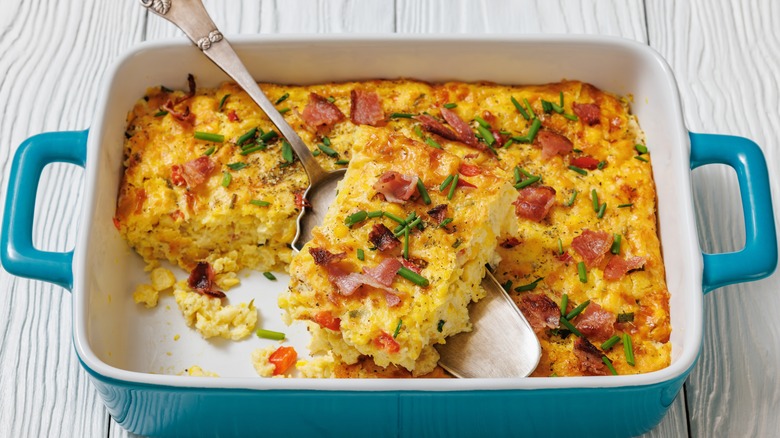
One Redditor described corn casserole as "mushy cornbread with corn kernels in it," which doesn't make it sound super appealing. But they also described it as "incredibly good," so there must be something to it. The dish has been around for a while. In fact, it can be traced all the way back to the years after the Civil War, when it was known as spoonbread. But it's a much later recipe that many people remember.
Jiffy Corn Casserole was created by the brand Jiffy in the 1960s, and basically involved six key ingredients: Jiffy Corn Muffin Mix, cream-style corn, kernel corn, sour cream, eggs, and margarine. Back then, it was called a corn bowl and was given out as a tear-off sheet in grocery stores. During this time, it accrued many loyal fans, and plenty remember eating it during Thanksgiving. Most have fond memories of the dish (although some call it corn soufflé or corn pudding); it has been described as creamy and a little crunchy thanks to the corn kernels inside.
Chicken divan
Chicken divan is another dish with a slightly misleading name. "Divan" is a French word (it means canapé or couch), so you'd assume that it has a French history. But actually, this chicken dish wasn't invented in France. One commonly accepted origin theory states that chicken divan was actually invented at a restaurant called Divan Parisien inside New York City's Chatham Hotel, in the early 20th century.
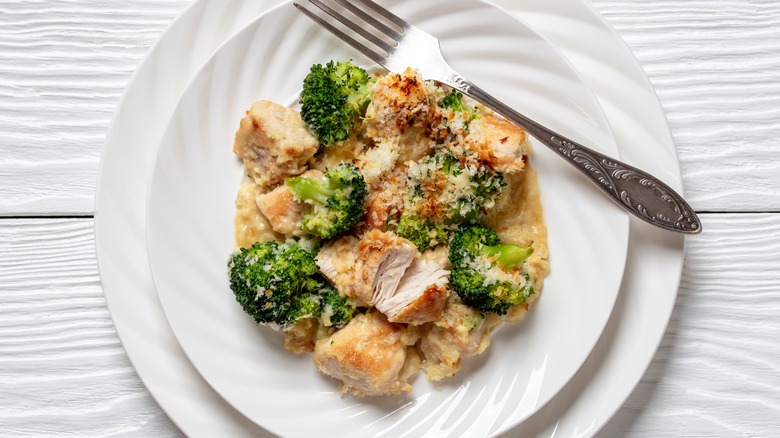
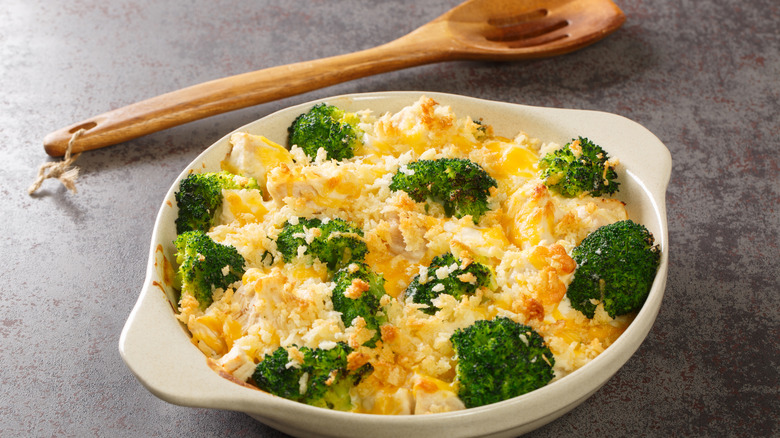
Again, there are many different twists on chicken divan, but generally, it is creamy, cheesy, broiled in the oven, and loaded up with broccoli and chicken breast. One recipe from the 1980s relies on chicken soup, mayonnaise, lemon juice, curry powder, and cream cheese to make the sauce, while another vintage recipe calls for cooking sherry, heavy cream, chicken broth, and Parmesan cheese.
The ingredients may differ for chicken divan, but the result is nearly always a comforting, wholesome, and warming dish. For that reason, many believe it is incredibly underrated in the modern day and are hoping for a resurgence in its popularity. Many put it in the same category as other vintage classics like chicken à la king and Salisbury steak in terms of nostalgia. Again, if you're looking to bring it back to the table, chicken divan can be modernized in many different ways. Some like to add mushrooms and multigrain breadcrumbs, for example, while others lose the chicken entirely and swap in jackfruit instead.
Chow mein casserole
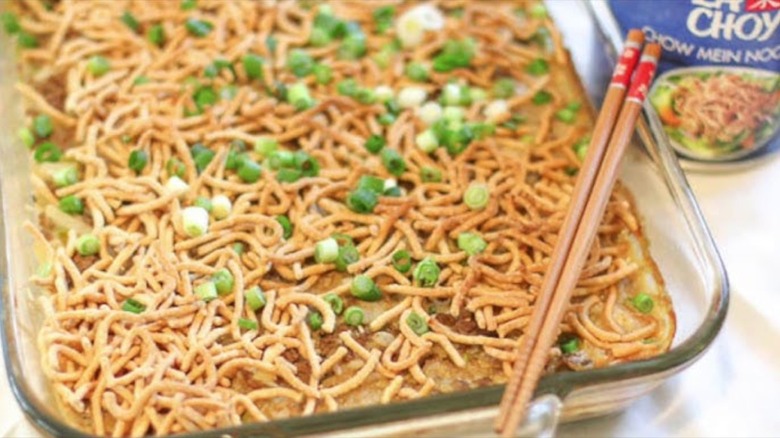
In the 1950s, Chinese food was pretty popular in the U.S. This was largely because during this decade and the one previously, many people had emigrated from China to America. They had to make a living, so they opened up Chinese restaurants. The recipes were slightly altered, though, to suit the American palate, and this led to a boom in the popularity of dishes like chop suey and chow mein. Coincidentally, casseroles were also having a moment in 1950s America. At some point, someone decided to combine the two, creating a chow mein casserole.
The dish, also known as chow mein hot dish to some, can be made in many different ways, but it usually consists of crispy chow mein noodles, a creamy sauce (made with canned soup), and protein. Some opted for ground beef, while others were fans of canned tuna instead. To get the crispy top, some would also sprinkle crushed potato chips on top before baking.
The origins of chow mein casserole were probably planted much earlier in the 1930s. Although back then, it was particularly popular in Minnesota (as it is now), and made with macaroni or potatoes rather than chow mein. Plenty who grew up eating chow mein casserole, specifically, believe that this vintage dish deserves a revival on the mainstream modern dinner table.
Porcupine meatballs
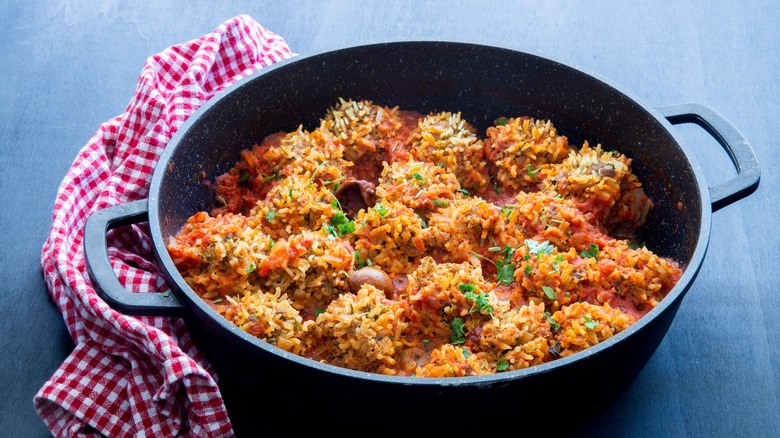
Meatballs have likely been around since the days of ancient Persia, and they're still incredibly popular today in spaghetti dishes and subway sandwiches, for example. But porcupine meatballs, specifically, are a slightly more recent invention — in comparison to ancient Persia, anyway.
The first recipe for the dish was likely printed in 1918, in a cookbook called "Conservation Recipes," by the Mobilized Women's Organizations of Berkeley. It then became popular in the 1930s, during the Great Depression, as people looked for simple recipes that could stretch their ingredients even further. And don't worry, none of the ingredients in porcupine meatballs are quill-bearing rodents. Nope, this vintage dish, considered underrated by many, is just rice, ground beef, and tomato sauce. The rice goes in raw and firm, so it absorbs liquid and sticks out of the balls, giving it that porcupine-like appearance.
Many people remember eating and cooking porcupine meatballs in days gone by. Some would combine the meatballs with cabbage and carrots, while others would make the rich sauce with cream of tomato soup. The people who made it with soup probably picked it up from a cookbook that Campbell's released in the 1960s. The book had a recipe for "yummy porcupine meatballs," made with condensed tomato soup, ground beef, uncooked rice, minced onions, herbs, shortening, and eggs.