

The Staple Ingredient That Has Even More Potassium Than A Banana
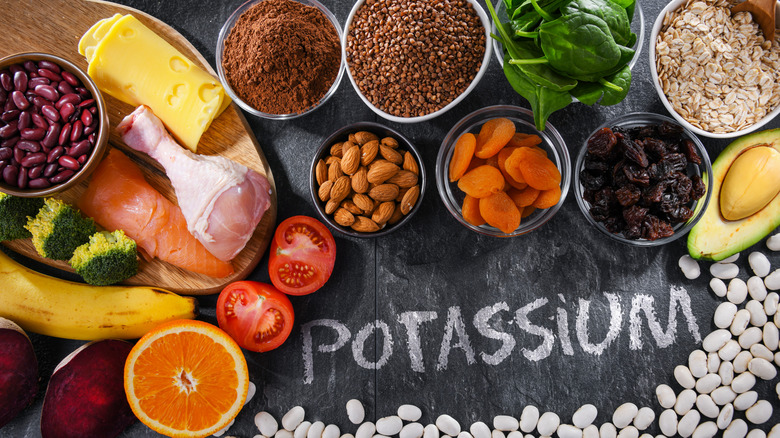
There are dozens of nutrients the human body needs to function properly. That includes all kinds of vitamins and minerals. Most of us know we should get plenty of vitamin C, calcium, and fiber – and we generally know which foods provide them. In turn, most of you understand that you need potassium and that you can get it from certain foods, specifically bananas. However, there are better sources of potassium out there if you're concerned about getting enough — including an incredible, tasty, and very common option: potatoes.
Hypokalemia is what it's called when you have low potassium levels. According to the National Institutes of Health, most Americans do not get enough potassium in their diet. That can lead to a host of health concerns — including decreased brain function, high blood pressure, and an elevated risk of kidney stones in the most extreme cases, and general muscle weakness and tiredness in the least. So you want to make sure you're getting enough in your diet. Adult males should be consuming 3,400 milligrams of potassium per day while women require 2,600 milligrams.
Bananas are touted as a great source of potassium, and while they do provide quite a bit, there are some better sources. Consuming a fairly small 100 gram banana will provide 358 milligrams of potassium. Meanwhile, eating the same amount of potato with the skin on offers 531 milligrams and a whole, medium-sized potato offers 919 milligrams. If you ate a large potato that weighed over 200 grams, you'd get over 1,000 milligrams of potassium. Only a few foods, such as spinach cooked from fresh spinach and raisins, contain more potassium per 100 grams than potatoes do — but they're much more satiating and versatile.
Getting the most out of your potato potassium
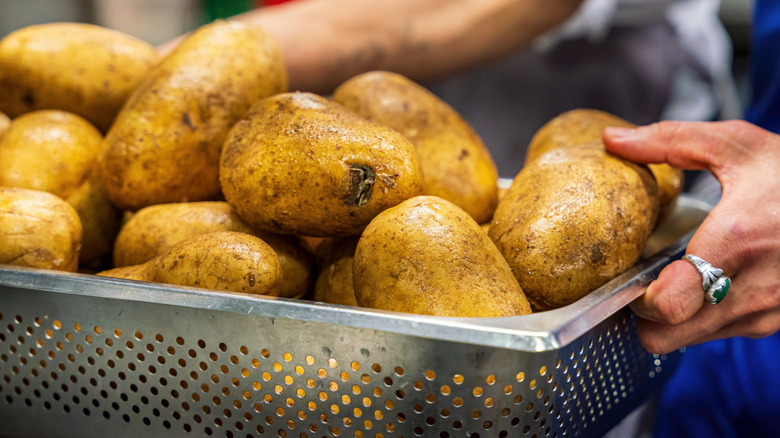
If you're looking to increase your potassium intake with potatoes, you need to be mindful about how you prepare them. For instance, boiled potatoes — whether served whole or mashed — have lower potassium levels than baked potatoes because much is lost in the water when cooking. In fact, one 2008 study published in the Journal of Food Science found that, if you cut or shred your potatoes and boil them down to make mashed potatoes, you can lose anywhere from 50% to 75% of the potassium in the cooking liquid. You'll also lose about 25% of the potassium by simply removing the skin.
If you want to maintain the potassium as much as possible, then keep the skin on your potato when you cook it and ideally eat the skin as well. Baking a potato with the skin on is a great way to make it as nutritious and tasty as possible — and Tasting Table has some great tips to get a delicious, crispy baked potato skin if that's what you're looking for. You can also microwave your potato and enjoy the same nutrition with little potassium loss, and there's even a trick for crispy microwave potato skins, too.
If you need to boil your potatoes for a specific preparation, try keeping the skin on. That will preserve more potassium than peeling them ahead of time. The larger the pieces of potato you boil, the more potassium you'll save as well. Luckily, there are plenty of delicious potato recipes, so you're bound to find something tasty and still loaded with potassium.