

The Homemade Pesto Mistake That'll Lead You To An Unappetizing Dish
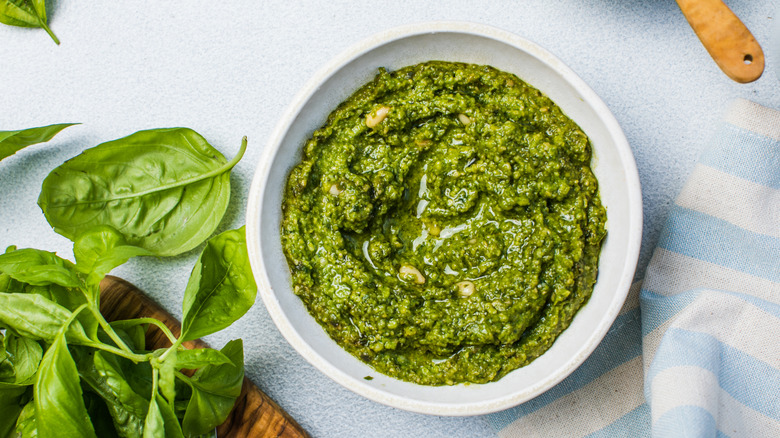
The hallmark of a good tasting pesto is a bright, emerald green color. Pesto only has a handful of ingredients, which means there's not a lot to hide behind if something goes wrong. If your ingredients started out fresh and high quality, why is the combined and processed result a bland, murky brown slurry? It could be the tool you used. High-speed blenders are built to liquefy, not mince around or preserve, and when tender basil leaves meet sharp blades with that kind of force, the mixture goes dark. The leaves bruise instantly, and the motion of the machine drags in so much air that the brown-ifying process of oxidation starts right before your eyes, before you've even taken the lid off to scrape down the sides.
Basil's chlorophyll is fragile and breaks down under heat, and blenders run hot, because they create friction energy. Even when the base of the machine stays cool to the touch, the blades generate enough friction to warm the sauce as it forms. The essential oils that give basil its sharp flavor are also sensitive, and once they volatilize, they start to dissipate, which causes that flat, vaguely metallic flavor profile.
Some ingredients need old-school compression, not high velocity. Herbaceous, leafy sauces like pesto, salsa verde or fresh chimichurri sauce all prefer to be more roughly hewn. That's why the classic, low-tech mortar-and-pestle method is the gold standard tip for making the best pesto, because it respects the structure of the leaves, crushing them to draw out the flavor, without utterly annihilating them. If you must use a blender, use the popular "pulse" setting to get there more in fits and starts, roughly and slowly.
How to stay in the green
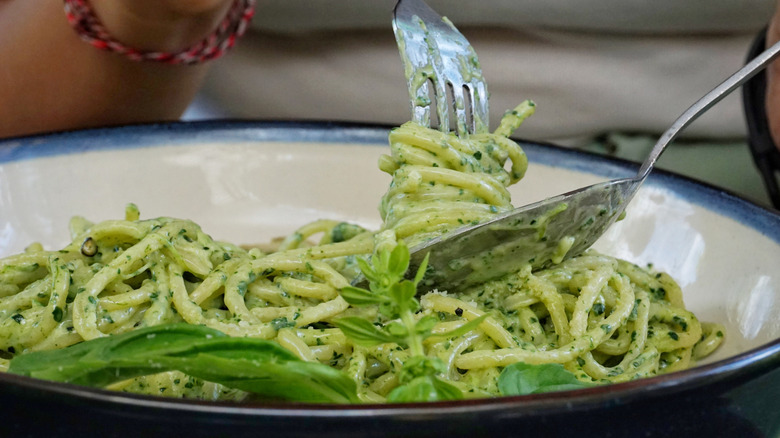
Besides not using your ultra-powerful Vitamix to nuke your pesto into looking like the versatile green juice Martha Stewart drinks every morning, there are some tricks to bring the greenest green out of your basil, mostly involving getting your temperature and sequencing down to a science. Basil starts to discolor the moment it warms, so cold ingredients buy you time: A chilled bowl, basil straight from the fridge, and nuts that have toasted then rested in the freezer for a few minutes will slow the loss of chlorophyll. You can also add the oil, in pulses, at the very end rather than at the start. When the leaves are coated with fat too early, they sit against the blade or processor wall longer, which encourages both heat buildup and over-processing.
A single ice cube added to the blender or food processor can keep the temperature down, and helps the mixture emulsify without becoming too silky-smooth. Some pesto heads blanch basil for a few seconds to "set" the pigment and shock it in ice water before blending, which freeze-frames the vivid color and helps the sauce maintain its brightness longer on the plate or in the fridge. If you're making pesto ahead, store it in a shallow container and level the surface with a spoon, then drizzle a thin layer of olive oil over the top. This seals it, keeping the leafy-parts away from oxygen, which is also what triggers browning in storage. You can also press a layer of plastic wrap into the surface of the pesto.