

Is A Marble Rolling Pin Worth The Investment? Here's What You Need To Consider Before Buying
We may receive a commission on purchases made from links.
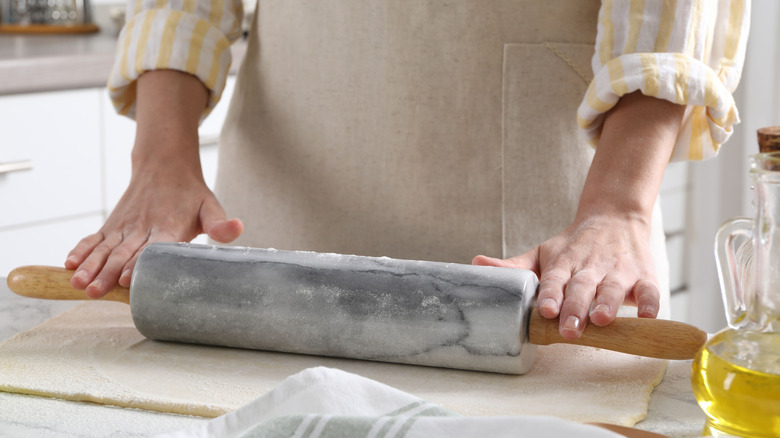
If you're even a semi-regular home baker, a rolling pin is a staple in your toolkit. There are so many genius uses for rolling pins beyond flattening dough, from squashing cucumbers to juicing pomegranates. Depending on how we tend to use them, many of us have favorite kinds. Julia Child preferred French rolling pins (which consist of a single dowel with tapered ends) over American ones (which have handles on each end), for example. These tools can come in wood, marble, ceramic, stainless steel — but which is the superior material, if there is one? Marble rolling pins are chic and popular. But they are also easily the priciest option. An 18-inch-long American-style version made of marble might cost between $20 and $50 on Amazon, while a wooden one of similar length can go for as low as $13. Are marble pins actually worth the investment when it comes to function?
An expert weighed in on the matter for The Takeout. Kelsey Elizabeth of Kelsey Elizabeth Cakes and the Korbel & Cookies collaboration says that while marble pins are indeed "gorgeous," they're just not as practical as the humble and timeless wooden rolling pin. While their heaviness can be an advantage for a smooth finish on some tougher doughs, it more often makes these tools challenging to handle. And marble pins can end up nearly pulverizing a more delicate dough because it's harder to tell how deeply they're pressed into it. A wooden pin, on the other hand, has a nicer balance of dough-flatting heft and more easily manipulated lightness.
Marble rolling pins have advantages, but don't top French pins
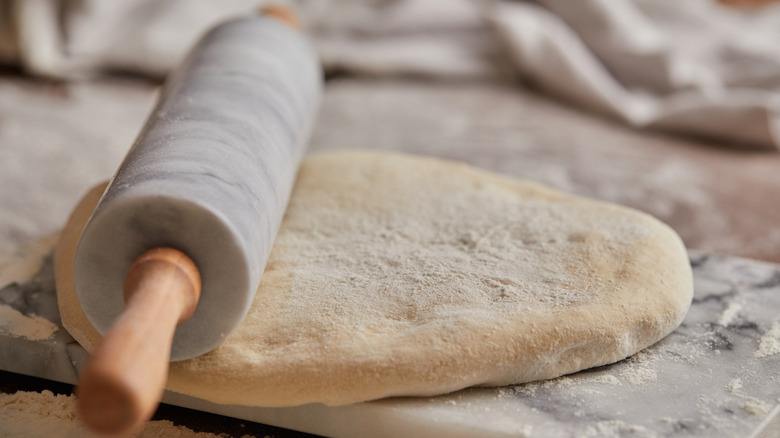
Marble rolling pins are not without their benefits. Kelsey Elizabeth explains they're best viewed as a specialty tool, and so may be a worthwhile investment for a very dedicated home baker. Their stone keeps cool, helpful when working with more butter-based doughs — think shortbread and pie crusts. It's the best kind of rolling pin to use for puff pastry. You can chill it first, and then it remains cool and doesn't melt the butter in the dough. The cooler surface also prevents any sticking.
That heft of a marble rolling pin could also be a pro as you don't have to apply a lot of pressure yourself; but again, this weight could be a bit much when you're working with delicate or even just easier to work with doughs. Wooden rolling pins are generally a more affordable option, and they offer versatility. Because they're heavy enough to flatten heartier doughs while also light enough for you to feel how they're rolling the dough, you can apply a gentler touch if needed. Even better is a French wooden rolling pin. French rolling pins are a must for pie crusts and really just about anything else. And with their tapered, one-piece design, they're easier to maneuver than any other kind of pin. Marble rolling pins are undeniably stylish and may be worth the splurge if you bake often, especially with puff pastry, but if you're choosing just one, say "oui" to wooden French pins.
Static Media owns and operates Tasting Table and The Takeout.