

Why Parchment Paper Is Your Friend When Traveling With Baked Goods
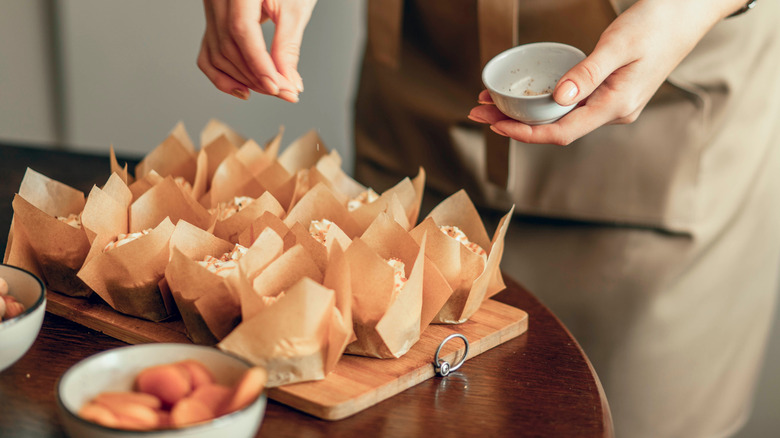
Traveling with baked goods is basically an engineering project. Stairs, sudden stops on the subway, and sundry bumps in the road, everything conspires against the delicate structural integrity of your beautiful cupcakes. There are lots of different strategies to protect your creations, and one of those is parchment paper. Most people think of it only as something to line a sheet pan, but it has a secret superpower: travel insurance. Parchment has just enough friction to keep baked goods from drifting into each other, and it absorbs the tiny impacts that would otherwise cause smudges or chips.
In a slippery container, a stack of cookies will slide around like coins in a jar, knocking against each other until the prettiest ones are a disjointed pile of jagged crumbs. Parchment provides an interruption to that movement. Each sheet is a non-slip mat, giving the layers of baked goods their own defined space. It's especially helpful for anything fragile, like shortbread, slices of loaf cake, or frosted cinnamon rolls. The parchment will hold them in place without sticking, which keeps their surfaces intact.
Materially, parchment protects texture because of the way it handles moisture. It does have a layer of silicone, so while it isn't "breathable", it still won't trap condensation as thoroughly as plastic wrap would, and doesn't cling when exposed to hot air, allowing crisp items to stay crisp, and soft, crumbly goods don't get clammy during the trip. You can fold parchment around individual pieces like envelopes, or simply lay sheets between layers in a container.
Carefully wrapped baked goods have a better chance of survival
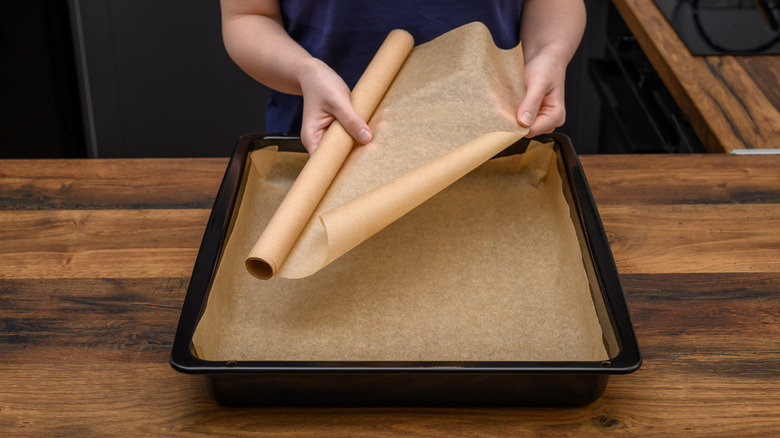
There's also practicality at the destination end, because each parchment divider is a marker in the stack. When you open the container at your destination, everything is legible, one layer per sheet, easy to lift out by the corners, nothing crushed or hidden underneath something heavier. It's mise en place for traveling sweets.
To pack baked goods for a trip, start by fitting a sheet of parchment to the footprint of your container. It should lie flat without buckling. Arrange your first layer of cookies or bars with a little air around the edges so the pieces aren't touching the walls of the container. Then add another cut sheet of parchment on top, tucking the corners in lightly so the layer below can't slide. Repeat this until the container is full. The goal is a tidy stack with boundaries as clear as the pages of a notebook. If and when the container tilts during your journey, the parchment will keep the top layer from smearing against the lid. If you've packed anything with icing or a powdered sugar finish, the parchment protects those surfaces from being imprinted with the geometry of whatever plastic box you're using.
There are other similar packing papers, but they aren't quite as good for this task as parchment. Wax paper can cling if pastries are still warm, and Bee's Wrap works well for whole loaves but isn't great for softer, layered stacks. Parchment is neutral. It bends without collapsing and doesn't impose any aroma or residue on the baked goods. Traveling with pastries is always a test of your packing choices, and the motion of the trip will reveal whether the architecture of the container was built with care.