

Rest Your Chicago-Style Pizza After Baking And You'll Have Deep Regret
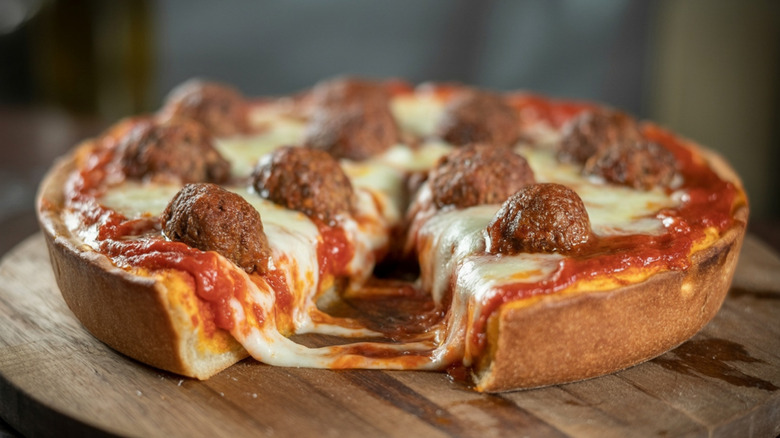
Upon removing most foods from the oven, it's common to hear the sage advice, "Let it rest." While this certainly applies to delicate cakes and roast meats, Chicago-style deep-dish pizza is an exception to the rule. If you let your homemade deep-dish rest too long after baking, you'll end up with some serious regret — and what some baking pros might call a soggy bottom.
In a recent interview about common Chicago-style pizza mistakes with World Pizza Champion Tony Gemignani, the Chicago pizza legend told Tasting Table that allowing Chicago-style pizza to "sit too long can cause the bottom to steam and become soggy." Compared to chewy thin-crust pizzas, Chicago-style pizza crust is generally a bit crispier, flakier, and butterier. If you let the pizza, loaded with melty mozzarella below a generous helping (ie. ladlefuls) of chunky tomato sauce, rest after baking it in its pan, all of those piping hot toppings quickly seep into the bottom layer of crust and make it wet.
Instead, it's crucial to serve deep-dish pizza pretty soon after it comes out of the oven. You can remove it from the hot baking dish, if possible, and let your pizza cool on a ventilated cooling rack, such as a cookie sheet, for a few minutes before slicing it. However, Gemignani recommends keeping this time relatively short — about 10 minutes.
More tips for a loaded deep dish pizza with crisp crust
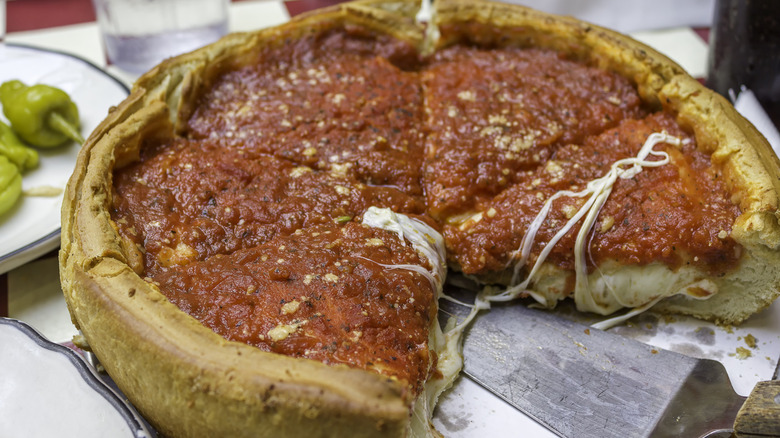
When in doubt, eat your deep-dish pizza sooner rather than later. This is the type of pizza you eat with a fork and knife, so you probably won't risk burning your fingers on a slice after you serve it up on plates. However, if you've avoided resting your baked Chicago-style pizza too long and are still noticing your crust comes out rather damp, it could be worthwhile trying a new pizza crust recipe altogether. Your average pizza dough may be tasty, but it may not hold up to the heft of a Chicago-style pie.
If you've had the pleasure of trying deep-dish pizza in the Windy City, you know the importance of good sauce and toppings — but a perfectly crisp bottom crust is not to be overlooked. To stand up to and hold the toppings, many Chicago-style pizza recipes call for cornmeal in the crust, and some are made with a flaky butter-laminated dough similar to a crisp pastry crust.
To further ensure a crispy crust that's less susceptible to becoming soggy, it also helps to use a dark metal pan with good heat retention and grease it well. If you have leftovers of the hearty pizza (a pretty inevitable circumstance), you can troubleshoot potential moisture seepage that may accumulate as the pie rests by reheating the deep dish in the oven.