

No Electric Mixer? This Old-School Kitchen Gadget Will Do The Trick
We may receive a commission on purchases made from links.
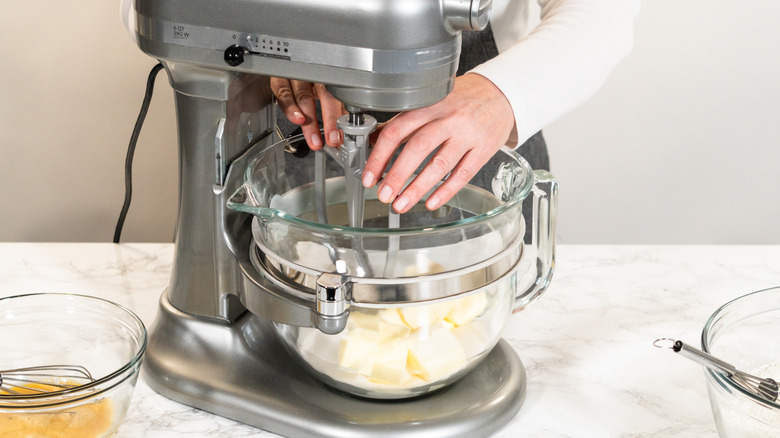
You know that feeling of dread when it's time to whip up a certain something for breakfast or dinner, but your heavy electric mixer is buried in the back of a cabinet? Or even worse, there's a power outage in the neighborhood. We hear you, and we've got a solution you may not have considered. It's the old-fashioned, hand-crank egg beater from dorm-room days or grandma's kitchen. Also known as a rotary beater, this simple, no-frills device was once standard equipment for home chefs, and it got the job done — with no electricity, just lots of wrist action.
The manual beater cropped up in professional kitchens during the mid-1800s, featuring only a handle on top, a crank on the side, and a set of geared metal beaters that spin when turning the handle. Though its called a beater, it also achieves more gentle forms of mixing, including whisking, whipping, and stirring ingredients as needed. Earlier versions went through several iterations before being perfected by the Dover Stamping Company, which is why you may hear them called Dover egg beaters.
Nostalgia aside, this old school kitchen gadget is still kicking around because it's so functional. Completely hand-powered and compact, it goes with the flow, traveling to campsites, picnics, or busy family gatherings with too many chefs vying for electric plugs. Back home, a manual beater takes up no counter space and makes small tasks a breeze. Modern versions, available on Amazon, keep the same format but typically come with padded handle grips, stainless steel beaters, and smoothly-operating gears.
Manual beaters are better for certain tasks
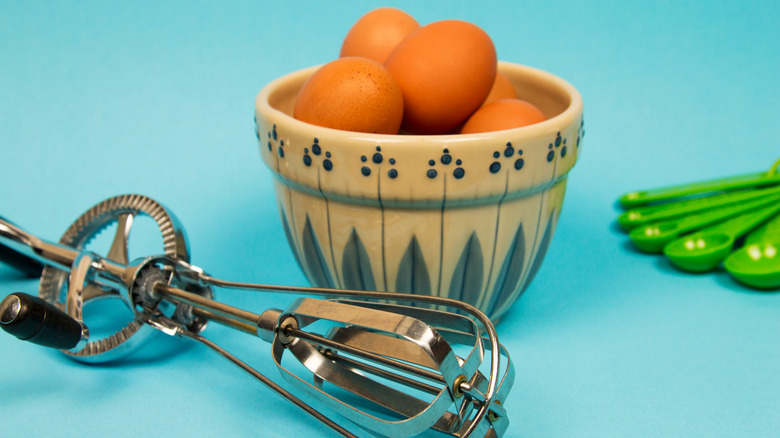
Another reason to have a manual beater ready-and-waiting in your kitchen is its superior performance in certain scenarios and recipes. It's widely known to be better than electric mixers when making batters for pancakes, food coatings, or especially for cakes. Electric ones can overpower the delicate nature of cake batter, making it tough or dough-like rather than pourable, which can alter the results of soft fluffy cakes. They're perfect for beating eggs or prepping butter for pastries and pie crusts.
When whisking egg whites for meringues or whipped cream toppings, a manual egg beater is more likely to inject air into the mixture, helping to create the structure you need. Rotary and manual beaters are handy for salad dressings, gravies, sauces, and even mayonnaise, when you're slowly bringing oil and liquid together into a smooth, stable mixture. It allows more control over the blending and the timing. There are similar types of whisks that get the same results, including the balloon whisk for facilitating low-key blending of delicate items.
For deeper insight on this and other retro-style mixing tools, check out these 14 vintage kitchen gadgets no one remembers anymore. And go even more off the grid with these 11 powerless but useful kitchen appliances and gadgets. Bigger and more powerful isn't always the way to go, so consider a rotary beater for simplifying meal prep — with fewer bits and pieces to clean when the deed is done.