

The Wooden Spoon Cleaning Mistake That Can Make You Sick
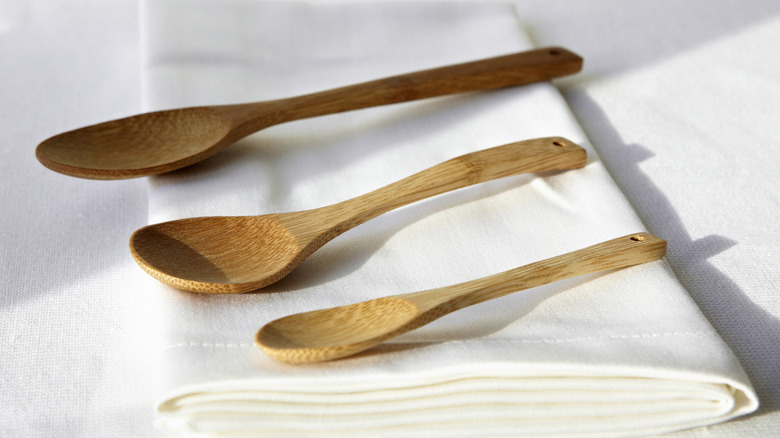
The pros of using wooden spoons in the kitchen are plentiful. They're durable, comfortable to hold, non-conducive — so safe to use over high heats — and won't scratch or damage your cookware or bakeware. It's no wonder wooden spoons are the ultimate utensil for time-consuming cooking tasks. They've even got an aesthetic value in their timeless country chic. However, there's a crucial part of owning and using wooden spoons, which is properly caring for them. And that involves drying them the right way. Not doing this is one of the top kitchen cleaning mistakes that can quickly turn toxic.
You might think the possibility for foodborne illness factors in here because of wood's porosity, but that can actually be a plus. The wood absorbs water and bacteria, essentially taking away the moist conditions from the spoon's surface that microorganisms need to continue growing. However, the correct drying process is necessary for this process to completely play out. If you wash a wooden spoon and just give it a quick pat before placing it back into an enclosed space, the moisture will remain on the surface longer instead of getting absorbed and therefore bacteria will indeed be able to grow. Wooden spoons must be allowed to dry for 24 hours somewhere there's plenty of dry air flow, like in a dish rack's utensil compartment — ensuring it's placed handle down, spoon up so that part gets that moisture-drying air.
How to best clean wooden spoons
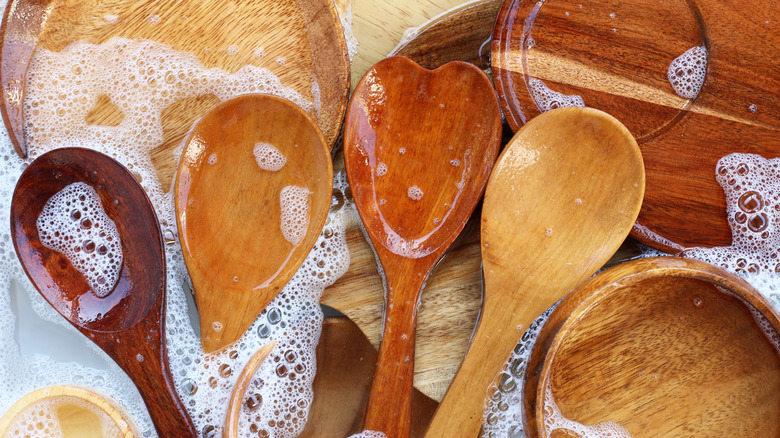
Proper cleaning and drying as an altogether process is one of the key tips you need for using wooden spoons. With this nailed down, wooden spoons can be your best cooking friend. In addition to their moisture- and bacteria-absorbing capabilities, they also boast the antimicrobial tannins woods have naturally developed in order to keep bacteria at bay. Paying attention to cleaning and drying these utensils strengthens their safety advantages.
Always thoroughly clean your wooden spoons with a mild soap and rinse with warm water after every single use. This will keep any build-up from getting too bad to begin with. But deeper cleans more periodically — once a month or so — are a very smart idea. Use a water and vinegar mixture and gentle sponge to give spoons a good scrub. Alternatively, you can let them soak in boiling water for just a moment (longer could cause the wood to swell with moisture and retain it, or even crack), dry them with a towel, and spread on just a touch of coconut oil to keep them from drying out too much. Whichever method you choose, make sure to then place the spoons into that rack to dry for about 24 hours in a space with good air circulation.
When you notice your wooden spoons are having trouble fully drying even when you've taken all these steps, this may be a sign it's time to replace them. You'll definitely want to replace any spoons showing cracks, as those are potential breeding pockets for bacteria.