

Why Opting For The Cheapest Canned Soup On The Shelves Is Usually A Mistake

With the cost of living rising, it's no surprise that people are trying to save money by switching to store-brand products. In many cases, private-label or store-brand items are just as good as their name-brand counterparts. Sometimes, however, going for the cheapest option might actually be a mistake. For instance, one mistake everyone makes with canned soup is immediately reaching for the least expensive brand on the shelf. Inexpensive canned soup brands – typically store brands – often contain unhealthy additives or ingredients. While they might taste fine, some focus more on cutting costs than offering healthy options. That means that they might have a super high sodium content, added sugar, refined carbs, unhealthy fillers, flavor enhancers, and preservatives.
For instance, one cup of Walmart's Great Value brand condensed tomato soup contains 1,000 milligrams of sodium, while the recommended daily intake for adults is 1,500 milligrams. The same amount of soup also contains 18 grams of sugar, which is close to the recommended maximum of 25-36 grams of sugar per day. Consuming excess sodium or sugar can have a detrimental effect on your health, increasing your risk of high blood pressure, inflammation, poor gut health, and water retention or bloating.
If you only eat canned soup every once in a while but otherwise follow a healthy, balanced diet, you might not need to worry. But although canned soup reigns supreme in most American pantries, regularly consuming it could cause health problems. The best way to protect yourself is to pay careful attention to the ingredients and choose healthier canned soup options whenever possible.
Finding the healthiest canned soup options
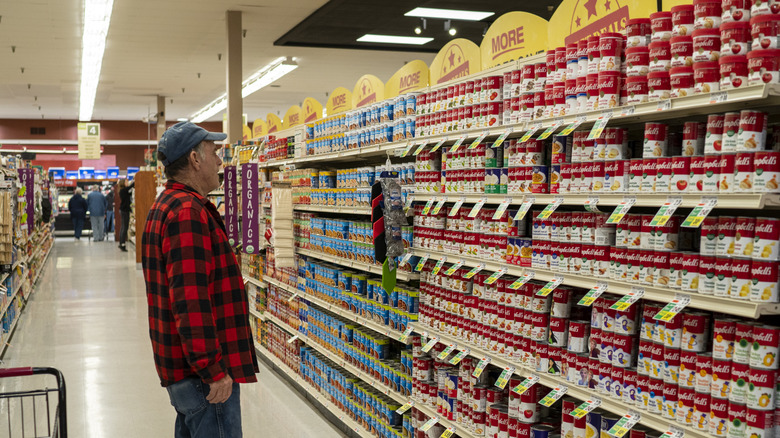
There are some key things to look for on canned soup labels that will guide you in choosing the healthiest one. The most important ingredients to look at are sodium and sugar content. If possible, choose a soup variety that has less than 400 milligrams per serving. Remember that most soup labels consider a serving to be ½ cup, which might not be the actual amount you plan on eating. If you typically eat a cup of soup for a meal, you'll need to multiply the numbers by two.
Opting for broth-based soups rather than cream soups can also cut calories, sodium, and sugar. Soup varieties that contain meat, whole grains, beans, and veggies may also be higher in fiber and protein, making them a healthier choice overall. Try to find soup that has 4 to 8 grams of fiber and/or 5 to 10 grams of protein per serving. Campbell's Healthy Request Split Pea Soup with Ham contains 410 milligrams of sodium, 5 grams of fiber, and 12 grams of protein in a one-cup serving, while Progresso Reduced Sodium Minestrone has 470 milligrams of sodium, 4 grams of fiber, and 5 grams of protein per cup.
Be wary of brands that claim to be healthy or high-protein, however, as the soups may still contain incredibly high amounts of sodium. Although Progresso's Protein Broccoli Cheese with Brown Rice soup has 6 grams of protein per 1-cup serving, it also contains 750 milligrams of sodium, which is half the recommended daily allowance. In the end, making a huge batch of homemade soup and freezing it in individual portions could actually be the least expensive (and healthiest) option of all.