

What Indoor Gardeners Should Know Before Growing An Avocado Tree
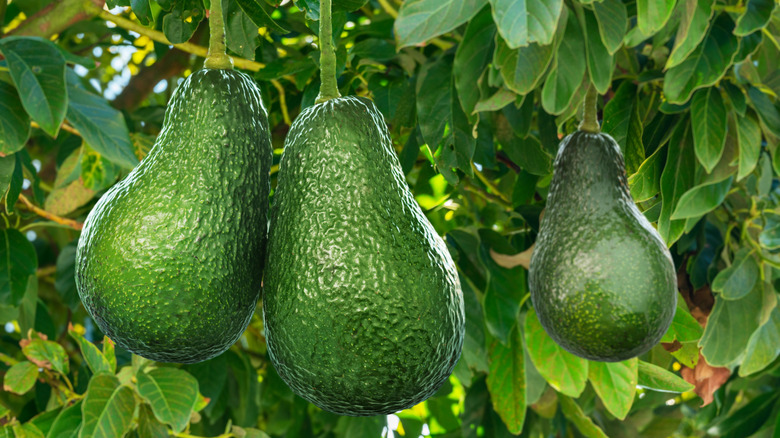
Growing an indoor avocado tree gives you access to one of the most delicious fruits year-round, regardless of your regional climate. Before you start looking for tips on planting an avocado pit at home, there are some important things you should know. While you can start an avocado tree from a pit, it may take up to 15 years to produce fruit, and some may never adapt to indoor conditions and won't grow fruit at all.
While there are many varieties of avocados, opting for a dwarf avocado tree gives you the best chance of successful indoor growing. You can buy a young dwarf tree online or at your local nursery or garden center. Two common varieties that might be relatively easy to find are the Wurtz avocado and the holiday avocado. These self-pollinate, which means you won't need a second tree for cross-pollination. However, an overlooked reason indoor fruit trees don't produce is that even self-fruitful avocado trees may benefit from being placed near another compatible cross-pollinator.
When buying an avocado tree at a nursery, there are some things to look for to make sure you're getting a healthy plant. The trunk should be straight, and you should see leaves on the top, middle, and lower sections. The leaves should be bright green with no yellow or brown spots. Check the root ball for signs of circling roots, dead roots, or being root-bound. You can do this by gently squeezing the pot. If it feels rigid or tight, or if there are roots growing from the pot's drainage holes, the tree may be root-bound. Avocados might not necessarily be a beginner-friendly fruit tree, but with some research and patience, you can succeed.
How to care for an indoor avocado tree to increase the chance of fruit
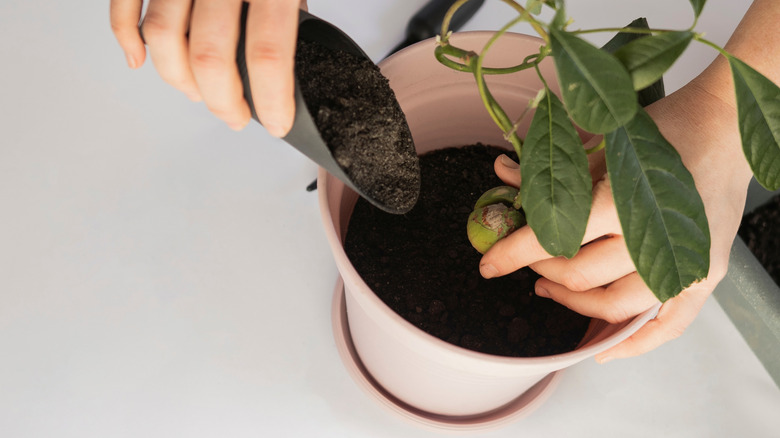
Your tree's environment and how you care for it will play a huge role in whether it bears fruit. With proper care, your tree may start producing in two to three years. Some dwarf varieties can withstand temperatures as low as 29 degrees Fahrenheit, but they prefer temperature ranges between 60 to 85 degrees Fahrenheit. If your home gets colder than that overnight, you can use towels, blankets, or canvas to insulate the tree's roots.
Developed trees need six hours of direct sunlight per day, but young trees should not get direct sunlight until their canopy has fully developed. You should also regularly rotate the pot so that all areas get exposed to the sun. This will help the branches grow straight and evenly. These trees can thrive in large pots or containers that are at least 18 inches wide, and make sure to use a pot with drainage holes. This will lower the risk of it becoming root-bound or suffering from root rot.
You should also use a sandy, well-draining soil, ideally a variety specifically for citrus or avocado trees. Water your tree anytime the soil feels dry. It should remain slightly damp at all times. Lightly mist the leaves periodically, especially if you are using your heater. You can also install a small humidifier to maintain an optimal humidity level of 50%.
The top of the tree should be pruned once at the end of each flowering cycle. Remove suckers from the rootstock, and reduce the height and width with thinning cuts. Following these tips can increase the chance your tree bears fruit, and may even lower the risk of avocados becoming extinct anytime soon.