

The Aromatic Kitchen Trick That Keeps Rodents At Bay

Kitchens, even very clean ones, smell like food, and this is a neon welcome sign to a rodent's nose. These creatures don't rely on their eyesight the way humans do. Smell is their dominant sense, and they use it to follow scent signals that mark a rat-safe route or a promising meal. A mouse has over 1,000 odor receptors (whereas people have a measly 350) finely tuned to trace the semiotics of a kitchen, like starches, fats, and other rodents' chemical signatures. Peppermint oil short-circuits that map. The menthol scrambles the olfactory cues mice look for, disorienting them and making the space inhospitable. Most household vermin, including ants and cockroaches, won't cross an area that smells strongly of this oil, similarly to how tea tree oil will keep bugs away from your kitchen.
Used correctly against rodents, peppermint oil overpowers both the pheromone trails of their vermin brethren and the subtle scent of anything edible that draws rodents into a kitchen in the first place. Just know that it won't solve an existing infestation on its own — if mice have already set up house behind a wall or inside a cabinet, they're not going to pack up just because you introduced peppermint. As a preventive measure, however, it does alter the conditions enough to make your kitchen a less-appealing stop on their nightly rounds. If a rat is scouting your kitchen as a late-night diner and encounters peppermint oil, he's going to write a bad Yelp review and never return.
Peppermint is putrid to pests
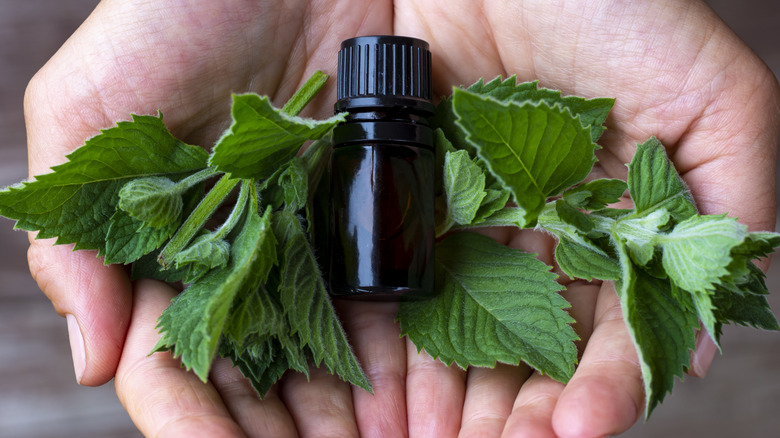
The peppermint oil we're talking about isn't the same as the mint flavoring you might use to make peppermint bark, ice cream, or other refreshing mint recipes. It's the essential oil you'll find in the wellness section of a health food store. Any food-safe peppermint essential oil works for this purpose, and some premade pest-deterrent products already utilize it. Whether you use those or your own bottle, the idea is that you're creating pockets of sensory disruption in the places mice look first, so the path they're tracing disappears.
To use this method, sprinkle a few drops of the oil on a cotton ball or a paper towel strip, then place it where rodents would start exploring, like the shadowy areas under the sink, behind the stove, along the baseboards, or where pipes or wiring enter the wall. You can also add peppermint oil to your DIY household cleaner vinegar spray, if that's in your wheelhouse. You don't need to flood the space — it's strong stuff, so a small dose creates a distinct boundary. Essential oils aren't inherently edible, especially in concentrated doses, and they aren't designed for cutting boards, so keep the oil away from food-contact surfaces.
Because the volatile oils disperse over time, try to make a habit of refreshing these placements every week or so (or sooner if they're in a consistently warm area). This is also a good time to scan the area for signs of unwelcome vermin visitors. Move the cotton balls occasionally to trace a broader perimeter, like drawing a ring around the areas you want to protect. Peppermint won't replace sealing entry points or general food safety, but it's effective as a low-effort deterrent.