

Why Side Dishes Are Just As Important As The Main Course
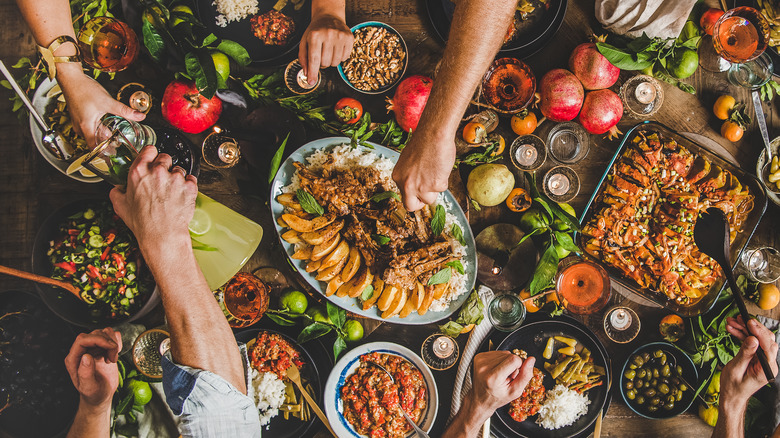
When it comes to preparing a good meal, be it a family feast, dinner party menu, or even just a run-of-the-mill weeknight supper, it is easy to spend a little too much time and energy on the main course. Yes, the main dish is the defacto star of the show, and you want it to be exquisite, but the dishes that you serve alongside it are every bit as important a part of making a meal truly excellent. Side dishes actually have a lot of roles to fill. When done right, they complement and elevate the main, as well as add a variety of flavors and textures to the plate. But they also serve to round out the nutrition of the meal and make sure that everyone gets plenty to eat.
Obviously a perfectly seared ribeye on the plate is going to be the centerpiece of your dinner, but the side dishes you choose for that steak can make or break the meal. If that plate comes out with plain boiled potatoes and canned green beans, it doesn't matter how good the steak is, the meal will be something of a disappointment. Yes, the green beans provide servings of vegetables, and the stachy potatoes make sure your belly is full at the end of the meal, but they just don't stand up to the quality of the main item. If, on the other hand, that savory slab of beef is set beside creamy, rich au gratin potatoes with gruyere and a hearty portion of sweet, tangy, umami-forward balsamic roasted Brussels sprouts, well, that's a meal that you won't forget anytime soon.
The sides should be the majority of the meal
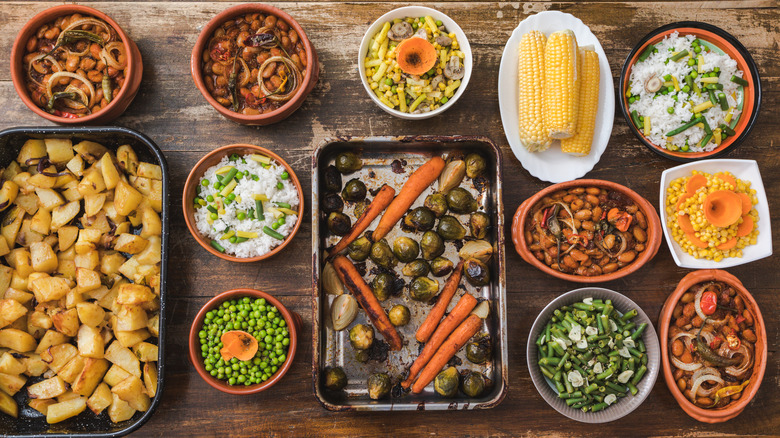
In fact, side dishes can sometimes steal the whole show. Thanksgiving dinner is perhaps where this phenomenon is most evident, but the same can be true of the sides you serve with a rotisserie chicken. This isn't intended to be a slight to roast birds, either. A roast Thanksgiving turkey, when done right, is a juicy, herby, wonderful main. But mashed potatoes with gravy, stuffing, grandma's sweet potato casserole, these dishes are often what we are more excited about eating — and that's okay. Truth be told, a properly built plate should be about three quarters side dishes anyway.
When it comes to healthy eating, the world is awash with lists of rules and guidelines. These often contradict one another, making the whole endeavour terribly confusing. But there are a few nutritional rules that always seem to find their mark, and a simple one to live by is the plate method. According to this technique, your plate should be divided into four equal parts. One of those quadrants you fill with the protein of the meal, like some nice slices of ribeye, as in our earlier example. Another quadrant is dedicated to the starch, in this case that would be those au gratin potatoes. The remaining two quadrants — or half of the plate — should be filled with non-starchy vegetables and fruits, like those delectable Brussels sprouts we mentioned earlier, or Brussels sprouts and a green salad. This method won't answer all of your nutritional questions, but it is a simple rule that can make a difference by improving the balance of your meals — and also making it clear just how important your side dishes really are.