

7 Vintage Bar Snacks That Fueled Prohibition-Era Speakeasies
In 1920, booze went underground in America. New legislation meant that manufacturing or selling alcohol was no longer permitted in the United States. So, naturally, everyone abided by the rules. They had early nights, they kept quiet, and they certainly didn't drink. That's all a lie, of course.
Prohibition didn't stop people from partying or finding ways to drink alcohol; it just changed the way they did it. People hosted parties and flocked to speakeasies, which were underground bars and clubs that sold bootlegged booze. It's hard to say exactly how many illegal speakeasies there were across the U.S., but many reports suggest that in just New York, there may have been up to 100,000.
As well as illegal drinks, these secret establishments needed to offer something to mop up some of the alcohol. They needed snacks. That's why many speakeasies provided their patrons with everything from finger sandwiches to pretzels to stuffed mushrooms and peanuts. As you'll find out below, the food ultimately kept people full and drinking for longer. Here are seven vintage bar snacks that fueled Prohibition-era speakeasies (many of which are still served today).
Deviled eggs
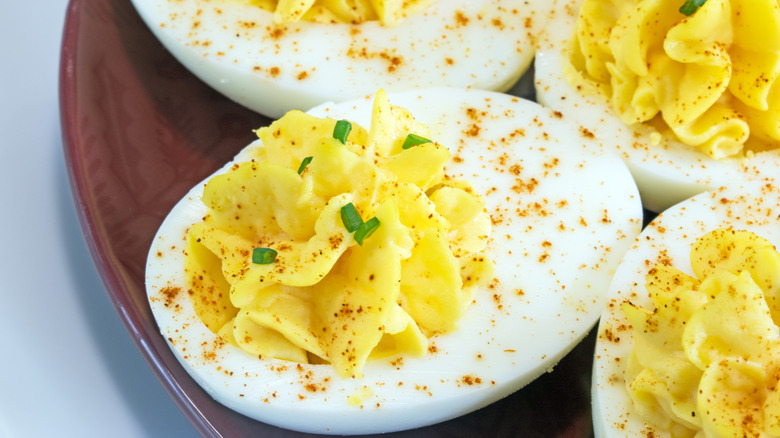
Deviled eggs have been eaten for centuries. Even long before the 1500s, ancient Romans would boil eggs and serve them with spices. But in one 1587 English cookbook, called "The Good Housewife's Jewel," there is a recipe for "farce eggs." It instructs the reader to extract the yolks from boiled eggs, combine them with butter, and then stuff them back into the white, before serving. It's essentially an early version of deviled eggs, which is similar, but doesn't involve mixing the yolks with ingredients like salt, pepper, and Dijon mustard.
At the end of the 19th century, American cookbook author Fannie Farmer put another twist on the recipe. She suggested serving deviled eggs with mayonnaise, and a new American bar snack was born. Classic boiled eggs were already being served in cocktail bars by the mid-1800s, but in the early 1900s, you'd also often find deviled and pickled eggs served alongside them. Not just in fancy cocktail bars, but also in average dive bars, too.
When Prohibition came along, the booze left mainstream bars, and so did the eggs (in part, because the bars closed, but also because of new health and safety regulations). Just like the alcohol, though, it seems that the eggs found a new home: speakeasies. There, they would be sold as finger foods to keep the drinkers fed. This meant that people would stay in the illegal bars for longer, but they wouldn't end up leaving too drunk (which would risk alerting the authorities).
Pretzels
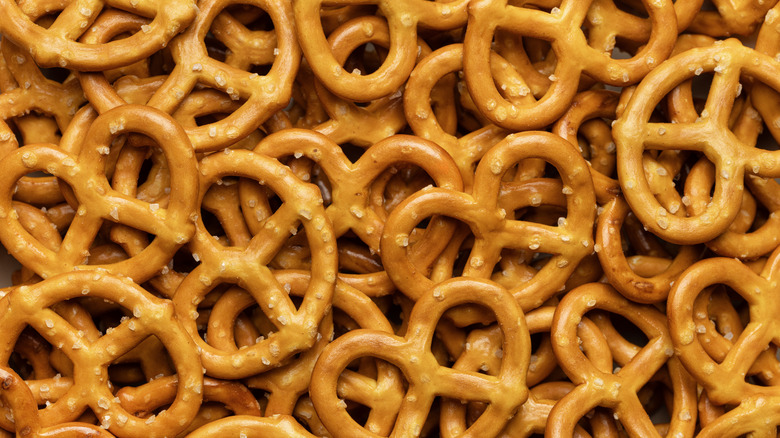
When waves of German immigrants landed in the U.S. in the 1700s, they brought with them two things that would go on to shape the social landscape forever: beer and pretzels. The combination would become a hit in saloons across the U.S., not just because people enjoyed the taste, but because the pretzels were incredibly salty, and customers would eat them, inevitably drink more beer, and then spend more money. It was a winning combination.
By the time the 1920s rolled around, though, pretzels were facing a difficult time for a few reasons. Firstly, there were no more saloons on account of Prohibition. Secondly, America was incredibly anti-German due to the First World War. And yet, this salty snack persevered.
Sales during prohibition actually went up for some pretzel producers. This was likely for two reasons: Many people were still drinking beer at home and were craving their go-to bar snack, and, you guessed it, speakeasies. The idea was the same as it had been with legal bars. If pretzels were on offer, then customers would stick around for longer and drink more alcohol.
Stuffed mushrooms
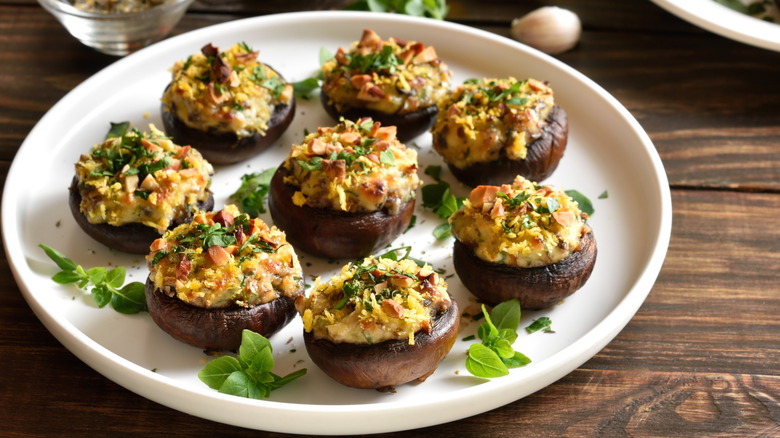
Many Americans were quite suspicious of mushrooms in the 19th century. The fear wasn't entirely irrational, of course, considering that so many varieties are poisonous. But by the end of the century, people had started to accept mushrooms into their diet. For example, in 1919, the third edition of "Vaughan's Vegetable Cook Book: How to Cook and Use Rarer Vegetables and Herbs," published by Vaughan Seed Store in Chicago and New York, there were several mushroom recipes, including baked mushrooms and mushrooms with macaroni.
By the 1920s, Americans were, generally, pretty big fans of mushrooms. And the industry just kept growing. More and more Europeans were arriving in the country, bringing their own mushroom-centric recipes and farming techniques from home.
Because of their size, mushrooms made for the perfect canapé, which was a must at 1920s parties. But stuffed mushroom canapés were also sold at speakeasies, too. Just like deviled eggs, they were a great finger food, as they could be held in one hand, leaving the other one free to hold an (illegal) drink, of course.
Finger sandwiches
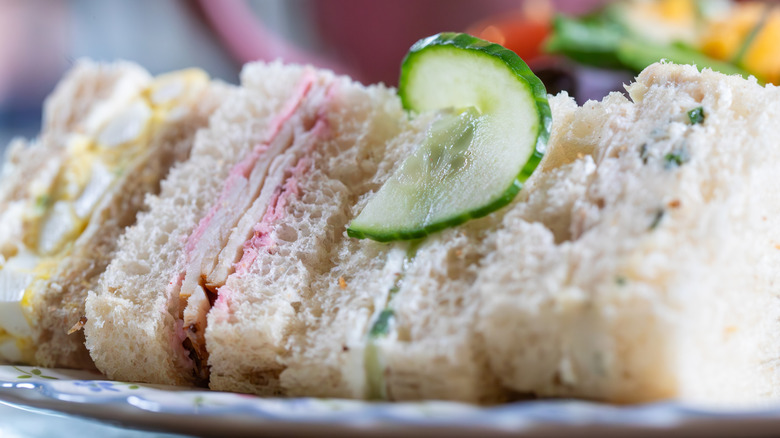
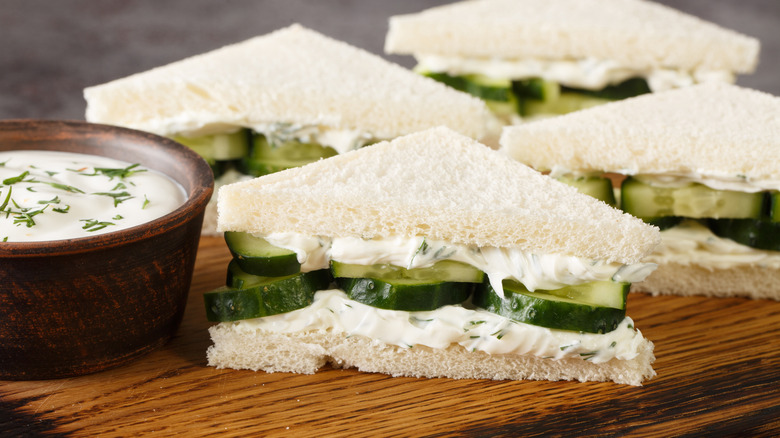
It feels like sandwiches have been around forever. After all, they fit into most scenarios, from simple lunches to party food to on-the-go quick breakfasts. But actually, sandwiches weren't invented until the 1760s (by the Earl of Sandwich, of course). From there, the simple dish spread in popularity. By the early 20th century in the U.S., they had become an easy option for entertaining. In the 1920s, especially, sandwiches were the go-to food to serve guests.
So, of course, it tracks that finger sandwiches would become a staple for speakeasies. They were small but substantial, making them the perfect snack to make and then circulate around an underground bar. As for the filling? Well, that probably varied. Some popular options at the time included tinned fruits and cream cheese. Others might have been a little more adventurous, opting for oysters and bacon, perhaps, or maybe sardines with olives.
Olives
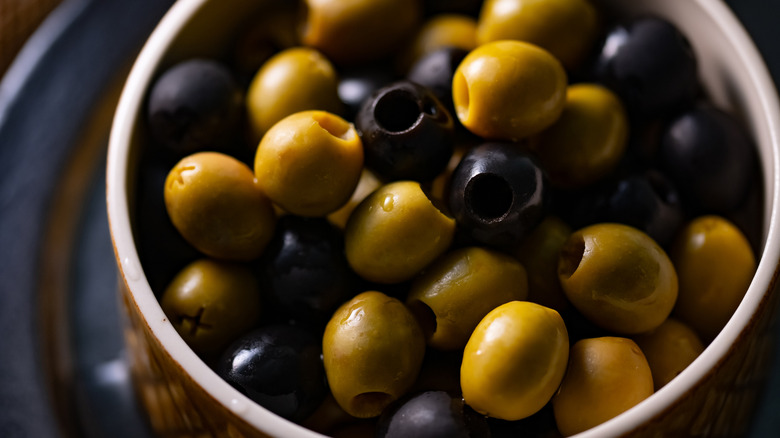
Olives weren't just a sandwich ingredient; they were likely also served at speakeasies in other ways, too. It's highly probable that they were made available on the bar, as, again, they were nice and salty, and would keep people thirsty. If they weren't given out as a snack, they would likely have been served in a different way, with a lot more alcohol. We're talking about martinis, of course.
American bartenders had been adding olives to martinis since the late 1800s, and these drinks were likely still served in underground bars during Prohibition. Martinis were seen as a sophisticated, classy beverage, and so would be more likely to be served alongside other cocktails at fancier establishments, like ballroom speakeasies, for example. In fact, olives, too, were seen as a pretty fancy food during this time, reserved for the richer people in society.
In fact, one theory states that dirty martinis, which are a standard martini with olive brine, were actually created during the Prohibition years. There may have been a pretty simple reason for that: Bootlegged alcohol tasted grim, and bartenders needed to add something to mask the flavor. That said, it's important to note that the origin of the dirty martini is contested, and there are many different theories about its invention.
Peanuts
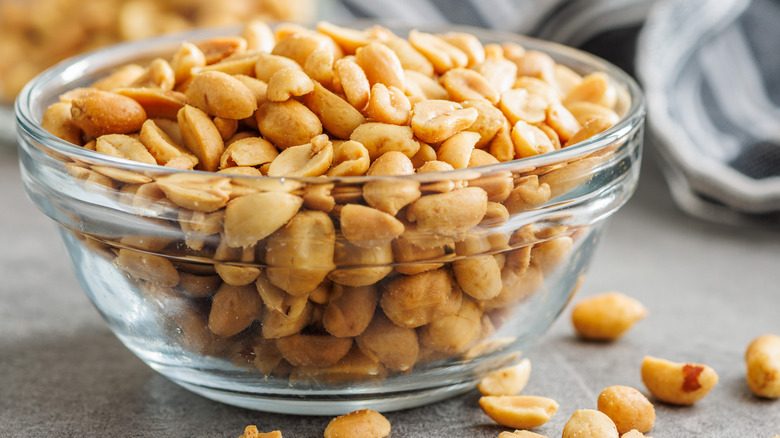
If you walk into a bar today, you'll probably be able to find peanuts to enjoy with your drink. They're a classic bar snack: Peanuts are easy to eat with your fingers while you hold a drink with the other hand, fairly substantial (due to their protein content), and usually pretty salty, too. During Prohibition, things were no different. Speakeasies would regularly serve up peanuts to their customers to keep them drinking all of the bootlegged alcohol.
In fact, several reports state that infamous gangster Al Capone had his own peanut supplier for his speakeasies (of which he had many — some estimates put the number at more than 10,000 across Chicago). That supplier was Capone's friend, Leonard Japp. As well as nuts, he also ensured that Chicago's speakeasies were in good supply of pretzels, sandwiches, and cigarettes, too. Eventually, on Capone's request, he expanded into potato chips.
Japp didn't go out of business after Prohibition — far from it. He actually ended up starting Jays Foods, a popular potato chip brand throughout the 20th century.
Pickles
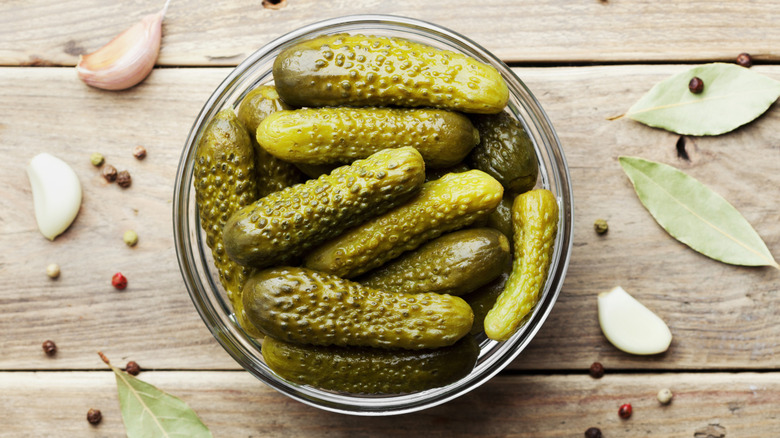
Pickles have been eaten in America for a very long time. They were first produced by Dutch farmers in the 17th century, and then popularized by Eastern European Jews in the late 19th century. By the early 20th century, pickles were everywhere.
Pickles were eaten on their own, served with sandwiches, and, during the 1920s, you guessed it, they were given to patrons at speakeasies to enjoy with their bootlegged booze. Just like the other snacks on this list, they were the perfect fit for an underground bar, with their small size and salty taste.
Interestingly, though, for some, pickles were seen to be just as bad as the banned alcohol. Many members of the upper classes looked down on immigrants who ate pickles, putting them in the same category as tobacco and whiskey. But the pickles won in the end, of course. Today, they're not just a popular bar snack like they were during Prohibition, but they're also a beloved flavor of everything from popcorn to potato chips.