

12 Food Brands Many May Not Know Are Owned By Campbell's

When you think of the Campbell's brand, you probably think of soup. It makes sense: The company was a pioneer of the condensed soup industry. It's the reason why grocery store shelves all over the world are now lined with millions of cans of soup. It's also partially responsible for popularizing the artist Andy Warhol. His famous 32-piece "Soup Cans" exhibition centered on designs featuring the iconic red-and-white cans, of course.
Among this storied history, Campbell's has experienced some big ups and some big downs. In 2025, it attracted negative publicity when one of the company's executives allegedly stated that its products were for "poor people," among other denigrating and prejudiced comments. That executive — Martin Bally — has since been fired from the company.
The comments put Campbell's in the spotlight, and left many consumers thinking: Just how big is this company? Well, the short answer is very big. Huge, actually. In December 2025, Campbell's net worth was just over $8.8 billion. This comes from more than just soup. As it turns out, the company is behind many of your favorite brands and snacks — Goldfish crackers, Kettle Brand Chips, Pretzel Crisps, and Late July tortilla chips are just a few.
Pepperidge Farm
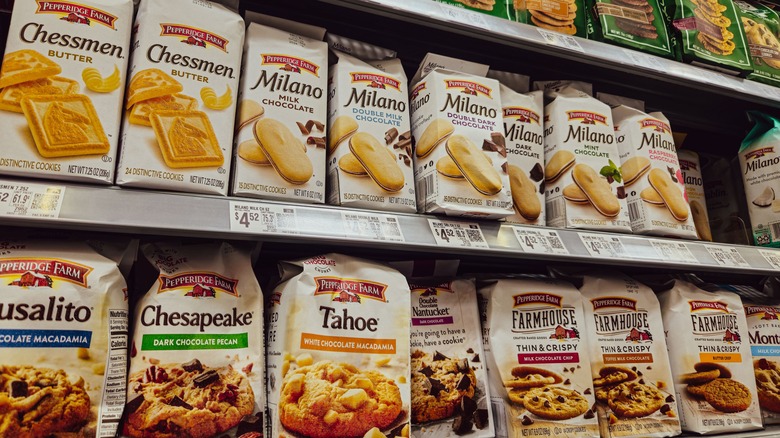
Yep: The brand that gave the world Goldfish crackers, a whole range of iconic indulgent cookies, and those hearty Farmhouse Breads is actually owned by Campbell's. Pepperidge Farm was founded in the 1930s by entrepreneur Margaret Rudkin, who against all odds built the company through the Great Depression and the Second World War. It became an American favorite very quickly, and she sold it to Campbell's for around $28 million in 1961.
When Rudkin started Pepperidge Farm, she began just selling bread. Despite being expensive for the time, sales of the commodity were a huge success. She added Belgian cookies to the lineup in the 1950s, and Goldfish crackers came in 1962. When Campbell's — then known as Campbell Soup Company — bought the company, Pepperidge Farm was already producing 58 products. By 2010, that number grew to nearly 600 products. Rudkin didn't step away from her brand after selling in the 1960s. In fact, she actually became the company's first female board member.
Kettle Brand Chips
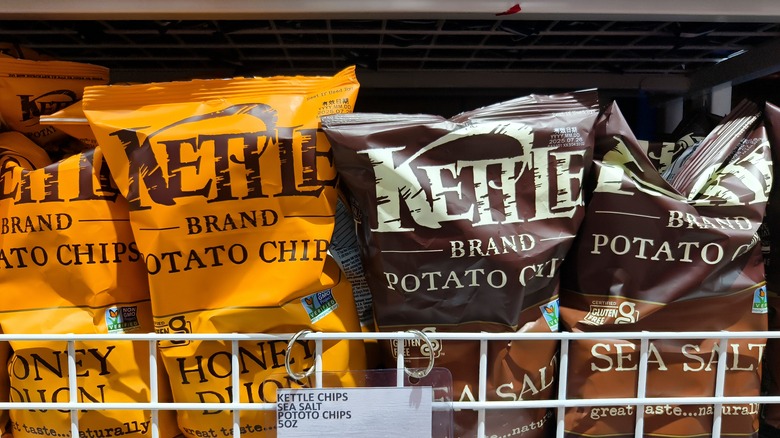
In 2018, Campbell's completed its acquisition of another major snack giant — Snyder's-Lance — for around $4.87 billion. This, of course, meant that Campbell's owned all of Snyder's-Lance's snack brands ... including Kettle Brand Chips.
Kettle Brand chips are an American favorite. There are a few key reasons, but one is quite simple: It's all about the crunch. Kettle chips are thickly-cut and slowly batch-cooked at lower temperatures than regular chips, which helps to give them their signature texture. Kettle Brand didn't invent the process (that was George Crum, who sold kettle chips in the 1800s), but it did popularize the style when founder Cameron Healy began selling the snack out of his van in the 1980s.
Kettle Brand took off in the U.S. and the U.K., where it remains a firm favorite today. Across the Atlantic however, Kettle Brand chips are produced by a company called Kettle Foods Limited; which currently isn't owned by Campbell's. In 2019, Campbell's sold its European Chips Business — an umbrella which includes the Kettle division — to Valeo Foods for around $80 million.
Pacific Foods
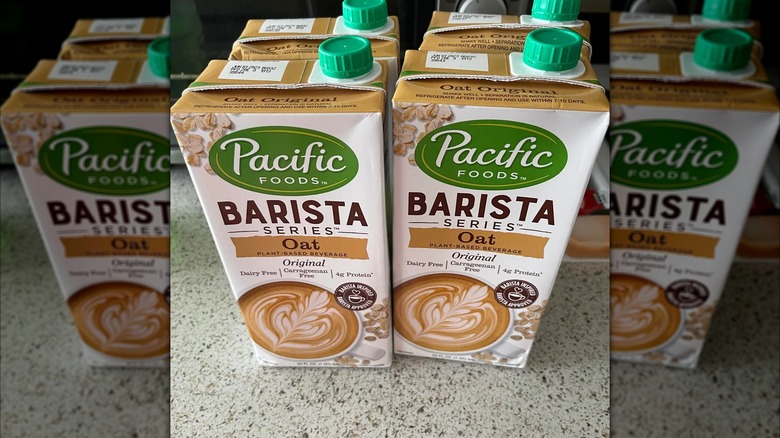
Pacific Foods started back in 1987 as a tofu company. Back then, the aim was to provide healthy, organic, and great-tasting foods that went above and beyond what was already on the market. The plan was a success: For decades, Pacific has filled shelves with organic soups, chilis. plant-based milk, and more; nurturing a loyal following of consumers seeking healthier food options.
In 2017, Campbell's saw Pacific Foods as a potential solution to alleviate reduced demand for its own classic soups. It acquired Pacific for $700 million, in the hopes that the company would help Campbell's reach a wider consumer base. The strategy seemed to work: In 2024, Campbell's announced it would close down Pacific Foods' original production plant in Tualatin, Oregon, as the manufacturing center was no longer fit to keep up with growing demand for Pacific products. Unfortunately, the decision resulted in around 330 employees losing their jobs.
Snyder's of Hanover
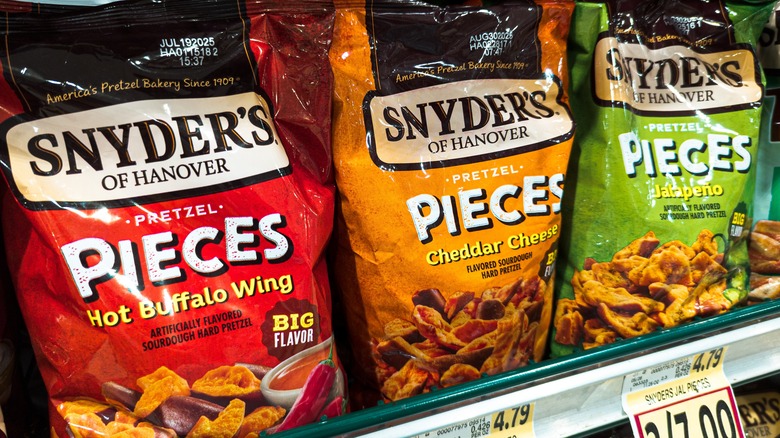
This beloved Pennsylvania snack brand began in the early 1900s, with a potato chip company and a pretzel company. These were operated by the Snyder family and a man named Harry Warehime; respectively. To cut a long story short, the two eventually joined together. In the 1980s, the descendants of Warehime and the Snyder's created Snyder's of Hanover.
The snack brand was a huge success. People loved — and still do — the brand's products, such as tortilla chips and pretzel varieties. Every single year, Snyder's of Hanover produces around 245 million pounds of pretzels in its various factories.
Throughout its journey, Snyder's of Hanover has consistently evolved. In 2010, it joined with the food brand Lance, and formed the snack giant Snyder's-Lance. Together, they boasted a huge catalog of snack brands — but you already know how this story ends. Eight years later, the entire company's portfolio would fold into Campbell's after a multi-million dollar acquisition.
Lance
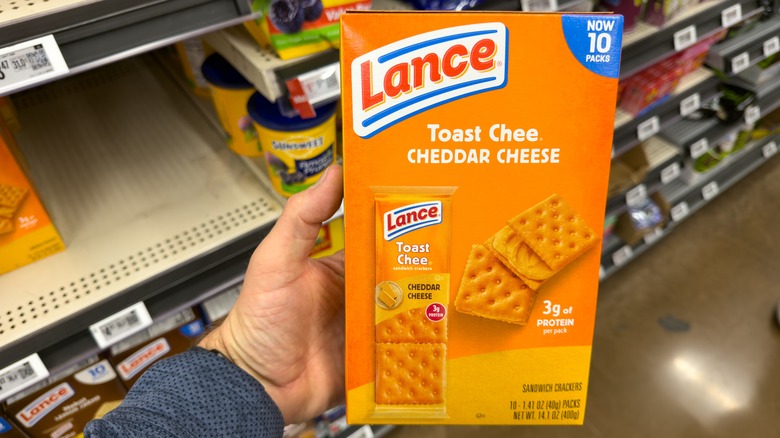
Lance — the second half of Snyder's-Lance; the snack giant acquired by Campbell's in 2018 — started life in Charlotte, Virginia. In 1913, its founder Phillip L. Lance had 500 pounds of peanuts he needed to shift. He had planned to sell them in bulk, but his buyer had a change of heart. Instead, Lance roasted the nuts and sold them for a nickel a bag.
It turns out Lance was pretty good at roasting peanuts, and so he kept doing it. Lance eventually formed the Lance Packing Company with his son–in-law Salem Van Every in 1915. It was a family business, and everyone pitched in with ideas. For example, Mary — Lance's wife — and their two daughters created peanut butter crackers.
Now, Lance is a household name. It's known not just for sandwich crackers, but also products such as sandwich cookies, salted peanuts, and popcorn. Still based in Charlotte, the Campbell's-owned brand produces 215 million pounds of snacks every single year.
V8
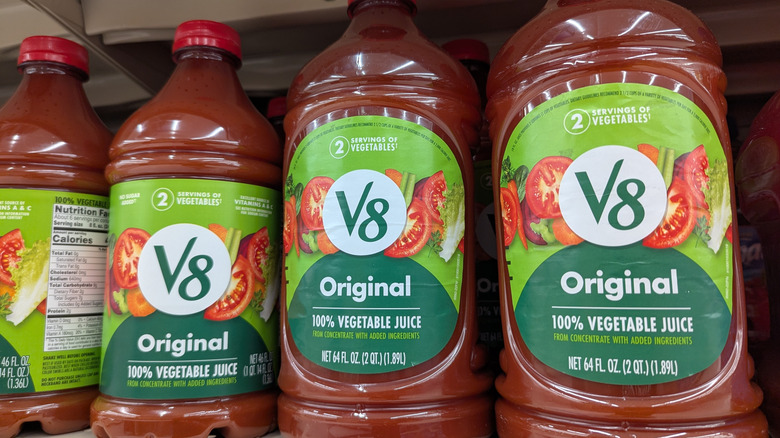
Lately, an increased interest in health and wellness has driven major growth in the juice industry. More American consumers are looking for healthier juices, which are often packed with nutrients thanks to a mix of natural ingredients such as fruits, vegetables, and spices. V8 was ahead of the game in this respect. The Illinois brand — founded by W.G. Peacock of the New England Products Company — has made vegetable juice since the 1930s. The company and its manufacturing plant were quickly acquired by Campbell's in the late 1940s. Fun fact: In the early 1950s, future president Ronald Reagan appeared in print ads for the brand.
Campbell's has worked to evolve V8 for decades, and things were still changing for the company as recently as 2025. The original vegetable juice is still a popular product — accounting for around half of all V8 sales — but now Campbell's is looking to expand into areas such as energy drinks and cocktails.
Snack Factory
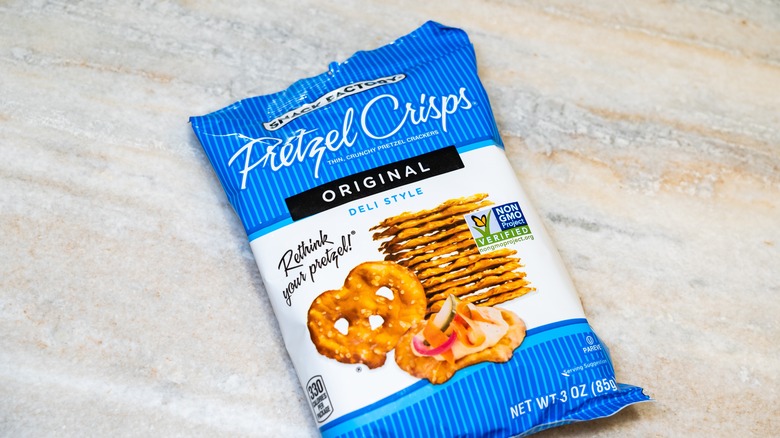
In 2012, Snyder's-Lance snapped up Snack Factory for around $340 million. The New Jersey-based brand was a natural fit for the snack company, as it specializes in Pretzel Crisps. Available in multiple flavors, these striped-bagged snacks are essentially thin and flat crispy pretzels. You probably already know that however, because Pretzel Crisps – created by Snack Factory co-founders Warren and Sara Wilson — are a big deal. They're a key player in the global pretzel industry, which was valued at more than $7.5 billion in 2025 by Fortune Business Insights.
As we've established by now, Snyder's-Lance is no longer a standalone company. In 2018, all of its brands — including Snack Factory — were acquired by Campbell's. The food giant has continued Snack Factory's legacy of food innovation: In 2024, for example, it launched Pop'ums. These munchies are a unique blend of popcorn and pretzels which come in three flavors.
Cape Cod Potato Chips
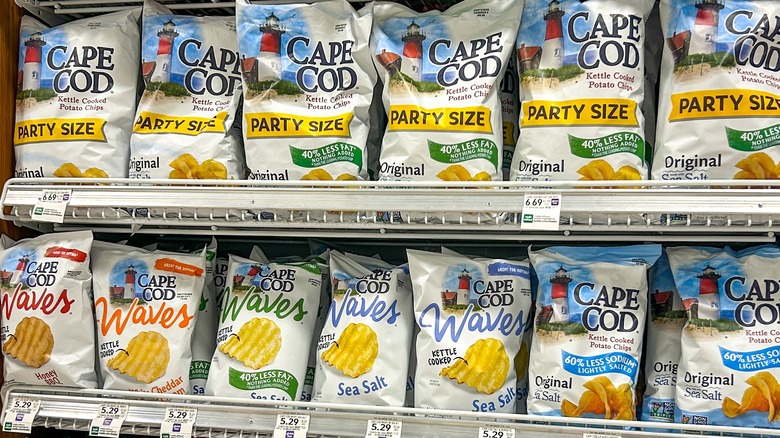
Kettle Brand isn't the only kettle chip under Campbell's umbrella. The food giant has also owned Cape Cod Potato Chips since it acquired Snyder's-Lance.
The many flavors of Cape Cod Potato Chips are just as beloved as Kettle Brand chips. It makes sense, as these are also thickly-sliced, incredibly crunchy, and just as delicious. That's why the brand sells around 136 millions bags of chips every year. It comes from humble beginnings, however: In 1980, Stephen Bernard was selling auto parts before deciding to buy his own potato slicer and teach himself how to make potato chips. Needless to say — he had a knack for it.
In 2020, Campbell's celebrated 40 years of the iconic potato chip brand with a new online store. It hasn't always been smooth sailing, though. In 2025, the food giant was slapped with two lawsuits after shoppers complained of false ingredients claims. Cape Cod Potato Chips claim to be free of artificial colors, flavors, and preservatives, but they are made with synthetic citric acid.
Swanson
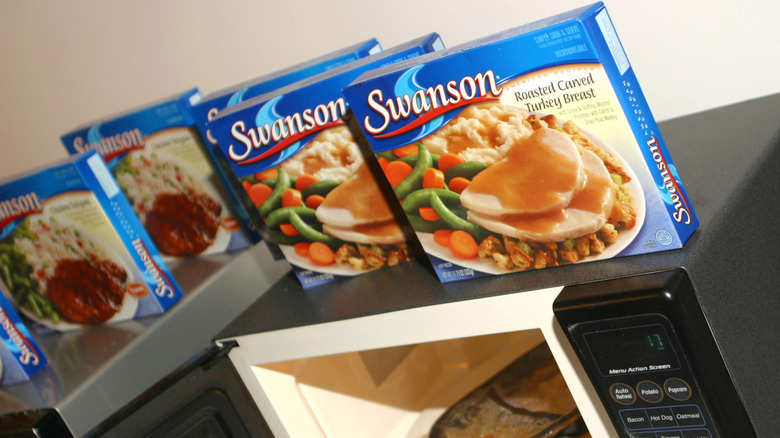
Swanson is arguably one of the most influential brands in American food history. Founded in the late 1800s, the company first focused on transporting ingredients like eggs, milk, dairy, and meat around the country. It was in the 1950s — after the invention of flash-freezing food — that Swanson's iconic TV dinners were created. Those TV dinners ended up not just defining the brand, but transforming America's food landscape. Suddenly, preparing dinner was quicker and more convenient than ever.
You may not have known it, but Campbell's has been a huge part of Swanson's journey ever since the company announced its intentions to buy the TV dinner manufacturer in 1955. It was a good move: By 1956, Swanson sales exceeded $13 million. By the 1980s, Campbell's had helped innovate TV dinners even further by creating microwave-safe trays. By 2030, the global ready-meal market is expected to exceed a value of $225 billion, per Grand View Research.
Today Swanson looks a little different, but it's still all about convenience. For example, its product line up includes packaged and seasoned fully cooked chicken, as well as canned chicken à la king and cartons of broth and stock.
Pace
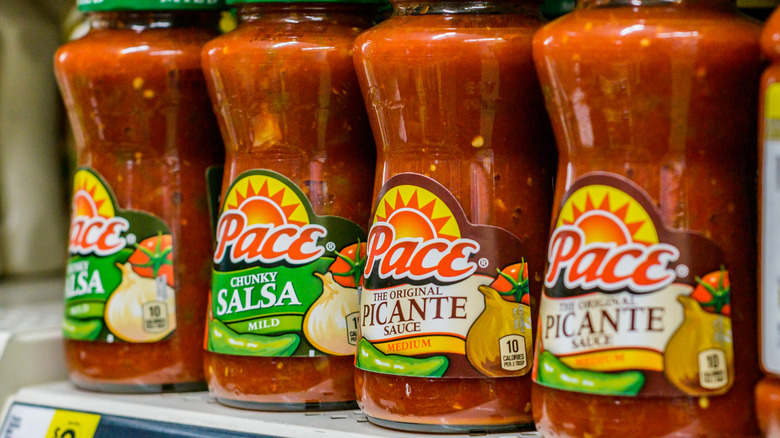
Since the 1940s, Pace Foods has been synonymous with picante sauce. The original salsa recipe — made with a simple mix of tomatoes, onions, and jalapenos — was created by Louisiana-born entrepreneur David E. Pace and is still used today. Truthfully, there's no real need to fix what isn't broken. By the time Pace died in 1993, his recipe had won the title of best picante sauce in the world no less than three times.
The 1990s was also when Campbell's saw potential in Pace Foods. The year after the founder's death, Campbell's acquired his brand — at this point the world's leading producer of Mexican-inspired sauces — for around $1.1 billion. In good news for Campbell's, the hot sauce market has continued booming since. Thanks to Pace, the food giant has stake in an industry projected to be worth nearly $11 billion by 2034 (per Global Market Insights).
Prego
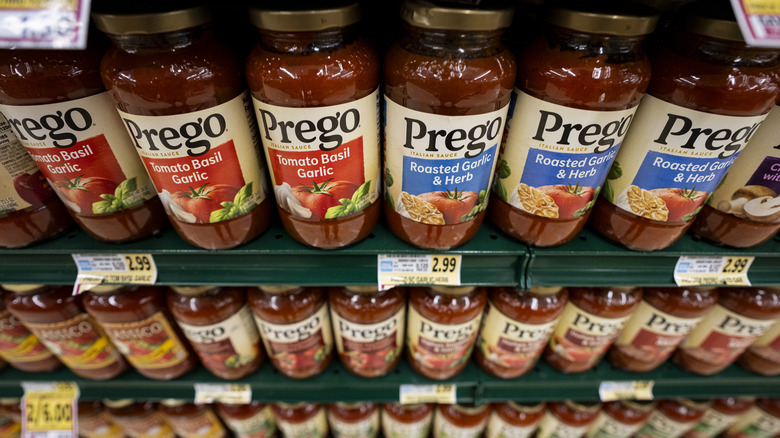
Spaghetti sauce is a ubiquitous staple in American households. This makes sense considering that — according to the National Pasta Association — people in the U.S. love pasta even more than they love chocolate. And most people love chocolate a heck of a lot. When reaching for a tomato sauce to pair with your spaghetti, there's a good chance you'll grab a jar made by Prego. However, Prego isn't its own company. It's actually Campbell's in disguise.
Campbell's created Prego spaghetti sauce in 1981. The recipe was apparently inspired by a team member's family recipe, and it was a hit. By 1983, the Prego name garnered around $40 million in sales for the food giant. That success inspired Campbell's to keep expanding the Prego line, which is why you can now find everything from classic Traditional Pasta Sauce to Creamy Roasted Garlic Pesto Sauce sold under the Prego name.
Late July
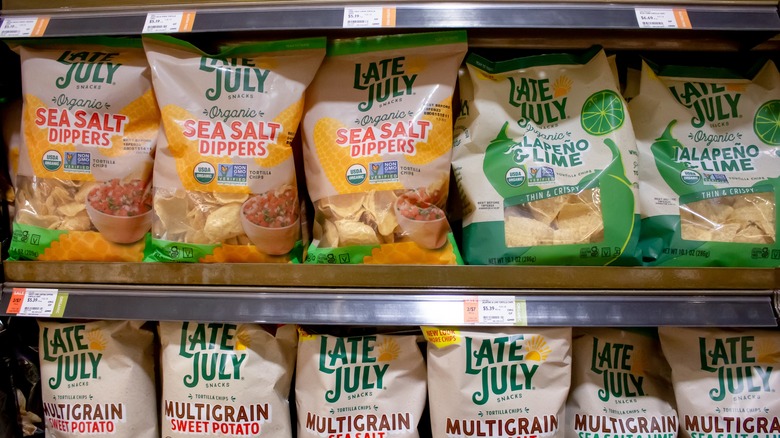
Kettle chips are a big moneymaker for Campbell's, but it has the tortilla chip market covered too. This is all thanks to Late July snacks, which was another brand inherited when Campbell's took over the Snyder's-Lance portfolio.
Founded by New York-based entrepreneur Nicole Bernard Dawes in 2001, Late July began as an organic saltine cracker brand. The surname is no coincidence — Dawes knew how to handle the snack business, because she's the daughter of Cape Cod Potato Chip founder Stephen Bernard. In fact, Bernard actually ended up co-founding Late July with Dawes. By the late 2000s, Late July had a new investor in the form of Snyder's-Lance, and a new niche: Tortilla chips.
In 2014 — after the tortilla chips catapulted Late July into the mainstream — Snyder's-Lance upped its stake to 80%. This meant that by the time 2018 rolled around, Late July was officially under Campbell's ownership.