

How To Store Fresh And Powdered Turmeric For Maximum Freshness
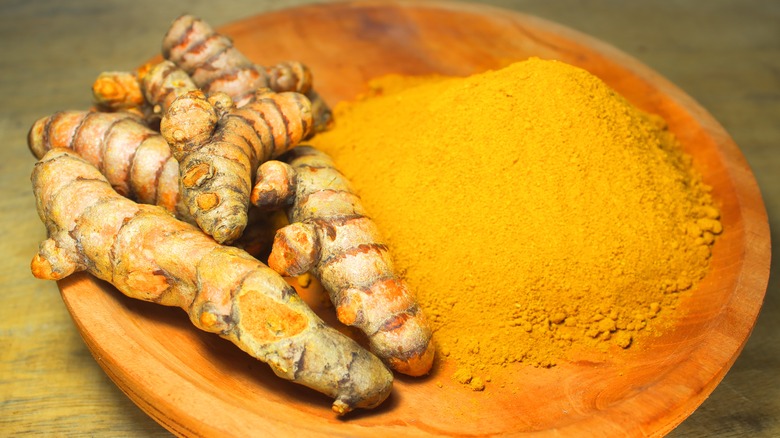
Turmeric is one of those super-versatile spices that can be found in every well-stocked spice cabinet, whether you're using it to amp up the color of BBQ meat, add warmth to rice dishes, or even create a savory substitute for mustard. However, if you do have it in stock — either as a powder or even rhizomes for those who like their spice fresh — make sure you're storing them correctly. If you're not following these rules, odds are good that your turmeric's dying a slow death.
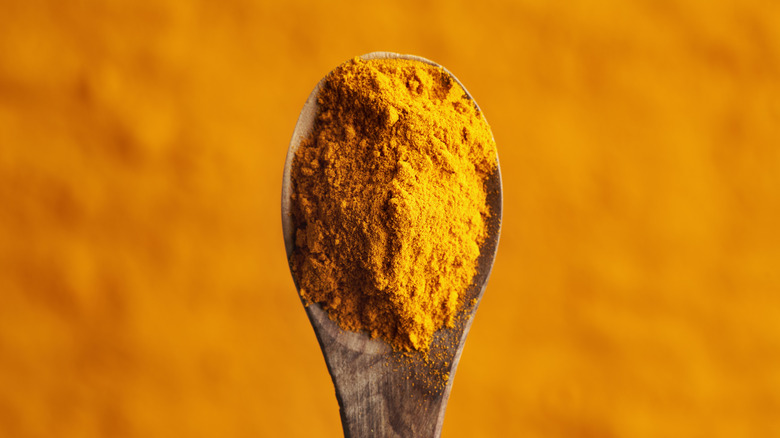
Ground turmeric is simple. They need three things to survive: darkness, dryness, and a very tightly sealed container. That's it, really — after you've got it home, put it in an airtight jar or tin, then stuff it in a drawer far away from your cooking zone where temperature can fluctuate wildly throughout the day. Just doing this, and the spice will maintain its brilliant sunset hue for one to two years instead of fading to a depressing beige just weeks after.
Fresh turmeric rhizome is an entirely different beast. Those knobby orange fingers you brought home from the market will need cold storage after a thorough wash and an even more thorough drying session — any lingering moisture invites mold. Wrap them gently in paper towels, slide them into a sealed bag, nestle them in your refrigerator's crisper drawer where they'll happily last several weeks. If you've too much, freeze them and they'll last six months, easy. The potency fades gradually over time, sure, but frozen turmeric beats spoiled turmeric every single time!
Dehydrate turmeric roots at home for even better shelf life
Fresh turmeric rhizomes will only last three weeks max — plenty of time normally to put them to use. But if you couldn't use them all up by the deadline, try dehydrating them at home, and you can lengthen three weeks to six months of preserved color and flavor. While freezing works well, dehydration gives you pantry shelf-stable turmeric without taking up freezer space, plus the concentrated flavor is exceptional. Begin by scrubbing those fresh roots until every speck of dirt disappears down the drain, then strip away the papery skin with a vegetable peeler.
Slice everything into rounds as uniformly thin as your patience allows — consistency really matters here, as different thicknesses mean some pieces finish drying before others, which throws off your grinding. Lay these slices in a single layer across whatever you've got: drying racks work beautifully, while a parchment-covered baking sheet also does the job. Then comes the waiting: several hours somewhere airy and away from direct sunlight if you're blessed with reliable weather, or several hours in a barely-warm oven if you're not.
When you've an inkling it's ready — do the snap test. Do the turmeric pieces break cleanly? If so, you're done! Bendy pieces equal more time. Once ready, grind up the dried turmeric pieces. Use whatever you have: spice grinder, blender, food processor, or even a mortar and pestle. Store in glass or steel (cool, dark places only), and your homemade powder will outshine store-bought versions by miles.