

The Old-School Wood Cleaning Product That's Better Left In The Dust
We may receive a commission on purchases made from links.
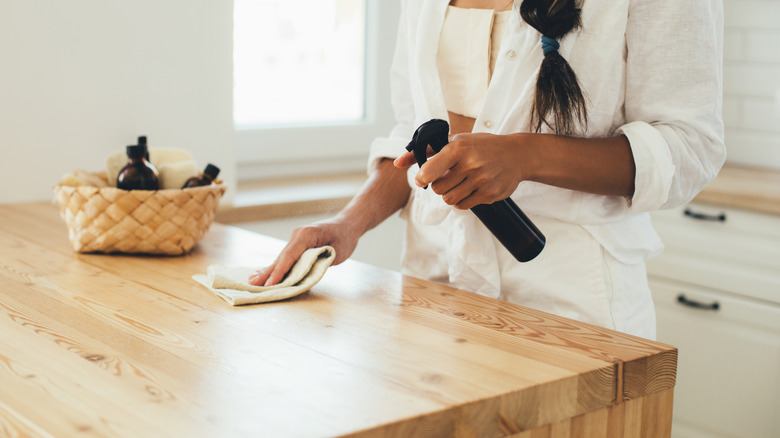
Most old-school cleaning hacks are actually pretty good, but you need to be a little more careful when dealing with wood. We all absorbed some classic cleaning tricks from our parents and grandparents growing up. Ways to save a dollar and make use of products we already have in the house. Some of those, like using lemon juice and salt to clean cutting boards, or putting out baking soda to absorb odors, are genuinely good advice that will work most of the time. But every once in a while, you find grandma's advice isn't the answer. And one of the old-school cleaning habits you should stop practicing has to do with vinegar and wood.
As something everyone has a bottle of in their pantry, vinegar is a classic household cleaner. But while it can be great for glass or cast iron, it's best avoided when cleaning wood products, especially those that have been finished. That's because vinegar is an acidic liquid, and a strong one at that. While a mixture of vinegar and water is great at cutting through grease, the acid can also wear away at surfaces it's used on repeatedly. It's especially tough on finished wood products, because it will strip away and dull the sheen. It's not as bad for unfinished wood items like cutting boards, but it should still be heavily diluted to avoid excess wear. If you are going to use it, start with two parts water to one part vinegar.
Vinegar can wear down and corrode finished surfaces like wood and marble
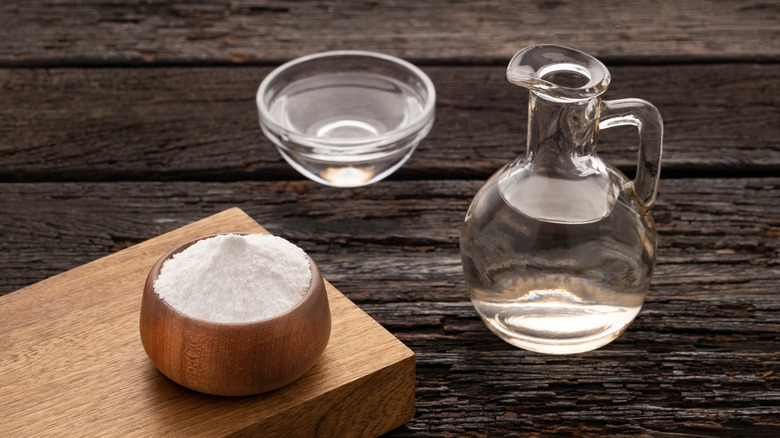
Wood isn't the only surface you want to avoid cleaning with vinegar. The acid has the same problem with many finished stone surfaces that are popular as kitchen countertop materials. Smooth marble, limestone, and soapstone can all have their sheen corroded by vinegar. In fact, vinegar can actually start to dissolve the stone itself. Some countertops, like granite, are more resistant, but can still lose their finish, which will hurt the sealing and make them more prone to staining.
Thankfully, there are both common products and household alternatives to cleaning wood and stone with vinegar solutions. The best products for peace of mind are those made specifically for the surface you're cleaning. Things like Murphy's Oil Soap for wood and Weiman Granite & Stone Cleaner are effective, affordable, and widely available.
If you prefer sticking with a DIY cleaning method, there are a few options you have for cleaning wood. The best is also probably the easiest, which is just warm water and dish soap. Using a few drops of soap in water, then using a cloth to wipe down your wood, is effective for most cleaning jobs. If you have sticker residue or food on wood, you can also use vegetable oil or olive oil to help cut through the grime without damaging your wood. So you don't need to spend extra money to clean your wood, but do be careful about the household products you use.