

The Special Thai Rice You Need To Make Mango Sticky Rice
We may receive a commission on purchases made from links.
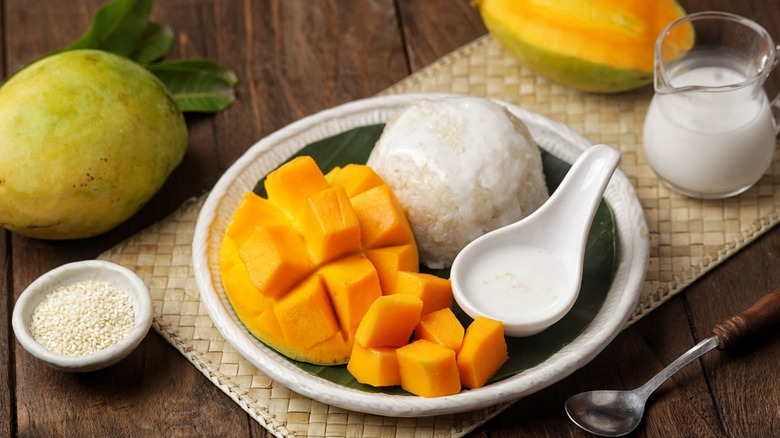
A spoonful of mango sticky rice explodes in your mouth; fresh pulp with warm grains cushioned in rich coconut milk. It's the savory crossover that many never knew they needed. Yet, recreating a classic Thai mango rice recipe at home requires a special purchase. Scanning the ingredients, there's one secret to success: glutinous rice.
Not to be confused with gluten, the protein in wheat, glutinous rice goes by a few names, including "sweet" and "sticky" rice. However, these nicknames are fantastic clues: this special product has a sweetened flavor and gluey consistency, which pairs beautifully with slippery mango slices. The texture comes from a higher concentration of amylopectin (one of the two types of molecules in starch). Amylopectin has a larger molecular weight than the other molecule, amylose, and its presence directly impacts the stickiness of your rice. When cooked, the result is unmistakable: glutinous rice swells into delicious clumps.
As an Asian ingredient, it might be worth heading to a specialty store to find it. That said, scope out the international aisles at local supermarkets beforehand; Walmart has Fusion Select Sanpatong Thai Sticky Rice, and, conveniently, Soeos Sweet Sticky Rice is available on Amazon.
What happens if you make mango sticky rice with different rice?
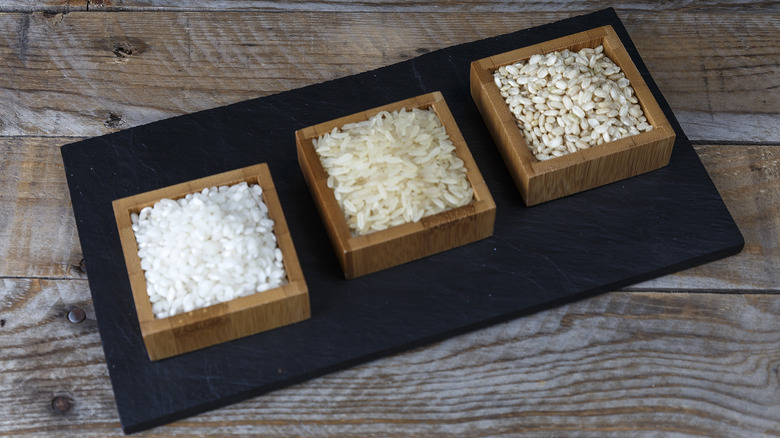
There's always the urge to take a shortcut, especially when working with ingredients that tend to elude the realms of your "pre-stocked pantry." Unfortunately, glutinous rice isn't the type of ingredient you can swap in a pinch. The primary issue is that this recipe hinges on its characteristics — the stickiness that gives "mango sticky rice" its name.
Let's get scientific about types of rice. Indica is the world's most popular variety of rice, so chances are, you're brandishing jasmine or basmati. Neither will work. The distinct difference between jasmine and sticky rice is in the starch molecules; it contains approximately 22% amylose and just 78% amylopectin. This ratio lends itself to a fluffy texture — aka, a dish that scatters, rather than clumps. For those craving a traditional Thai dessert, it's hard to imagine a more undesirable finale.
The closest swap would be sushi rice, which contains more amylopectin than basmati or jasmine. But, while sushi rice might stick together, you'll still miss the floral notes and gooey texture; these two are sisters, not twins. Ultimately, it's better to approach mango sticky rice the "proper" way. This dish is amongst the most delicious recipes to use up fresh mangos; don't waste juicy fruit on the wrong rice.