

Season Your Roasted Broccoli With This Punchy Leftover Ingredient
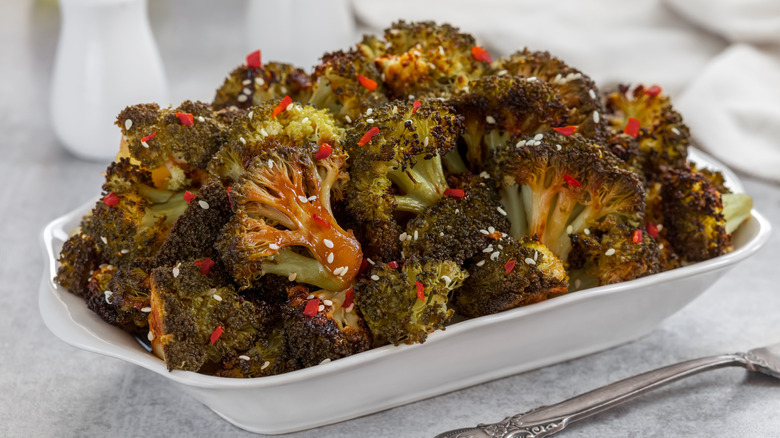
Next time you open a jar of anchovies, stop right there! Don't pour the oil out, because it's liquid gold. It might be a byproduct, the unintended result of the real reason you bought the jar, but people pay good money for oil infused with things like truffles, rosemary, or Calabrian chilis, and this is, when you think about it, the exact same thing. Originally a preservation method for the salty little fishies that helps keep air out of the jar, over time, the oil takes on everything that makes the anchovies themselves delicious.
Roasted broccoli in particular responds beautifully to it. When you roast broccoli at high heat, the Maillard reaction kicks in and the florets caramelize at the edges while the central stems soften, which brings out a natural sweetness along with the vegetable's darker, earthy notes. Anchovy oil slips right into the many nooks and crannies of the cruciferous vegetable, and turns up the volume on everything that's good about it. If you're worried about fishiness, don't be. Once the oil meets the heat, any malingering, marine murmurs will soften as the flavor matures into a more warmly ambiguous umami note, rather than strongly seafood-y slap. Because the oil contains the glutamates of the anchovies, it works as a salty seasoning that teases out the roasted flavor of the broccoli, like how a splash of soy sauce or a handful of parmesan would.
A teaspoon or two will do; try tossing it all together in a mixing bowl first to get even distribution. You can also "water" it down with some extra olive oil if you feel any tinned-fish trepidation. From there, the broccoli roasts as usual — on high heat, spread on a sheet pan.
Floret-forward flavor
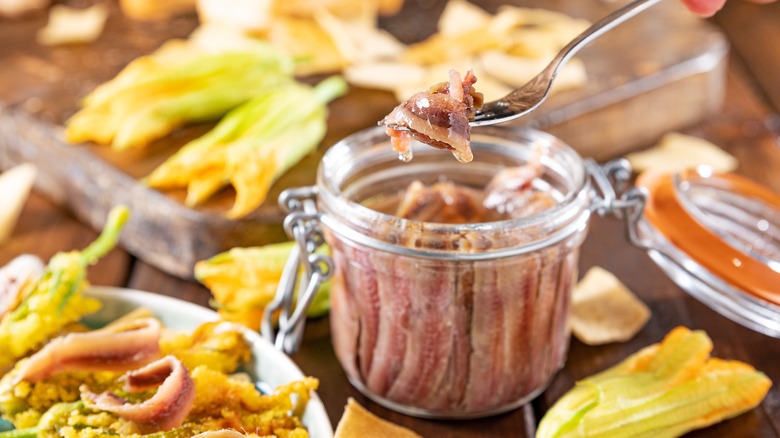
Tossing the florets with the oil before they go into the oven gives the dish a mellow, built-in depth that permeates the stems as they soften. The oil will amplify heat conduction and slightly scorch the edges of the oiled florets, which creates textural intrigue and a contrast of sweet and bitter notes. If you want a stronger flavor, drizzle the anchovy oil on the broccoli right after it comes out of the oven and the residual heat will still warm the oil. Or, if you're a true fish-flavor fan, do both.
The dish is perfect as it is, but if you want to build on the idea, use a microplane and add a clove or two of garlic into the bowl when you mix in the oil. You could also add a spoonful of chili oil or even some toasted, ground, and sifted Sichuan peppercorns to your dish.
No extra steps or ingredients are required, although a little lemon zest and a sprinkle of flaky Maldon salt over the top won't hurt. A textural topping can also be a yummy addition. A handful of panko, toasted in a small spoonful of the anchovy oil makes a crunchy pangrattato that can be scattered over the finished broccoli. This gives the dish contrast without overshadowing the vegetable itself. Toasted black sesame seeds can add a nutty crunch, while some finely shaved parmesan will enhance the aged, umami notes of the anchovy oil. Capers would work well too, if you want it a little saltier. Anchovy oil is concentrated, so start with a small amount and build up from there. A little goes a long way, and the broccoli's natural sweetness will stay at the center of the dish.