

How To Tell If You Have Under-Creamed Your Butter (And How To Fix It)
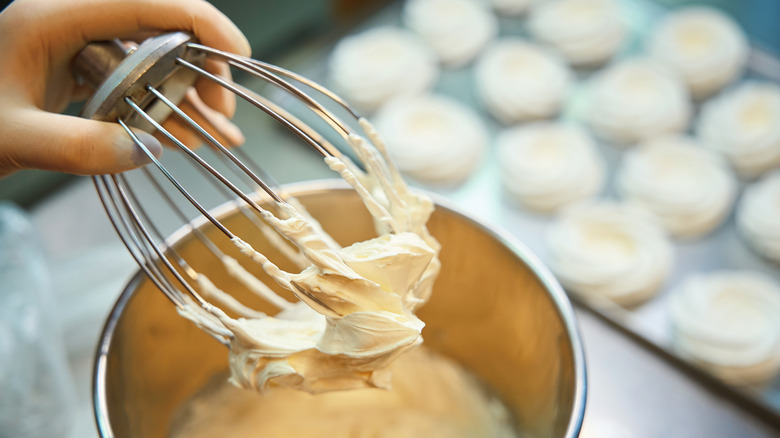
The act of creaming butter and sugar together is an essential part of baking. It's one of the most repeated tasks there is, and it's crucial for ensuring that our baked goods have the right texture. Properly creamed butter not only leads to perfectly light cakes but also fluffy muffins, crisp cookies, and tender sweet breads. It's a delicate balance, as over-creamed butter can lack structure, while under-creaming can cause a dense and gritty texture.
It can be intimidating to try to figure out exactly when to stop creaming, so we spoke with chef Danielle Sepsy, founder of The Hungry Gnome and author of "The Scone Queen Bakes," for her expert advice. According to Sepsy, the key is to look at the mixture. If the color or size hasn't changed, it's underdone. "When beating sugar and butter, it should be pale yellow, almost ivory, and it should be creamy and have increased in volume," she explains. "It should not have harsh granules of sugar."
Room-temperature butter will help you get there. You want to ensure you can make a noticeable indent with your finger before you use it. "If you use room temperature butter, it will incorporate better and smoother and in a shorter amount of time," Sepsy adds. "Keep your eyes on it, and it will happen in just a few short minutes! Once pale yellow, light, and fluffy with just a slightly grainy feel, you are done."
What to do if you over-cream butter
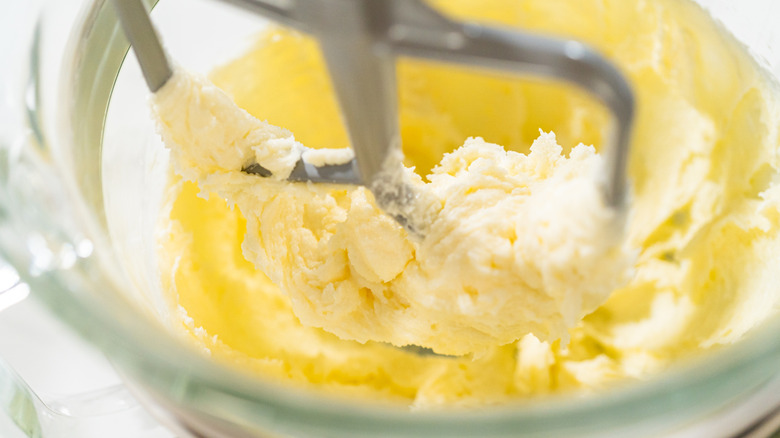
The whole reason we cream sugar into butter is to trap air inside of the molecules. But if the butter is too cold, it won't expand, and the ingredients won't incorporate properly, leading to a chunky mess. When it comes to cold butter, Sepsy says there's a better chance that you'll over-cream the mixture too. "If your butter is too hard, you may have to beat it longer," she explains, "making it more likely that you walk away and lose track of the progress."
If that does happen, and you end up with an over-creamed mixture, you need to re-evaluate. "If it is beaten until it is too liquidy, you can place it in the fridge and let it firm up a bit for 10 to 15 minutes, then beat it again," Sepsy notes. "If it is very broken/separated, you may need to start again."
If you're unsure about whether the butter is over-creamed or not, your best bet is to again take a good look at it. According to Sepsy, it will get too soft or liquid-like, with a pale, curled appearance. "This can cause your baked goods to [not have] enough structure and cause them to be dense, greasy, gummy, or even collapse," she adds. That's the last thing you want, so it's best to just add some flavor to the beaten butter and use it as a spread for something like sweet cinnamon toast instead.