

How To Easily Remove Stubborn Stains From Cutting Boards
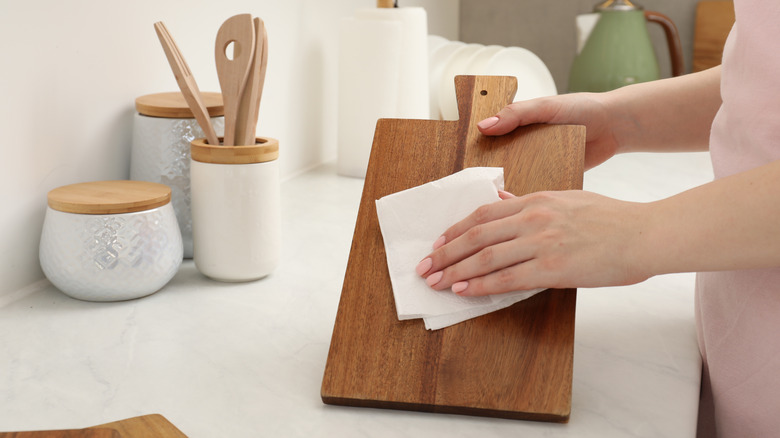
A cutting board should literally be a clean slate. It's the surface that the raw ingredients touch first and where your attention settles before the actual cooking even begins. When the board holds onto stains and smells, it's more than just cosmetically annoying; it starts the process off on the wrong foot. But, perhaps most importantly, both the marks and miasma are indicators of molecularly meaningful material left behind from meals past, settled into the grooves made by your knife. These cuts can carry bacteria and impart undesirable off-flavors, so it's important to keep them clean.
While many scrub harder or soak the board longer to sanitize cutting boards, this does little for the stain and can actually damage the material. The better strategy is routine care that matches the surface. Wood absorbs moisture and releases it slowly, whereas plastic keeps everything on the surface, including stubborn pigments and strong smells. Though both can be cleaned well, the steps that work for one won't always work for the other. Those distinctions change how the stains form and how they need to be removed.
Since wood boards have natural fibers that open slightly under the blade and settle back into place, stains are generally easy to remove with hydrogen peroxide. Plastic boards, on the other hand, hold the exact shape of every cut, which allows colorful or aromatic ingredients to settle into the grooves. This requires heat (be it from boiling water or the dishwasher) to get rid of. With a few basic habits, paired with an approach that fits the material, you can keep both wood and plastic boards clear, bright, and ready for whatever you cook next.
Work with the wood
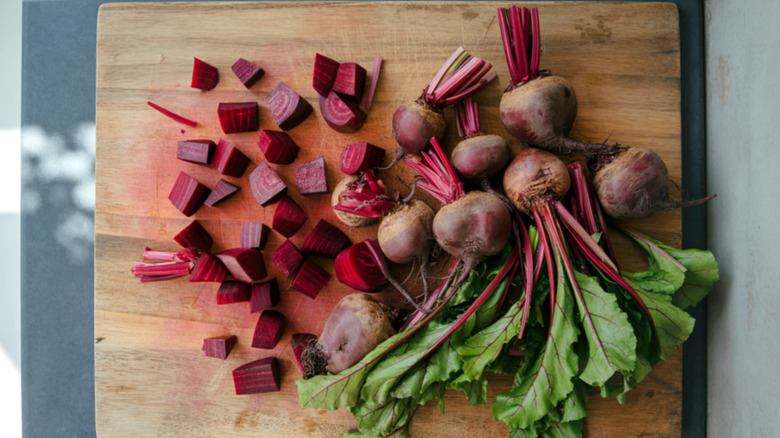
The key is working with the material's natural behavior rather than against it, and wood responds well to stain removal exactly because of its structure. The natural fibers swell when wet and then shrink as they dehydrate on the drying rack, settling back into place. Thus, stains lift best on wood when the board is cleaned soon after use, before the fibers contract around the residue. The most effective method that doesn't rely on caustic scrubs and basic, nontoxic pantry staples is a simple 3% hydrogen peroxide solution. This is strong enough to break down color without damaging the wood itself.
Pour a small amount of peroxide across the stain and let it sit for a minute or two. The peroxide will react with the organic compounds that cause discoloration, loosening them so they rinse away easily. For boards with heavy staining, placing them in a patch of sunlight while the peroxide rests can strengthen the chemical reaction, as light activates the peroxide. Salt and lemon can also be useful, as coarse salt is a good natural scrub and the acidity in the lemon helps lift discoloration. This combination won't replace a true sanitizer, but it will remove the signs of frequent use.
Wood that stays damp will warp and crack, which creates new grooves for residue to settle into, so intentional drying is essential to maintaining your wooden cutting board's long-term health and integrity. Stand the board upright so air can move across both sides. Seasonal conditioning with MCT oil or food-grade mineral oil will seal the surface, reduce future staining, and slow the rate at which moisture enters the fibers.
Breakdown of plastic
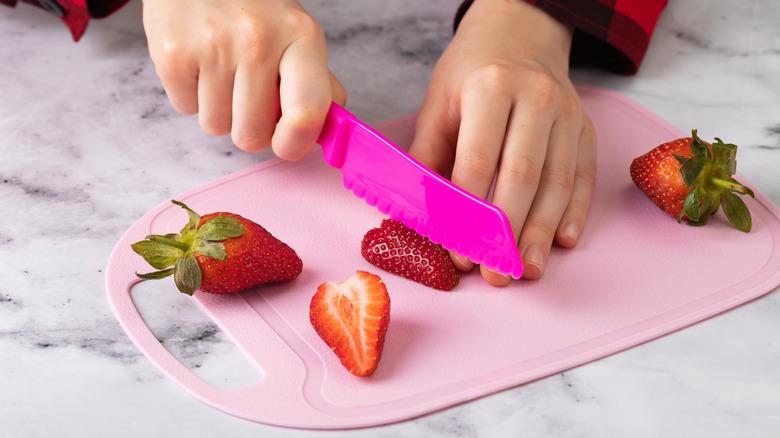
Plastic boards hold onto stains for different reasons. They don't absorb moisture, and they don't have fibers that move. But every mark your knife leaves behind stays, and those shallow cuts become channels where pigments can settle. Once the color sinks into those grooves, scrubbing often isn't enough to pull it out. The good news is that the same 3% hydrogen peroxide technique that works on wood will also work on plastic, as will baking soda and vinegar or a mild bleach treatment. However, the simplest way to loosen pigments and draw out strong smells imparted from ingredients on plastic boards is with heat.
Plastic softens slightly when exposed to high temperatures, which helps detergent reach the residue clinging to the knife marks. Running the board through a dishwasher cycle often resets the surface without any further intervention. However, if you prefer hand-washing, pour near-boiling water onto the surface and let it sit briefly before scrubbing with some dish soap and a stiff brush. The combination of heat, detergent, and manual stimulation will lift the pigment more easily than scrubbing a cold board.
A melamine sponge is another effective option for plastic boards because it's a micro-abrasive. When dampened and used with mild dish soap, it reaches deeper into the grooves than a regular sponge, and it will finely sand the area, shaving down the fuzzy texture plastic boards develop. The fuzziness does mean more microplastics in your food, though, so definitely replace it when that starts to show. Because plastic deteriorates quicker than wood, some home cooks reserve plastic boards for raw meat since they can utilize high temperatures and vigorous cleaning, preferring wood for produce and everyday prep.