

10 Traditional Christmas Eve Dishes Around The World
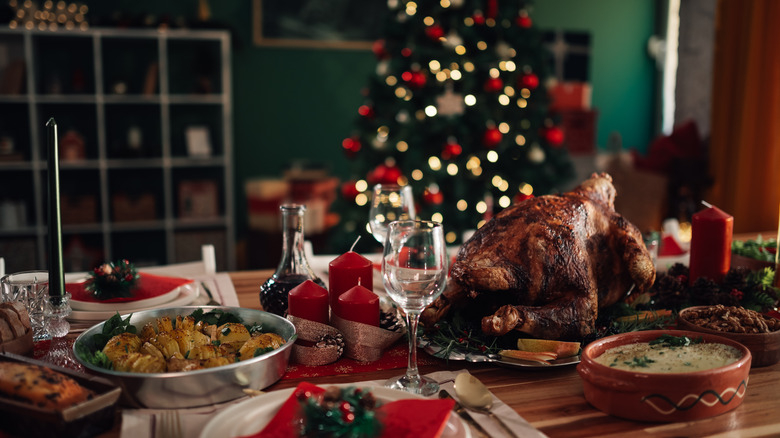
There's something so inherently cozy about Christmas Eve cooking. In the lead-up to Christmas Day's nonstop festivities, it can be a time to slow down and savor with friends and loved ones, truly embracing the spirit of the season.
Wherever you are in the world, most families have favorite seasonal dishes they return to year after year. These recipes are sometimes handed down through generations, or sometimes consist of enjoying the same meals out at favorite restaurants with the ones we love (Christmas Eve Chinese food, anyone?). Savoring those same flavors year after year helps us feel grounded in time, as the power of tradition helps us truly embrace the holiday spirit.
However, one of the most enjoyable aspects of Christmas Eve cooking is that the recipes and dishes vary from person to person. They vary from family to family, and also from region to region. Christmas Eve can taste very different depending on where you are in the world, so let's take a look at some of the world's tastiest traditions sure to inspire some new additions to your holiday table.
Mexico: Tamales
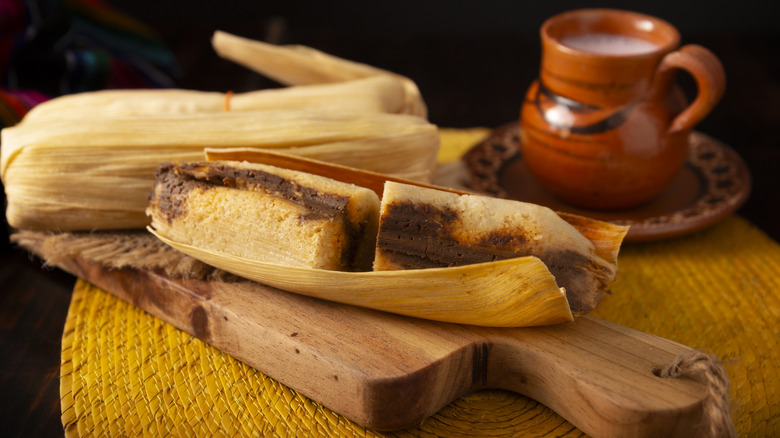
For families in Mexico and people of Mexican heritage scattered throughout the world, the tamalada is an essential part of the Christmas season. Families devote a whole day to preparing tamales, which are one of the world's oldest recipes. They soak the corn husks used to wrap the tamales the night before so they'll be supple and pliable when the hard work begins. Some people also prepare their fillings in advance, stewing large pots of various meats or veggies to get ready for the big work day, when families stuff, roll, and fold together in preparation for the Christmas feast.
One of the best things about tamales is how adaptable they are. The dough is typically made from masa, fresh if possible, mixed with lard. Some families also add seasonings like cumin, garlic, oregano, chili sauce, salt, pepper, or even the broth made from cooking the fillings for an extra savory touch. From there, it's a choose-your-own-tamale adventure. Fillings can consist of traditional meat stews like braised pork, lamb barbacoa, chicken tinga, beef birria, or mole, but sweet tamales stuffed with fruit, cream cheese, sweet corn, chocolate, and nuts are also popular.
This is traditionally a meaty main, but some regions also have vegetarian or vegan versions stuffed with things like mushrooms and beans, a savory corn fungus called huitlacoche, or simply cheese and peppers. The tamales may be consumed on Christmas Day or Christmas Eve, when families gather to share in the feast. Savory or sweet, meaty or vegan, tamales bring Mexican families together to share in the abundance of the season.
Japan: Kentucky Fried Chicken
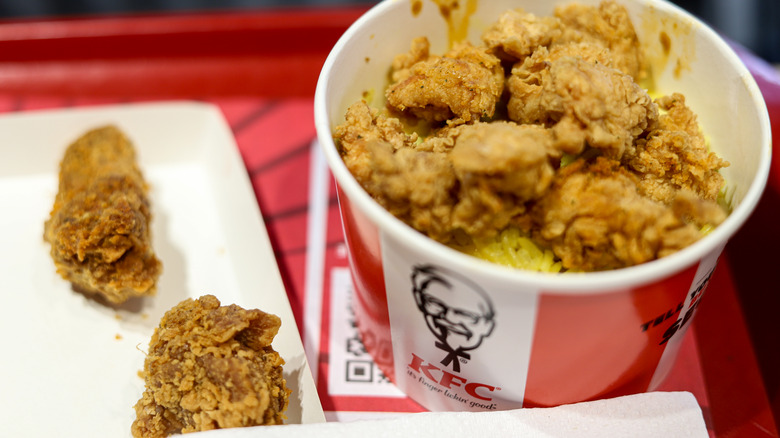
If all that tamale folding sounds like a lot of work, you might prefer to experience another country's Christmas Eve tradition: the Japanese habit of picking up celebratory fried chicken at their local KFC. This takeout tradition is so popular that some report that December 24th is the chain's busiest day by far in the country, with restaurants selling around five to 10 times as much chicken as they do on a day of ordinary sales. Lines often wrap around the block as early as December 20th. People begin placing preorders in November just to make sure they're able to get their hands on a coveted bucket.
Japan isn't a Christian country by any stretch of the imagination, with only around 1% of Japanese citizens identifying as members of the Christian faith, and most following either Shinto or Buddhism, neither of which celebrates Christmas. So how did this holiday tradition become so popular, anyway?
Apparently, the idea of linking Christmas and Kentucky Fried Chicken came from the manager of the country's first branch of the chain, Takeshi Okawara. Reportedly, Okawara overheard a homesick expat saying they missed eating turkey with their families for Christmas, and that chicken was the next best option. Inspired, he began pushing family buckets for the holiday, and in 1974, KFC officially launched the national slogan "Kentucky is Christmas," making the association official.
These days, Christmas and KFC are officially linked, with approximately 3.6 million people sharing in the feast. The chain offers special holiday items like Christmas packs, which include fried chicken, a chocolate fudge cake, and a commemorative plate featuring Colonel Sanders as Santa. It might not be as ancient as some of the other traditions on this list, but KFC for Christmas sure sounds like a lot of fun.
The U.K.: Fish pie
When it comes to Christmas in the United Kingdom, the Christmas Day feast gets all the glory. Christmas dinner (which is often served at tea time to coincide with the King's speech) is a huge spread of traditional dishes like turkey with stuffing, roasted root vegetables and Brussels sprouts, and potatoes with gravy, hopefully with a flaming Christmas pudding for dessert. But families still need something to eat in the lead-up to the big day, so what's on the menu for Christmas Eve?
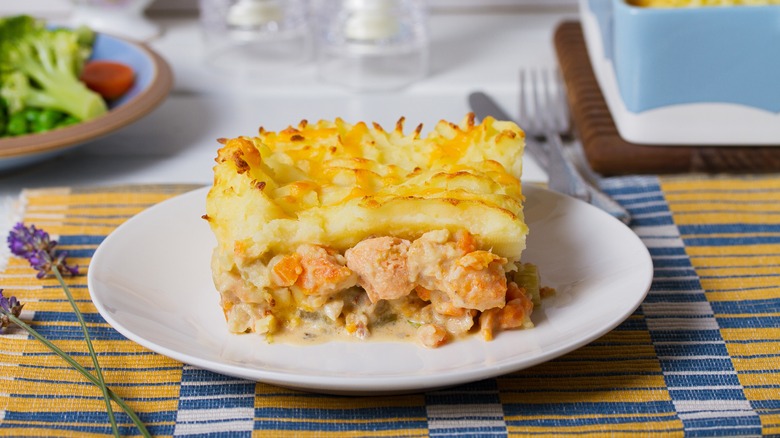
While traditions vary wildly from family to family, with people reporting eating everything from tikka masala to Tex-Mex, one of the most popular choices is cooking a simple dish involving fish, often fish pie, made with fresh ingredients. Don't worry, this pie is savory, with no sugar or pumpkin spice in sight! This tradition stems from the fact that Christmas Eve was traditionally part of the Advent fast period, when Catholics abstained from meat in the lead-up to the holiday, and monarchs like the Stuarts encouraged the consumption of seafood to promote maritime trade.
These days, some families like to stick to fish simply because it provides a lighter protein alternative before the big Christmas Day feast. Fish pie can also be made in advance and stored in the fridge until it's time to cook, a boon in a busy season. It's typically prepared by poaching white fish or cooking it in a savory milky gravy with aromatics like onion or fennel, before topping with creamy mashed potatoes, and even a chopped hard-boiled egg or two. Preserved fish like salt cod or smoked haddock can also be a welcome addition to boost the umami factor, making this simple dish a savory treat that pairs perfectly with a cozy Christmas Eve night spent with family and friends.
Germany: Sausages and potato salad
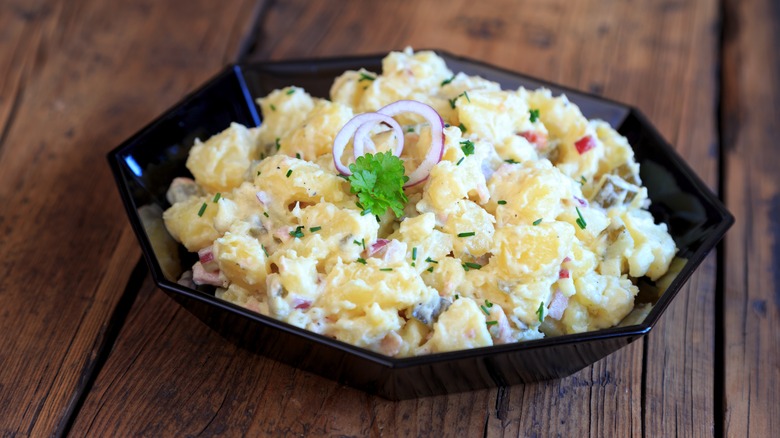
Like their neighbors in the U.K., German families keep it simple on Christmas Eve. Historically, Christmas Eve was considered a fast day, with little food eaten throughout the daylight hours.
Celebrations start ramping up as the sun sets early in this northern country, going down around 4:00 p.m. Many families with young children go to a children's mass at church, while back at home, the Christkind or the Weihnachtsmann (Germany's Santa Claus) brings Christmas gifts, including traditional sweets, nuts, and tangerines. When families get home, they open gifts and light their trees for the first time, then everyone is ready for supper.
After all this festive activity, it's no wonder no one is in the mood to cook a complicated meal. That's reserved for Christmas Day, when Germans feast on a roasted goose, turkey, or duck with bread dumplings and stewed cabbage or kale. Tonight, it's all about sausages and potato salad.
The sausages can be any kind you like, from knackwurst to bratwurst and beyond, but the potato salad seems to be standard: kartoffelsalat. This simple dish is made from waxy cooked potatoes dressed with an onion, beef broth, oil, mustard, chives, and Essig Ezzenz, a concentrated 25% acidity vinegar with a distinctive sharp taste. With easy preparation and simple flavors, it's the perfect recipe for gearing up for a Christmas Day full of family visits and feasting the day away, German style.
Poland: Beetroot soup with mushroom dumplings
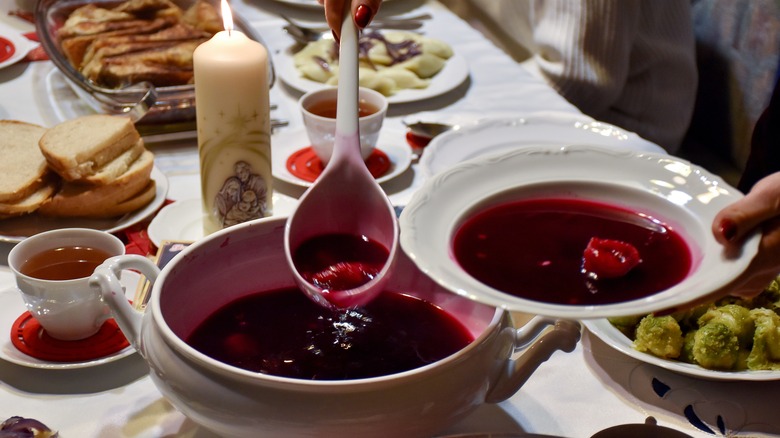
Just like their German neighbors, Poles love to celebrate Christmas with a nice dumpling or two. The Germans might opt for bread dumplings, but in Poland's tradition, the dumplings are made with savory porcini mushrooms and float in a vivid, flavorful beetroot soup: barszcz with uszka, the traditional first course of the lavish 12-course feast that forms the mainstay of Polish Christmas Eve celebrations. While the preparation of this dish varies by region, it's one of the most popular soups served at the Christmas feast, with a special holiday version whose base is made with fermented raw beets mixed with vegetable or mushroom broth and served with porcini and mushroom dumplings.
Christmas in Poland is a celebratory and ritualized affair, with many traditions to uphold before dinnertime rolls around. Festivities begin on Wigilia, or Christmas Eve, with a day of fasting until the first evening star rises. Fortunately, with sunset at around 3:30 p.m., hungry families won't have to wait too long! The Wigilia table is sprinkled with a light dusting of hay underneath the tablecloth, in honor of Christ's birthplace in a stable, and an extra place setting will be left out for an unexpected visitor, celebrating a seasonal spirit of inclusion and welcoming hospitality.
Then the feasting begins. Specifics vary by family and region, but the traditional Polish Christmas Eve dinner always has 12 dishes on the table to represent Christ's 12 apostles, and the meal always begins by breaking a Christmas wafer as family members share wishes for good health and prosperity. A sample menu might include that red borscht with mushroom dumplings, dried wild mushroom soup, carp prepared multiple ways, herring, pierogi, braised sauerkraut, cabbage rolls, and desserts like kutia (or sweet wheat berry pudding), gingerbread cake, poppyseed cake, and dried fruit compote.
Italy: Panettone
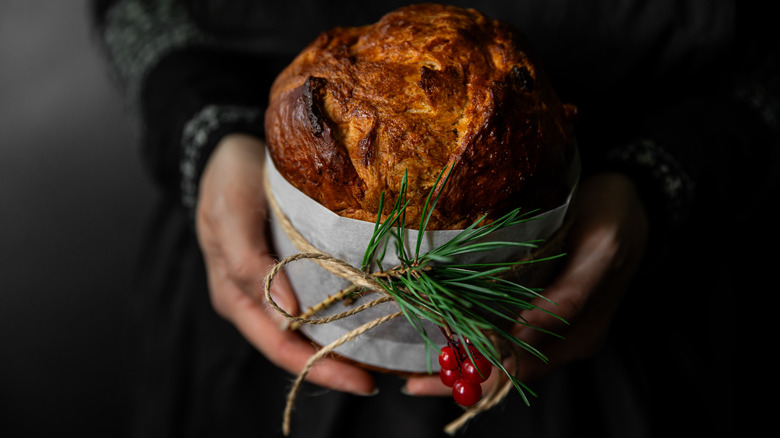
While Polish families take things to the next level by celebrating Christmas Eve with multiple desserts, sweet treats are a nonnegotiable part of many countries' holiday celebrations. Still, there is perhaps no country that has made its Christmas Eve bread such a universal status symbol as Italy, where panettone, an enriched sweet bread stuffed with a variety of dried fruit, has become so popular that luxury brands like Dolce & Gabbana include it as part of their holiday gift offerings.
There are many legends surrounding the origin story of panettone, which comes from Milan. One story states that the name comes from the phrase "pan de Toni," named after a scullery boy who made an improvised enriched sourdough after the head chef in the Duke of Milan's kitchen burned the Christmas cake. Another describes a lovestruck baker who invented the dessert to woo his wife, and another suggests it was invented by an enterprising nun. The truth probably isn't as poetic, but the bread definitely is — a complicated enriched sourdough that takes multiple days to make, creating a finished product studded with jewel-like candied fruit, and sometimes even chocolate.
These days, many Milanese enjoy panettone on Christmas Eve, as the culmination of the holiday dinner, but it can be savored throughout the festive season. Enjoy a fresh slice after your Christmas Eve dinner, which in Milan, as in the rest of Italy, will likely be meatless as seafood is traditional. This might include dishes like eel, salted cod, seafood pastas, fried vegetables, and cubes of ricotta. Don't forget to save that leftover panettone, which Italians like toasted with a sweet topping; the perfect Christmas Day breakfast.
France: Bûche de Noël
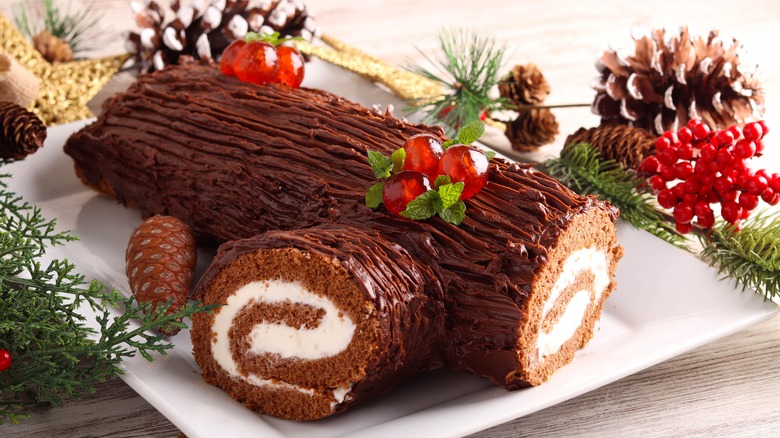
Just like their Italian neighbors, the French take Christmas Eve sweets seriously, and none more so than the bûche de Noël. Often traditionally prepared on the 24th, classic versions of this sweet involved a delicate chocolate sponge cake rolled around buttercream or pastry cream and a jam or jelly filling. It's coated with chocolate icing, then scored with a fork until the finished product looks uncannily like tree bark. Some committed bakers even complete their cakes with petite meringue mushrooms to truly bring their vision to life.
The prospect of biting into a log of wood might not sound all that appetizing for the uninitiated, so why make this tasty cake in such a particular shape? The bûche de Noël's origins stretch all the way back to the medieval era, where a gigantic log of wood from a fruit tree, symbolizing a bountiful harvest in the year to come, would be brought into a family's hearth and sprinkled with ingredients like salt, wine, or holy water. Lit on Christmas Eve, the log was intended to burn for at least three days, and ideally into the New Year, to ensure good luck and abundance in the seasons to come. It would have to be large and damp to smolder that long; maybe that's where the mushrooms come in!
As traditional hearths were replaced by stoves, these gigantic logs were replaced by decorative tabletop logs, and soon someone had the idea of replacing even that with a cake that simply looked like a log — but tasted a whole lot better. These days, you can make a bûche de Noël for Christmas in all sorts of flavors, like marshmallow mango, matcha chocolate, or even cardamom, orange, and ricotta. Delicate and delicious, they definitely won't last three days on any Christmas season table.
The Philippines: Lechón
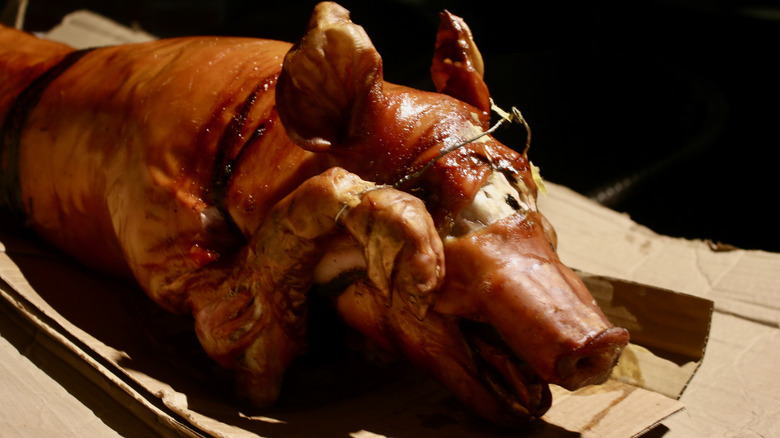
You don't need three days to roast it, but Filipino lechón, or roast pork, makes nearly as prolonged use of a burning flame as bûche de Noël's real log predecessor. This succulent dish consists of a whole suckling pig stuffed with ingredients like lemongrass, garlic, onion, bay leaves, tamarind leaves, saba bananas, and star anise, and glazed from its snout to its curly tail with ingredients like soy sauce, evaporated milk, oil, or sodas like Sprite and 7-Up.
Making lechón is an all-day production that makes it perfect for partying and any occasion where the family gets together. And what family celebration is more important than the Christmas Eve feast? On Noche Buena, as Christmas Eve is called in the Philippines, the feast begins at midnight and lasts well into the daylight hours of Christmas morning. This custom dates back to the 16th century when the Philippines was under Spanish colonial rule, and families gathered to celebrate and eat after midnight mass, the cap on a long day of fasting and abstention.
These days, families might make their Noche Buena lechón from a more manageable cut like pork butt, which is a little less intimidating than the whole beast, but still delivers the same shatteringly crisp skin and succulent meat. Sides might include other traditional dishes like arroz caldo, macaroni salad, lumpia, or spring rolls, and of course, the staple pan de sal, a classic Filipino sweet bread roll. The menu is a little more flexible than some of the other Christmas Eve traditions on this list, but the results are nothing but traditionally delicious.
Sweden: Christmas ham
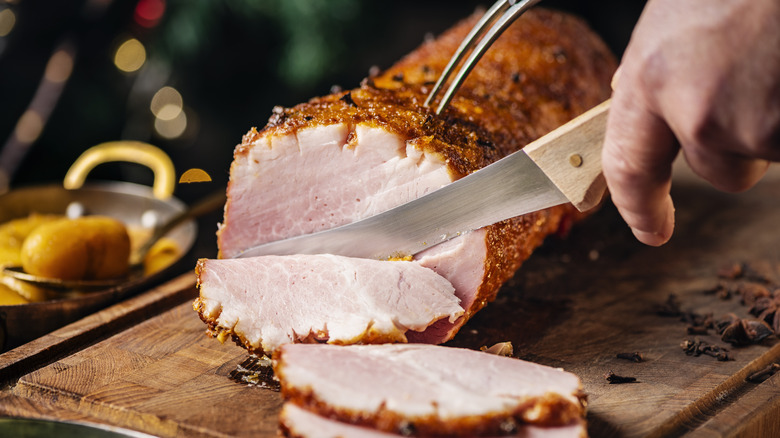
Things are a whole lot colder over in Sweden, but the protein centerpiece of the Christmas Eve table is also pork: julskinka, salt-cured Swedish Christmas ham. This savory roast is the traditional heart of the Julbord, or Christmas Smörgåsbord. Julskinka is prepared by curing a whole raw ham in salt brine. After curing, some families boil their ham, while others bake it, either covered in aluminum foil or a protective rye dough crust. Either way, the cooked ham is then covered with a mustard, egg yolk, and breadcrumb glaze for a finishing savory touch.
Julskinka is a central part of the Swedish Christmas experience, with the first bite of the Julbord traditionally consisting of bread dipped in ham broth (score one point for the ham boilers), and the ham itself lingering in the fridge to make appearances at meals from Christmas Eve to New Year's Day. This practice dates back to the 16th century, when pork was a luxurious rarity and its appearance on the table was tied to the sacrifice of a boar called sonargöltr in honor of Freyr, the Norse God of abundance, fertility, and the sun — all things that sound pretty appealing in the midst of a harsh Swedish winter, and well worth breaking out the precious ham for.
Traditional sides vary, but you might enjoy your Julskinka with savory delights like Swedish meatballs, cocktail sausages, cured fish like pickled herring and dry-cured salmon, and root veggies like potatoes or beetroot salad. The modern table also often includes Jansson's temptation, a gratin made from potatoes, onions, cream, and anchovies for a final savory touch.
Iceland: Hangikjöt
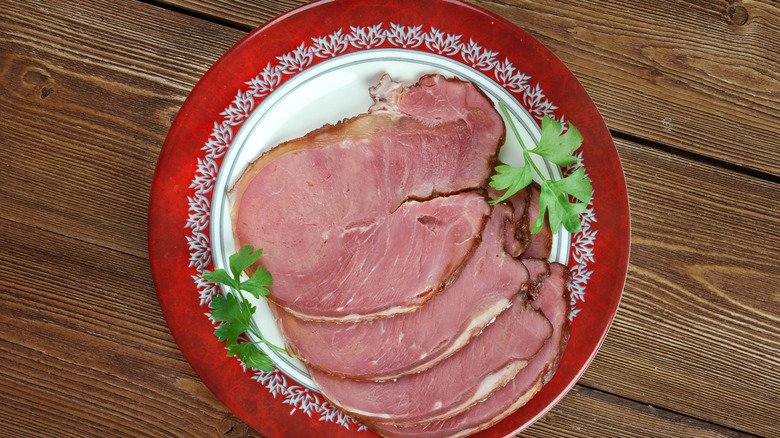
Over in equally, well, icy Iceland, smoked meat is also the centerpiece of the Christmas Eve table in the form of hangikjöt, which literally translates to "hung meat," a savory smoked lamb whose consumption originated with the Vikings, who preserved meat for the winter by hanging it over burning fuel in a smokehouse. Then as now, trees are scarce in Iceland, making wood a precious commodity. The crafty Vikings solved their fuel problem by smoking their hangikjöt over a resource that was much more abundant: sheep dung.
These days, hangikjöt is typically smoked using birch wood, rather than dung, but the same traditional low and slow smoking method still applies. A leg of lamb is suspended over a low flame for two to three weeks, gradually curing and taking on a savory, irresistible flavor. The finished product can be enjoyed hot with potatoes, peas, pickled cabbage or beets, and bechamel, as well as a traditional Icelandic Christmas bread called laufabrauð, or cold, perhaps in the form of Christmas Day leftovers on sandwiches or flatbread.
While its method of preparation has evolved over the years, hangikjöt remains a holiday staple, with some claiming that 90% of Icelanders enjoy the delicacy at some point during the Christmas season. Yet more proof that the holidays are all about nostalgia, and sharing the comfort of returning to familiar dishes with the ones we love the most as the old year fades and the seasons begin anew.