

The Common Sheet Pan Dinner Mistake That Has Nothing To Do With Your Ingredients
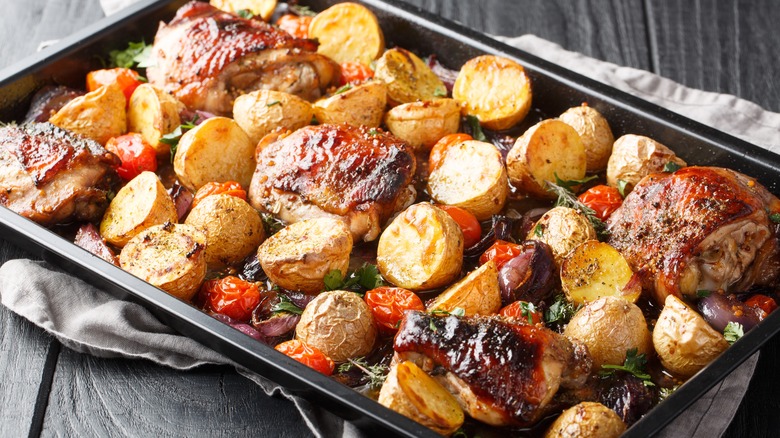
The idea behind sheet pan dinners is that you can get a meal on the table with minimal fuss and no hands-on cooking. It's just a matter of prepping the ingredients and then letting the oven do all the work. It's simple. Foolproof, even. So why then do some meals just not turn out right?
The mistake you could be making is not using an actual sheet pan. This might sound obvious, but there's an important distinction between a baking pan and a baking dish. Baking pans (including sheet pans) are made from metal, while baking dishes could be ceramic, glass, or silicone. Even if they're the same shape, it's the material that determines how your food turns out.
Glass and ceramic are not good heat conductors, which is ideal for low and slow cooking, particularly where you want to maintain the moistness in a dish. This is why baking dishes are perfect for making a saucy lasagna or a bubbling mac and cheese. However, if you're attempting this chicken sausage and asparagus sheet pan dinner, you'll probably end up with a mushy mess.
Metal, on the other hand, conducts heat much better, which results in quicker cooking, even heat distribution, and good browning. This is ideal for sheet pan dinner recipes where you want roast (rather than steamed) vegetables and nicely caramelized meat.
What to look for in a sheet pan
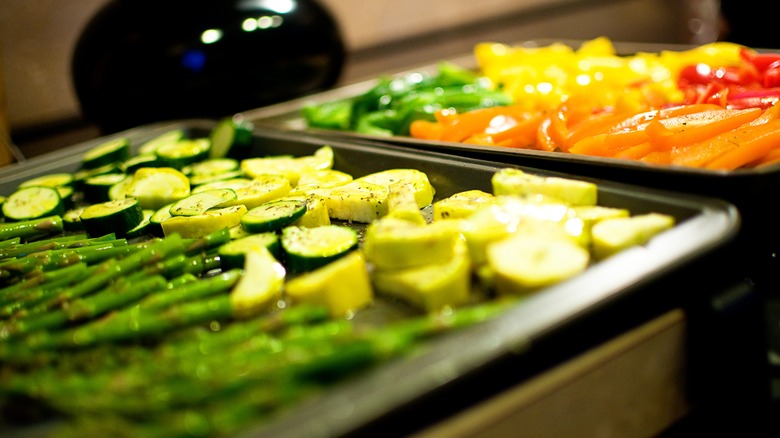
When you're looking at stove-top cookware, the best quality items are often made from heavy-duty metals such as stainless steel or cast iron. But when it comes to choosing a sheet pan, you should be opting for aluminum. Although this lightweight metal might have a reputation for being cheap or flimsy, it's one of the best conductors of heat, much better than steel or iron.
You might notice that sheet pans come in uncoated (light) or non-stick (dark) options, which each have pros and cons. Dark-colored pans absorb heat and will brown food more quickly on the bottom, which is great if you want crispy edges. However, the dark surface is just a coating, which can easily become scratched and end up in your food. There are also some concerns about the safety of using non-stick coating at temperatures above 500 degrees Fahrenheit.
Because aluminum is lightweight, sheet pans have a tendency to warp, so choose lower gauge metal pans which are (confusingly) the thicker and more sturdy ones. Pans with a rolled rim can also maintain their shape better. Even then, it's important to avoid sudden temperature changes, such as filling a hot pan with cold water to soak, or putting a cold sheet pan straight into a hot oven.