

Is It Safe To Store Food Outside In The Winter?

When you run out of fridge space during winter, the chilly outside air starts to feel like a promising backup plan. If you're in a place where the wind slices through your coat, the back porch can feel as reliably frigid as any stainless steel appliance, but food safety doesn't run on vibes. The USDA draws a very firm line at 40 degrees Fahrenheit. Perishable foods need to stay at or below that temperature at all times. Anything warmer slips into the bacterial "danger zone," where unfriendly organisms like salmonella and staph begin multiplying more quickly.
The truth is, winter weather, even on legitimately cold days, doesn't really offer the kind of stability a modern refrigerator does. Outdoor temperatures swing constantly, from shade to sun, morning frost to afternoon melt, wind gusts, radiant heat from brick walls, and concrete. A sealed container sitting in direct winter sun can warm up in minutes. It's just thermodynamics. Food safety depends on continuous cold, not slipping continuously in and out of the danger zone.
Then there's the whole "nature is wild" part of it. Porches, fire escapes, and garage steps aren't clean environments. Leaf mold, insects, birds, and exhaust drift over anything left outside. Animals can smell a turkey leg from astonishing distances, and you can guarantee that all the neighborhood creatures such as raccoons, squirrels, mice, and pets will be sure to investigate. Even sealed containers can get messed with by scavenging cold-weather opportunists.
Cold is not controlled
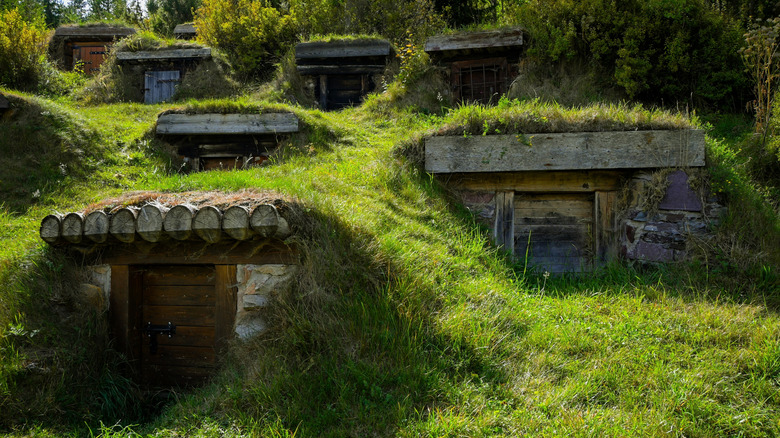
Humans have used outdoor cold to preserve food for thousands of years, but not by casually leaving groceries on a porch and hoping for the best. Root cellars, spring houses, ice blocks, and snow pits are all traditional methods of outdoor food storage, but they're also strategically controlled systems with stable temperatures. A modern back porch has none of those stabilizing factors. If you're hosting a gathering and temporarily need overflow space, an hour or two outside can be okay when the temperature is below 40 degrees Fahrenheit and the food is tightly sealed.
The key is to use the outside like an auxiliary cooler, not a substitute refrigerator. Start by checking the actual temperature. You need a sustained ambient temperature of 40 degrees Fahrenheit or below, ideally lower. If you're working with items that must stay cold, tuck them into an insulated cooler and let the winter air reinforce the cold rather than generate it. Adding frozen gel packs or bottles of ice can ensure a controlled chill rather than a fluctuating one.
Use sealed, waterproof containers that can withstand condensation, wind, or a curious animal. Keep food elevated on a table or insulated crate rather than directly on concrete, which absorbs and radiates heat unpredictably. Avoid placing anything near vents, dryer exhaust vents, or sunny patches where the temperatures can rise. Skip glass containers because temperature changes can cause them to crack as liquids expand and contract.
The not so great outdoors, for leftovers

There are some foods that should never be stored outside including raw poultry or any meat, seafood, items made with raw eggs, or dairy. They're extra-sensitive to temperature swings, and the risk of contamination is high. Overnight storage is particularly unsafe unless the forecast is consistently below freezing.
Even when the temperature does stay cold enough, outside is terrible at protecting texture and quality. Repeated micro-thawing and refreezing can rupture cell walls, turning produce flaccid or mealy, and changing the texture of cooked dishes. Fats oxidize faster in unregulated conditions, so soups that taste rich when stored indoors might taste flat after a night outside. The outdoor cold might stop bacterial growth, but it doesn't stop chemical reactions. A refrigerator is engineered to strictly regulate temperature, moisture, airflow, and light exposure. Even then, opening the fridge door too much can lead to less-than-ideal temperature fluctuations.
Basically, outdoor cold can be helpful during the chaos of a holiday cook-a-thon, squeezing in a few extra hours to chill stock, or cool down pies or a huge pot of soup before it goes into the fridge. But it's a stopgap, not a reliable system. Winter weather is fickle, but if there's a way, bacteria has a will. When possible, make room in your actual refrigerator using a system to reorganize the shelves. Let the great outdoors do to what it's best at, which is providing beautiful scenery, not food storage.