

This Common Spanish Cocktail Isn't Actually That Popular In Spain
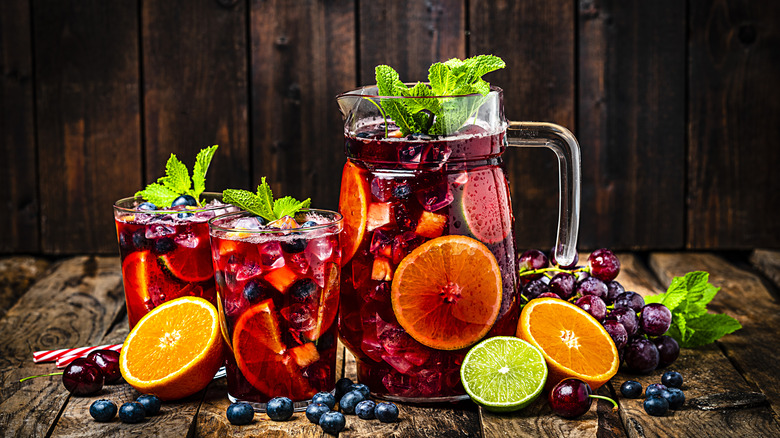
Imagine yourself lounging by the sea in San Sebastián or at a bustling tapas bar in Madrid. Now imagine what you're drinking. If the answer is a glass of sangria, you're likely marking yourself out as a tourist. While the storied bond between Spain and sangria is strong, the famous cocktail isn't as popular among the locals as one might think. It may be a rare summer indulgence, and youngsters on a budget might still drink it, but despite a myth-soaked history, it's much more of a tourist drink today.
So what really is sangria? The roots of the drink go back to ancient Rome, when wine was added to water to make it safe to drink, and herbs and fruits were thrown in for flavor. In modern Spain, sangria found a home as the cneter of the party. "It used to be more like a homemade beverage for random festivities," a Reddit user posted, adding that the fun was to make the mixture in the ugliest bowl they could find. "It was never supposed to be a drink you would order in a bar."
If you want to set yourself apart from the tourists and feel one with the locals, the cocktail you want to order is a Tinto de Verano, which translates to "red wine of summer" and essentially is wine mixed with soda or lemon soda. It's also a great drink to order if you don't like the taste of alcohol.
When in Rome versus when you're back home
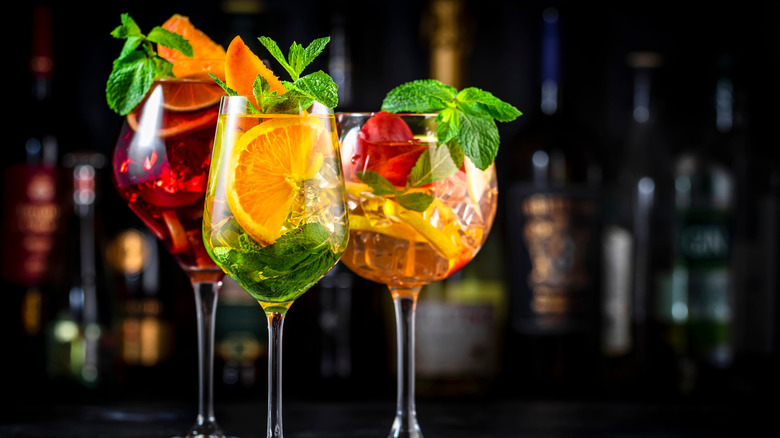
While you may want to drink like a local in Spain, there's no reason you can't enjoy a jug of sangria back home. It's extremely versatile and a great summer cocktail to make in large batches. All you need is wine, soda water, fruit, sugar, spices, and a touch of brandy or rum, which adds great depth to a red wine sangria.
Our suggestion is to start with a wine you love drinking that's not too high-end or expensive. In terms of fruits, apples, oranges, and lemons work best, while cinnamon, star anise, and cloves are the most common spices added. There are no restrictions though, think of your wine as a blank canvas.
While sangria was traditionally made with red wine — the cocktail takes its name from "sangre" which translates to "blood" — floral white wine sangrias are increasingly popular. For the best white wine sangrias, you want to choose a tart and fruity wine. Apart from oranges and lime, you can also add peaches, mint, and raspberry to your white wine sangria, while a hit of elderflower cordial will give your drink lovely floral notes. Add some lemonade instead of plain soda and your white wine sangria will really sing. Regardless of what wine or fruits you're using, the main ingredient for your sangria is patience: Serving it as soon as it's made is one of many common mistakes people make with a sangria.