

10 Old-School Boomer Cooking Habits That Baffle Younger Generations

Every generation has a different approach to food and cooking, and plenty of Baby Boomer cooking habits mystify younger generations. If you've ever been in a Boomer's kitchen, you've likely encountered a few of these practices yourself. Younger cooks may not cook as often or with the same ingredients, and the differences come with a history. Boomers are a generation who grew up in a different era, with parents who'd endured the Great Depression and with food advertisements promising faster cooking times for working moms. So, there's a reason behind that overflowing pantry filled with processed foods. And, like every generation, we all tend to get set in our ways — whatever they might be.
Obviously, not every one of these cooking habits applies to every Boomer, just like not everything people say about your generation necessarily applies to you. Some Boomer cooks have changed with the times and embraced new ideas about food and cooking along with the rest of us over the years. However, for many, the food, attitudes, and cooking habits they grew up with during childhood and young adulthood have stayed with them. Why make changes as long as you're happy and making healthy choices, right? Or perhaps the reason behind what you see in their kitchen is related to a change they've already made. These 10 cooking habits you'll find in many Boomer kitchens might baffle you, but we hope we've also provided a little insight into the reasons behind them as well.
The habit of cooking large amounts of meat with every meal
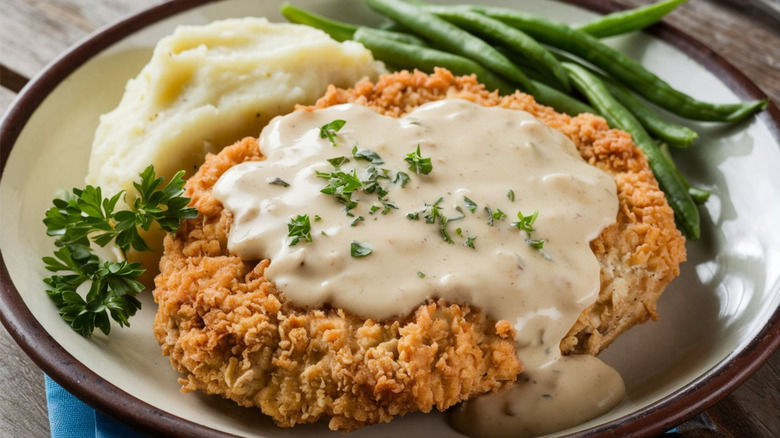
One Boomer cooking habit that younger generations don't necessarily all follow anymore is cooking meals that revolve around large amounts of meat. While the idea of a plate with meat and sides isn't dead, meat is often something younger generations have occasionally rather than at every meal. Meat isn't always the star of the meal anymore. Instead, younger people often make bowls and other dishes where meat is just another ingredient rather than the main attraction.
U.S. dietary guidelines related to daily meat consumption recommendations have changed over the years, but some Boomers continue cooking according to earlier guidelines. From the 1950s on through into the 1980s, dietary guidelines suggested two or three servings of meat per day. It wasn't until the 1990s that the protein section of the food pyramid started to contain beans, eggs, and nuts as options. Current USDA Dietary Guidelines for Americans suggest only consuming 26 ounces of meat, poultry, and eggs per week, which comes out to 3.7 ounces per day, only slightly larger in size than a deck of cards.
Younger generations are far more likely to be vegetarians and vegans than Boomers are, too. According to Statista, only 3% of Boomers are vegetarians or vegans. However, the percentage of those who don't eat meat has increased with each generation. Generation X is still only at 5%, but millennials are at 13% and Generation Z is at 14%.
Using ultra-processed foods for cooking

Using ultra-processed foods is one of the Boomer cooking habits that baffles younger generations most, based on the overwhelming amount of commentary about it on social media. Boomers came of age when the food industry started putting out and marketing convenience foods after World War II, and it shows. All these processed foods helped reduce the time it took housewives to make meals resulting in more processed food purchases at the grocery store as an ingrained habit.
The recipes that Boomers often continue to make use of ingredients like condensed soups, Velveeta, and Jell-O. Margarine started becoming popular during World War II, when butter was rationed. Many Boomers' parents continued to use it after the war due to advertising campaigns. The childhood nostalgia comfort-food factor plays a big part in what the Boomers continue to eat, as well as the perceived status that comes with eating these processed foods. Plus, quick boxed mixes like Hamburger Helper rescued tired mothers going into the workforce.
We've seen many folks on social media say their Boomer parents continue to eat name-brand processed foods because it's an indicator of an elevated social and wealth status to be able to buy them instead of grocery-store brands that taste just fine. The harder they fall for the perceived truths in advertisements on television and in magazines for all the processed and fortified foods, the more likely they are to choose prepackaged foods over creating the same thing using fresh ingredients.
Not branching out to new cuisines
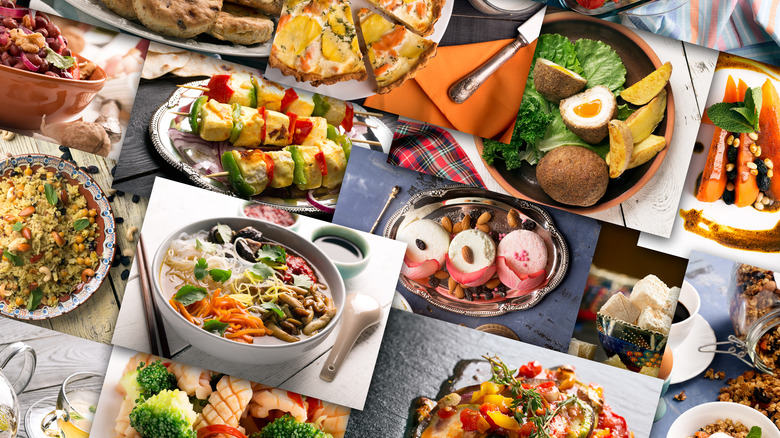
Sure, we all get stuck in our ways, but many Baby Boomers seem less adventurous when it comes to trying new cuisines. They're more likely to keep eating the food they know, with many only being willing to eat the traditional American-style foods they've been eating all their lives, while avoiding foods from other cultures or trendy new dishes and fusion foods. And if they're not trying it, they're certainly not cooking it.
According to 210 Analytics, LLC (via Food Business News), only 27% of Boomers like to try new foods. So, there are those who are embracing new cuisines, but it's certainly not the norm. Meanwhile, 54% of millennials enjoy trying new foods. Some people on social media have said that their Boomer parents have an adverse reaction to the idea of eating anything foreign or ethnic. Some people on social media claim their parents would go as far as to not even eat Mexican food, like tacos, or Italian food like pasta. In these cases, when new restaurants pop up in town that feature international cuisines like Indian or Middle Eastern, it's often the younger generations that are more likely to venture out to try them. Without trying new cuisines elsewhere, they're not getting the inspiration they need to change their old-school eating habits.
Not following good food safety practices

Many younger generations are flabbergasted at the poor food safety practices some Boomers use. Convincing the older generation to change their food safety habits can be a challenge, but according to the CDC, people over the age of 65 are at increased risk for more serious outcomes from foodborne illnesses. Nearly half of those over 65 exposed to serious bacteria like Salmonella, Listeria, and E. coli end up hospitalized from related complications.
Some dangerous practices include storing fresh produce or cooked food with raw meat or using potentially contaminated utensils to stir food. The USDA suggests using clean hands and utensils for cooking and eating, and keeping raw meat separate from other foods.
Many on social media mention Boomers following bad food safety storage practices after cooking. For example, Boomers will offer them day-old meat that's been stored in the microwave or has just been sitting out overnight rather than in the refrigerator. Even if they have regular gastrointestinal issues, they don't always realize that it's likely caused by eating food that's had time for bacteria to multiply from being stored at the wrong temperature. According to the USDA, foods are in the "danger zone" for bacteria growth if they've been left out at temperatures between 40 and 140 degrees Fahrenheit for more than two hours or not reheated to high enough internal temperatures.
Food hoarding and cooking with expired food
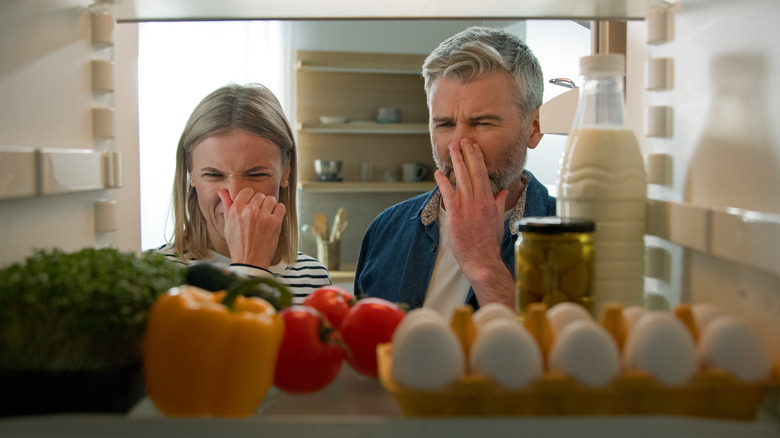
Those from younger generations who keep smaller amounts of food on hand can't help but notice just how much food Boomers like to keep in their homes and for how long. The cupboards, freezer, fridge, and even the countertops are sometimes stocked like they're planning for the apocalypse.
Anyone who's ever gone into their Boomer relatives' pantries, fridges, and freezers has likely uncovered items that were out of date by years and even decades. Some of it may even be older than their grandkids or even their kids. Often, these habits were instilled in them by their parents, who grew up during the days of rations and food shortages in the Great Depression and World War II. However, there are other reasons for overstocking groceries, too, like worrying about being stuck at home, unable to get out in case they're sick or the weather is unfavorable. And if they've ever lived through lean times, they always think in terms of accumulating canned food now for some unknown future disaster.
Keeping expired foods tends to be related to this worry about running out of food or not wanting to waste any. Sure, spices that expired 20 years ago might not hurt you, but they're not going to make your food taste that great. But then there are those who scrape the mold off the top of years-old expired food and eat it anyway.
Using canned rather than fresh ingredients
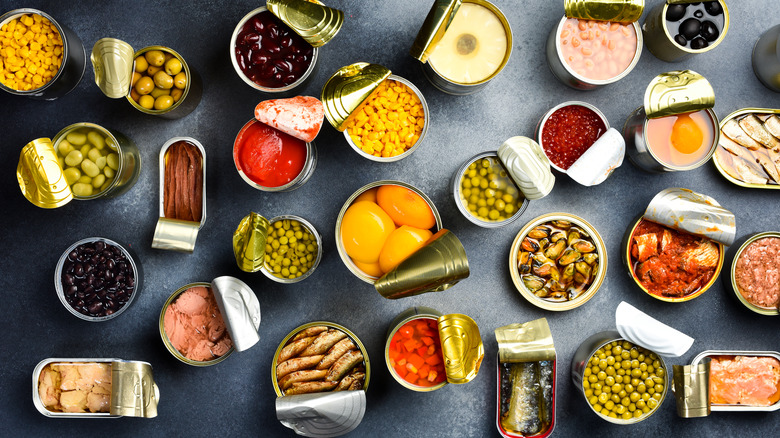
While many Boomers do use fresh ingredients, there are certainly many others who are more likely to use canned ones. Meanwhile, many people from younger generations (like millennials) don't even own can openers.
Many canned foods just aren't as popular with younger generations, who are more likely to cook with fresher ingredients. There's no chopping board in sight because everything in cans is already pre-chopped. Younger generations feel that some Boomers who don't like some veggies like Brussels sprouts or asparagus might feel the way they don't because they've only tried the mushy canned version rather than the crisp, fresh version.
One individual on social media explained that her mom viewed canned food as being for those who couldn't afford to grow their own food. So, once again, it was a symbol of wealth separating the haves from the have-nots. For those who grew up having to can their own food, they certainly appreciate it coming pre-cooked, pre-canned, and ready to eat. Plus, there's that whole food hoarding mentality to account for this trend since canned foods last longer than fresh. It's easy to end up with more fresh produce than you can eat before it goes bad, but canned food will be there for you for years. According to the USDA, the quality might decrease with time, but as long as the canned food is still in good condition, most of those cans of food are safe indefinitely.
Spending more time cooking at home
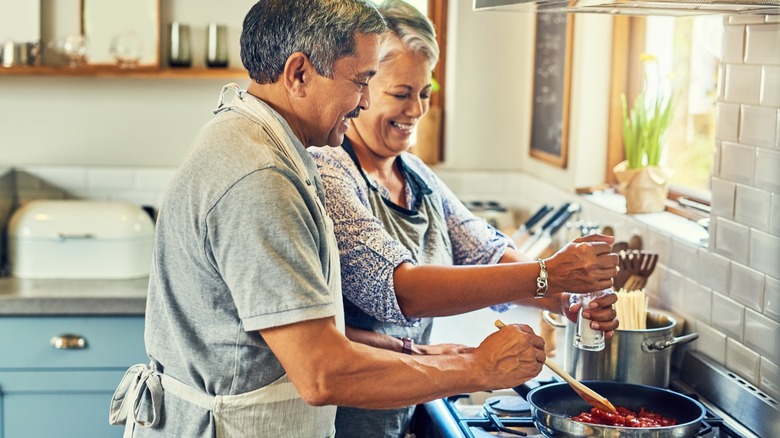
While Boomers are more likely to use processed and canned foods rather than cook completely from scratch, they do tend to spend more time cooking at home than younger generations often do.
Interviews tend to show Baby Boomers feeling more confident in their cooking abilities than younger generations. They are also more likely to prepare meals at home more often, relying on frozen or pre-packaged meals less often than younger generations. They also rely less on home delivery food services. So, even if you show up to their house unannounced, they're likely to be able to whip up something for you to eat quickly and by heart without thinking twice about the effort it takes.
When The Food Industry Association surveyed various generations about their cooking habits, it found that Boomers are by far the generation most likely to cook every day, with 26% saying that they do. With the cost of eating out on the rise, 62% of everyone surveyed say that they eat at home at least four times a week. Seemingly, the younger the generation, the less they cook at home, with only 11% of the Gen Z participants surveyed saying they cook daily and only 52% saying they cook at home at least four times a week. Generation Z is also the most likely to eat pre-prepared meals or get meal kits.
Cooking organ meats
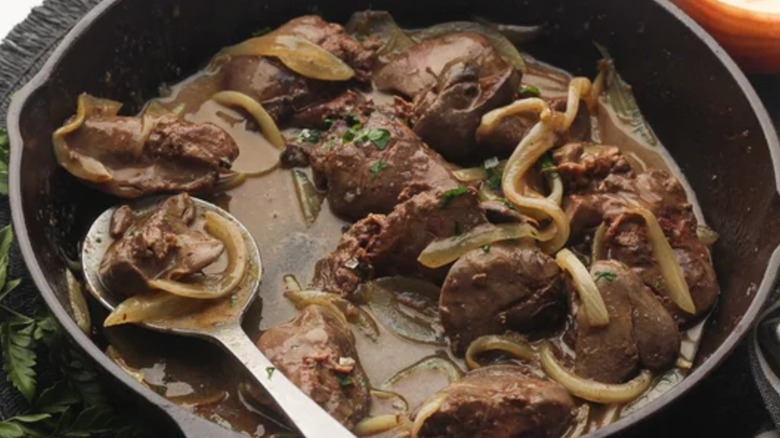
One old-school cooking habit that you see among Boomers more than younger generations is making dishes with organ meats. While some people in younger generations do enjoy some organ meats, it's certainly not as popular as it is with Boomers, who often grew up eating it. Waste not, want not.
On nearly every list of foods that Boomers like that younger generations tend to avoid, you'll find people talking about liver and onions. Boomer home chefs are also more likely to fry chicken gizzards, while others enjoy chicken hearts. This difference is why you'll see Boomers like Andrew Zimmern add organ meats to make giblet gravy instead of regular gravy for Thanksgiving.
While we occasionally see headlines about organ meats making a comeback because of the density of their nutritional value, liver tends to be one of those foods people don't have fond memories of eating as a kid. One person on social media suggested that Generation X may have been the last generation forced to eat it (by their Boomer parents). Meanwhile, another suggested that Generation X might have also been the last generation forced to eat everything on their plates, even when it was something they didn't like, such as offal. Some theorize it explains why they didn't go on to force their kids to eat foods similar to liver and onions like their parents did.
Under- or over-seasoning food
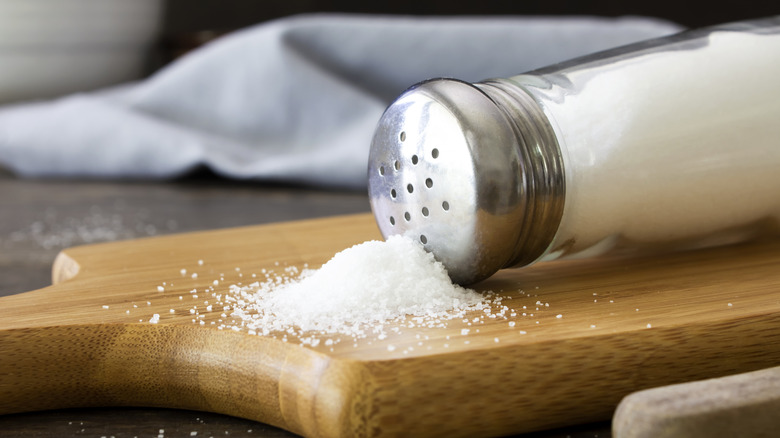
There are plenty of Boomers who get seasoning right, but it's the Boomer chefs who barely season anything or season food within an inch of its life, which baffles younger generations. While sometimes it's a lifelong habit, other times, there may be a health-related reason behind these practices.
The lack of seasoning that some younger generations have noticed goes hand-in-hand with the fact that many Boomers aren't trying new cuisines. Because they're not accustomed to it, their tolerance for spicy food may often be fairly low. While many younger generations are usually more used to all the spices they've experienced from other cultures, some Boomers are still just adding salt and pepper and nothing else because they grew up on bland foods and just didn't tend to keep many spices in the cupboards. Also, if they have high blood pressure, they may have started to reduce or omit salt altogether. In that case, they may be adding bland no-salt seasonings like Mrs. Dash.
Although, sometimes it goes the other direction. Boomers who over-salt and over-season their foods sometimes do so because they're starting to lose their sense of taste. Some don't even taste their foods before opting to add more salt.
Having a different idea of healthy foods than other generations
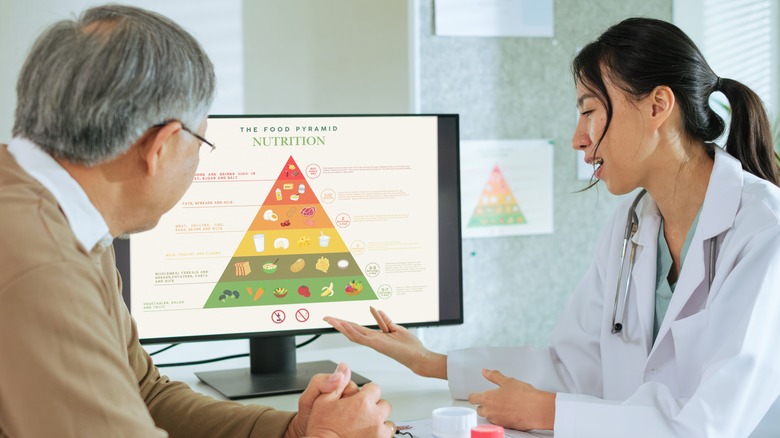
It's not that Boomers don't want to eat healthy, but their idea of being healthy is often different than that of other generations. With their cuisine choices often staying the same over the years, they're less likely to be willing to sacrifice flavor to follow current health trends.
According to a 2024 survey by the International Food Information Council Foundation, Boomers are less likely than other generations to know about the Dietary Guidelines for Americans. This fact shows up in many of the other points we've touched upon about how Boomers cook. They also aren't as likely to eat special diets for health benefits and other purposes. If they're looking for any health benefits, it tends to be related to healthy aging, and they are also the most likely to try to eat less beef and avoid sweeteners than other generations.
Interestingly, Boomers say they're more likely to consider how healthy something is when deciding whether to buy a product than other generations. However, they're the generation least likely to care whether or not a food they want to buy is processed or not. In fact, very few of them are even familiar with the term "ultra-processed food," which isn't surprising considering how much processed food they're used to consuming. Yet, at the same time, they're also the most likely of all the generations to think they're making healthy food choices. So, perhaps their idea of what's healthy is just different, especially since they are less likely to trust nutritional information they hear about on social media or from government agencies.