

Prevent Soggy Slow-Cooker Veggies With Just One Simple Step
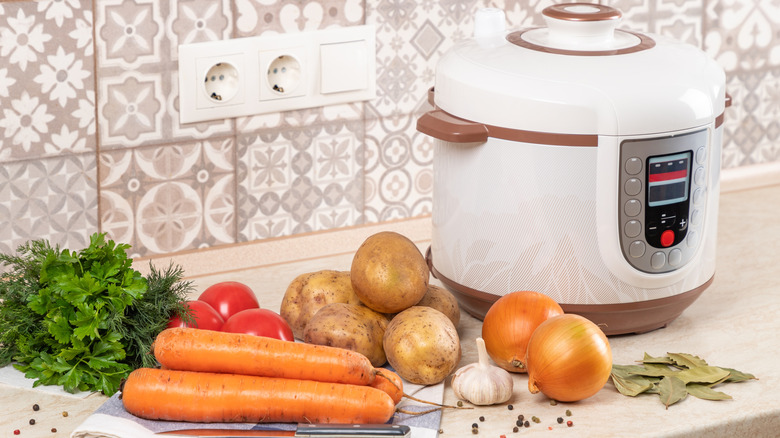
The meat's fork-tender and falling off the bone, but the celery has entirely lost it's crunchy character, disintegrating listlessly into the broth of your recipe. What happened, and how could it be prevented? Never fear, there is an easy solution to keeping slow-cooker veggies from developing the textures reminiscent of a cafeteria steam pan. Of the many tips you'll need when using a slow cooker, remember that if you don't want something to become overcooked, just stop cooking it. Similar to how you put the vegetables in, you can take them back out. Use a slotted spoon or tongs, reserve them in a bowl, then simply return them to the crock to heat up right before serving — think of it like pulling cookies off a baking sheet so they stop cooking.
Slow cookers are useful for a lot of different recipes, but conversely, they can only do one thing, and it's right in the name. They run at a steady, humid 190 to 210 degrees Fahrenheit, just past the temperature range where vegetables break down and starches begin to gelatinize. That's perfect for tough cuts of meat that need a low-and-slow cook, like pot roast and carnitas, or recipes that need to just sit and simmer, like apple sauce. It's less ideal for vegetables with tender cell walls that you'd like to somewhat hold their form when serving.
The science behind why this happens is straightforward. Heat and moisture dissolve pectin (the molecular scaffolding that keeps vegetables structured), so if you give carrots or peppers long enough in a slow cooker's steam bath, they will inevitably go from turgid to flaccid. Even so-called "hearty" vegetables hit a peak of tenderness, and then descend into mushiness well before the six to eight hour cooking cycles most slow cookers require.
Add vegetables one step at a time
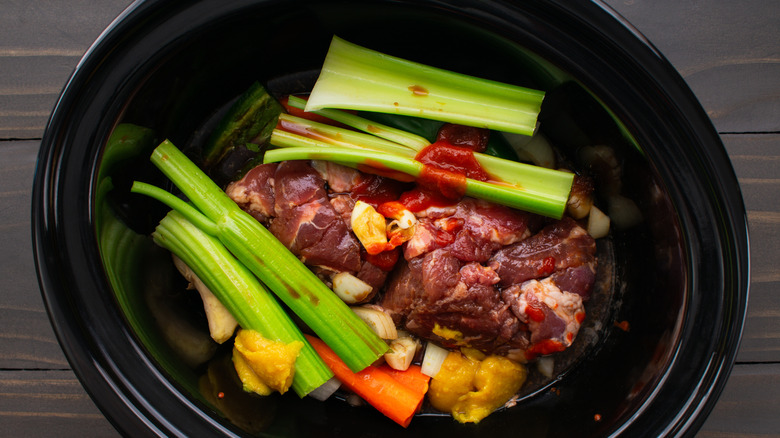
If the idea of periodic pot-checking stresses you out, or seems to defeat the purpose of the whole "set-it-and-forget-it" appeal of the machine, there's an even simpler method that addresses the issue on the front end. Simply add each vegetable at the right time instead of all together with the meat. Different vegetables have different structures, water contents, and heat tolerances, which is why they collapse at vastly different rates. Understanding and respecting these timings can change everything.
Root vegetables like potatoes, carrots, or parsnips can handle extended cooking and often benefit from it, so they can go in at the beginning or 3 hours towards the end. Alliums like onions and leeks can be added early to melt into the base — and, actually, the best technique for these additions is to caramelize them in a frying pan first. Sturdier vegetables, like cauliflower and cabbage, do best when added in the last 2 to 3 hours. Tender vegetables such as mushrooms or zucchini should join the party in the last 15 to 30 minutes. Fragile ingredients like spinach, snow peas, herbs want a brief cameo, so just 10 minutes for them is usually plenty.
Adding vegetables later won't sacrifice flavor. They will still absorb the cooking liquid, but they'll retain their structure and taste fresher, brighter, and less murky-muddled. Some slow-cooker enthusiasts prefer this method because it builds contrast between the deeply braised richness of the meat alongside vegetables that have the integrity to look and taste like what they are.