

Why Restaurant Chefs Dread Hearing This Order Request
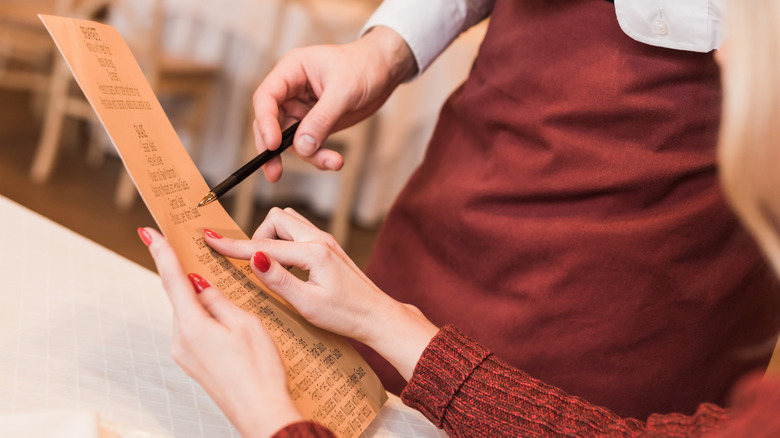
When a restaurant server comes to the table to take your order, if the first three words out of your mouth are "Can I just ...," know that the kitchen staff is already cringing. The Takeout spoke with Rocco Carulli, the executive chef and owner of R House, who said, "When someone starts with 'Can I just...' it usually means we're about to go on a little culinary detour," a detour that could pose a big headache for the people working in the kitchen. "It's rarely the request itself — it's how it's delivered," he said. By inserting "just" into your order, you're essentially minimizing the extra work the kitchen might need to do to accommodate you.
Being respectful of the restaurant's menu is one of those customer habits that can earn you better service. Per Carulli, "The menu was built with intention, and there's usually something already perfect for what you're craving." Still, he acknowledges that small tweaks are totally acceptable and usually not a problem to realize. The issue lies with the bigger changes that move to re-create the entire dish.
"When modifications start to stack up like a game of Jenga," he said, "it can get tricky for consistency, timing, and flavor." After all, you're not the only patron dining at the establishment; other people are waiting for timely and quality service, too. "When a dish turns into a choose-your-own-adventure with seven tweaks, it can throw the kitchen off rhythm," he warned.
Restaurant chefs don't just cook for one customer, so keep your requests sensible
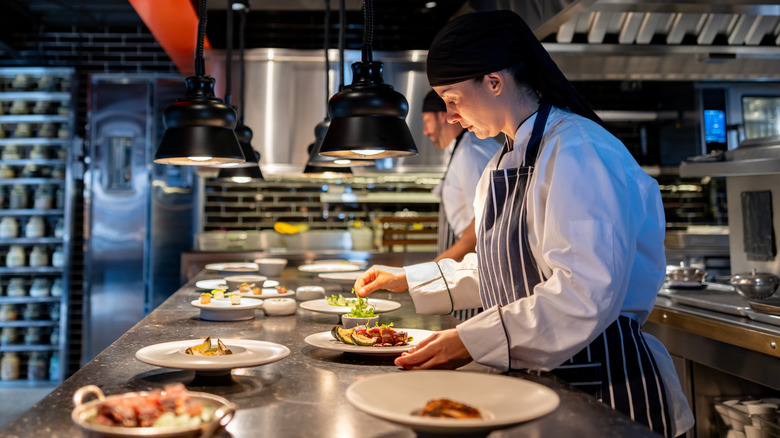
There's a reason why you can't order off-menu at most fancy restaurants — as mentioned, big modifications can disrupt the flow of the entire kitchen. That said, certain dietary restrictions can be taken into consideration and worked around. As Carulli pointed out, it's the customer's attitude that often makes a difference. "When you're thoughtful with us," he said, "we'll always go the extra mile for you. That's hospitality."
Dietary preferences and allergies normally mean less complicated modifications than purposefully fussy requests. Asking for a meal without certain ingredients is much more doable than a complete ingredient list swap. People have gone as far as bringing their own ingredients to the restaurant for the chef to cook and sending back an entirely modified meal when it didn't meet their expectations. Needless to say, those are huge etiquette mistakes that you should absolutely avoid if you want to be remembered as a pleasant guest. At the end of the day, restaurants are not there to provide you with an entirely personalized experience; they're there to serve a predetermined menu that's tried and tested so the place can run like a well-oiled machine for the benefit of all its customers.
Static Media owns and operates Tasting Table and The Takeout.