

How To Bring Your Baking Ingredients To Room Temperature When You're Pressed For Time

We may receive a commission on purchases made from links.
If you're doing a lot of baking that requires using room temperature ingredients but are also pressed for time, fret not. I've got you covered. I'll share how you can bring ingredients like butter, eggs, milk, cream, and cream cheese to room temperature quickly. I've authored two best-selling cookbooks on baking, including "108 Asian Cookies," and so have tested recipe after recipe under tight deadlines, often needing ingredients to be at the perfect room temperature, fast.
See, when you're baking cookies, the last thing you want is cold butter that is difficult to cream with sugars. Try creaming hard butter and it usually becomes a clumpy mess, instead of airy, fluffy, and smooth. For sponge and chiffon cakes, cold egg whites don't whip up as gloriously as room temperature ones. And as for cheesecakes, if you want a smooth, creamy dessert, be sure to beat the cream cheese after you bring it to room temperature.
Liquids such as milk, cream, and buttermilk also need to come to room temperature before being incorporated into batter. Too cold and they can cause butter to seize and batters to curdle. Warmer dairy integrates more smoothly, keeping batter evenly mixed.
Bring eggs to room temperature in just 10 minutes
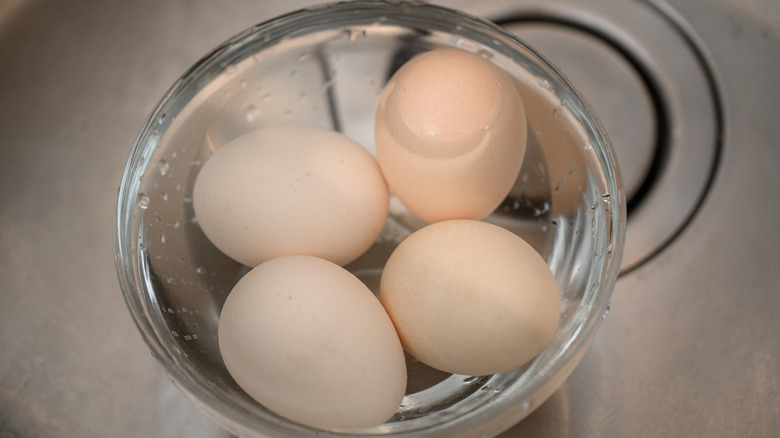
Let's start with eggs. One of the quickest ways to bring eggs to room temperature is to submerge them in a bowl of warm water. Make sure the water is not too hot. Eggs start cooking in water that is 140 degrees Fahrenheit or higher. Once submerged, keep the eggs in the bowl for up to 10 minutes. They should come to room temperature nicely. Remove the eggs from the bowl and wipe them dry with paper towels.
When I have more than a few minutes to spare, I use another trick. I simply leave cold eggs out on the counter for up to two hours. They usually come to room temperature by then. Since most eggs in the U.S., whether they are pasteurized or not, are washed and lack a protective coating (called the bloom or cuticle), I don't recommend leaving eggs on the counter for over two hours. American eggs should always be refrigerated when not in use.
Warm cream cheese in seconds
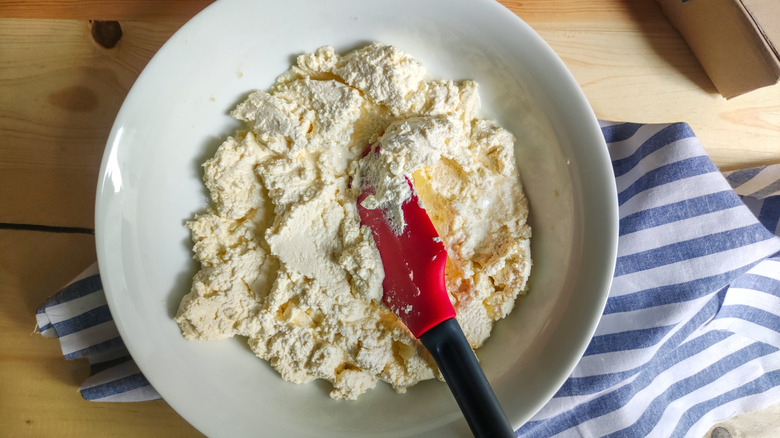
I've baked dozens of basque and Japanese cheesecakes. In fact, I authored the number one Japanese cheesecake recipe online. I've learned that to achieve the smoothest and creamiest cheesecakes, the cream cheese has to be softened. And the quickest way to bring cream cheese to room temperature is to use the microwave. Easy.
Simply add the weighed-out cream cheese to a microwave-safe bowl — you can cube it first if you'd like, but it's not strictly necessary. Then, cover and microwave in 20-second bursts on high. Test the softness of the cream cheese using a rubber spatula. If it's soft and spreadable, the cream cheese is good to go. Don't overheat the cream cheese, as it could then be hot enough to start cooking the eggs in your recipe.
If you have more time to spare, simply leave the cream cheese on the counter with your eggs for up to two hours. Beyond that, cream cheese can quickly spoil.
Soften butter quickly using a knife
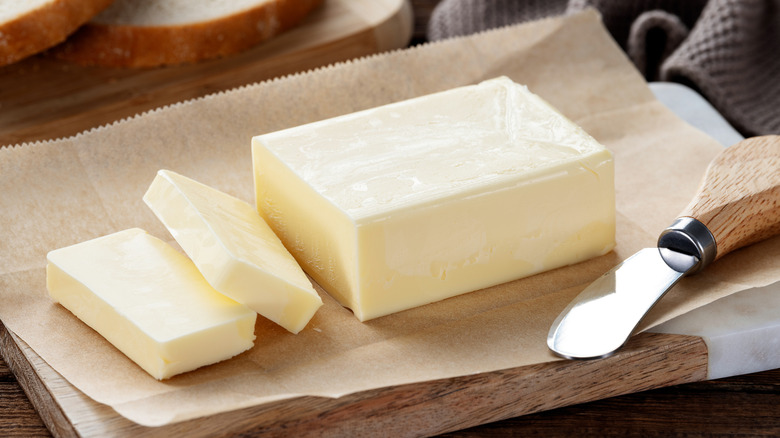
The next ingredient that I almost always soften and bring to room temperature as a baker is butter. With butter, the microwave will just melt the block into a puddle in no time, so that option is out. My quick way to soften butter in a pinch is to cut a stick up into small pieces or cubes and leave it in the wrapping on the counter for 15 to 20 minutes. By cubing the butter, you're increasing its surface area, which allows the air in your kitchen to reach more of the butter at once. This helps it warm up and soften more evenly and far more quickly than a whole intact stick would.
I've also seen other tricks floating around the internet, including heating a bowl in hot water until the bowl is hot and steamy and covering a stick of butter with the bowl. However, I find this inefficient. Once the butter is cut up, it softens fast on its own. You don't need all the extra energy and water to heat up a bowl, and then to have to dry it as well.
Now if you're not pressed for time, just leave your butter on the counter to reach room temperature with the other ingredients. Unlike cream cheese and eggs, butter can stay on the counter beyond two hours without spoiling.
Milk and cream warm up in seconds
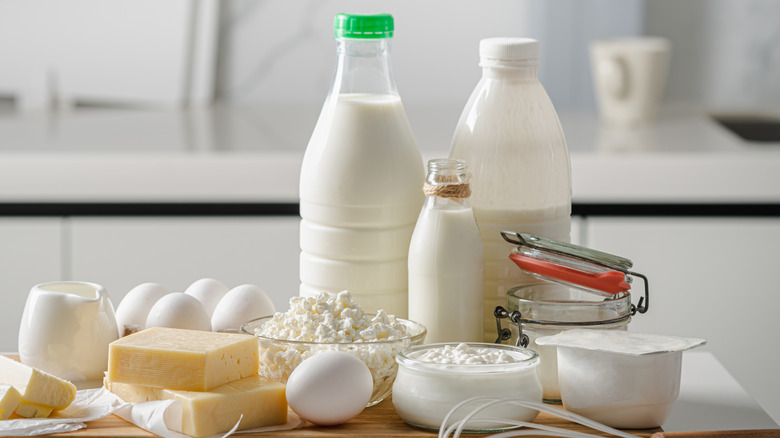
When baking cakes and bread, the final type of ingredients I like to bring to room temperature are liquids like milk, cream, and buttermilk. My cakes end up softer when the liquids are warmer, and warm milk helps activate yeast in bread dough. I've found that the quickest way to bring milk and cream to room temperature is to once again use the microwave.
Simply pour milk, cream, or buttermilk into a microwave-safe container and microwave in 10-second bursts on high. Give the liquid a stir between bursts and test the temperature with your finger. If it feels lukewarm, it's warm enough. If it feels too cold, microwave again for another 10 seconds and give it another stir.
While a good rule of thumb is to have most baking ingredients at room temperature before baking, there are times when ingredients should be cold. For example, if you're whipping cream and want it stable, the cream must be very cold. Or if you're making scones, cold butter is the way to go.