

Here's How To Spot Fake Lobster At A Restaurant

Few foods embody the idea of a fancy meal quite like lobster. They've come a long way from the food that was once considered so low-class that it was fed to prisoners and used as fertilizer. These days, if you want lobster, you pay a premium price for it. Even at a chain like Red Lobster, a Maine lobster tail and a rock lobster tail can cost around $45. At other restaurants, a single rock lobster tail may set you back almost $50. Considering the cost involved, you want to make sure you're getting what you pay for. Unfortunately, some unscrupulous restaurants might be trying to pull a fast one on you by offering fake lobster in place of the real deal. So how can you tell the difference?
Tasting Table spoke to Franklin Becker, chef and owner of Point Seven restaurant in Manhattan. We asked how a diner might be able to spot fake lobster, and his advice came down to taste and texture. "Fake lobster has a milder, more uniform flavor and has a slightly rubbery texture," Becker says. "It is definitely different from the real thing."
If you're ordering a dish that's made with lobster, look for confirmation that it's real lobster. The menu should specify if it's rock lobster or Maine lobster, for instance. If it doesn't, ask if the server can confirm the type of lobster. Is your ravioli made with claw meat or tail meat? The chef should be able to answer those questions easily.
The prevalence of fake lobster
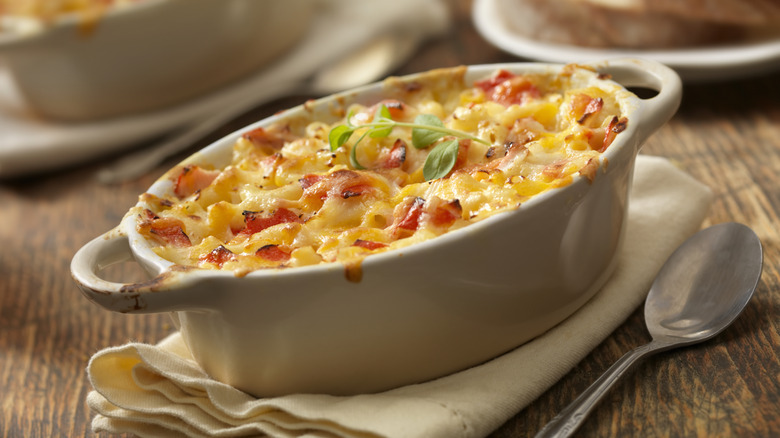
A restaurant can't fake lobster if you order a whole lobster dinner or a lobster tail. However, there are plenty of dishes that only use lobster meat. Dishes like lobster rolls, lobster mac and cheese, lobster bisque. A 2016 investigation by Inside Edition showed that as much as 35% of what is listed as lobster is actually something else altogether, often white fish like whiting or pollock, or langostino.
"Langostinos are more crablike in texture and have a milder flavor than lobster," Becker told us. "They are also much smaller." They look like large shrimp and are similar to lobster, but you're not paying for similar when you go out to a restaurant. Even if they are tasty, they should be listed as langostino on a menu, not lobster.
When the story broke and it was found that Red Lobster was also using langostino in dishes like bisque, the company released a statement acknowledging it. The statement referred to it as langostino lobster and said the restaurants use several kinds of lobster, and that's one of them. In 2005, the FDA allowed langostino, previously called squat lobster or Colorado langostino, to be sold as langostino lobster. The Government Accountability Office noted that, at the time, the Maine Lobster Promotion Council took umbrage with this because they felt it devalued real lobster by letting an inferior product use the name.
The price is another indicator. A lobster dish at an unbelievably low price is cause for concern. Real lobster isn't cheap. If you can't see lobster in the dish, or the price seems very low, or the menu calls it langostino lobster, you're probably not getting what you want.