

The Best Type Of Beer To Use In Beer Bread
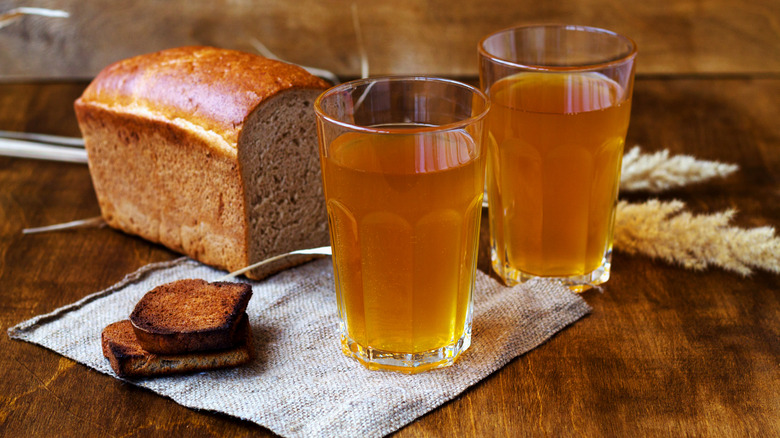
First things first, beer bread doesn't taste like beer (or, at least, it shouldn't). Those tender loaves are malty, yeasty, and comforting — and if the beer flavor is unpleasantly pronounced, then chances are you've selected the wrong brew for the job. Unlike traditional yeast breads, beer bread doesn't need to rise because the bubbly, yeasty beer in the batter acts as an almost-magical leavening agent. Some recipes also enlist a helping hand from an added pinch of baking powder to amplify the effects. Determining the right beer for your beer bread is as much about personal taste preference as the type of bread you're making. While technically any beer can be functionally used, the top contenders have low hops, low bitterness, and subtle sweetness.
Beers with low hops and a touch of sweetness naturally complement the tasting profile of baked bread and are generally the best options for making it. Opt for varieties with an added touch of toasty, malt-forward flavor — profiles which can apply to pale or amber lagers and ales, brown ales, barley wines, stouts, and porters. Malty beers also typically offer a richer, creamier, fuller textural body, which plays well in bread dough. Also, on a practical note, stick to low-ABV brews (4%-5%) to ensure that the yeast activates properly in the oven and that the crumb doesn't dry out.
Low hops, low bitterness, and subtle sweetness lend to lovely loaves

Flavor profile matters. The alcohol content in the beer cooks out during the bread's tenure in the oven, using the bubbles and yeast for their bread-rising powers and leaving behind the beer's unique taste. Accordingly, different ingredients will work better with some breads than others. Lagers deliver the classic subtle taste and fluffy texture foodies think of when they think "beer bread." To make Tasting Table's cheddar beer bread, for instance, a brighter, grain-forward American lager like Budweiser is the best brew for the job. Samuel Adams Boston Lager, Yuengling, Shiner Bock are all also solid choices with their sweet, smooth, caramely malts. Seasonal Oktoberfest lagers can lend subtle baking spice tones to your bread. Slightly-fruity wheat beers like Blue Moon Belgian White and New Belgium Fat Tire would likely perform well in sweeter breads, while ales like Sierra Nevada should yield richer, denser loaves. Robust stouts are better-suited to dark bread varieties, like our Irish beer bread, which enlists the help of dark, malty, roasted Guinness.
Whichever type of bread you're baking, or whichever brew you personally prefer, two universal beer-bread rules apply: Pick a bottle you would actually want to drink, and stick to offerings with a low IBU (International Bitterness Unit). This measurement scale ranges from 0 to 120, letting discerning sippers (and bakers) know how bitter a certain beer arrives on the palate. When it comes to making bread, the lower the IBU, the better.